




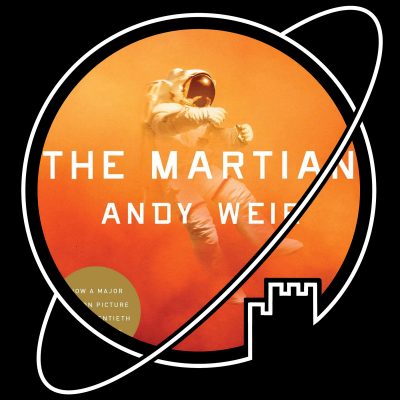

It’s been a while since I last read a book I could barely put down. The Martian was a delight to read. Sure, it’s a book about survival, but more importantly it is a book about a snarky man making jokes in the face of hardship. And boy does Watney face a lot of them.
This book does feature a lot of math, which is super not my thing. I quickly decided to just let the numbers pass me by and focus on the story. This was not a problem and didn’t impact my enjoyment of the book.
A friend pointed out that she doesn’t like how unemotional all the characters in the Martian are, and to an extent she is correct in that. Everyone is, like, super professional about what’s going on. We never get a nice window into the characters’ psyches. However, it didn’t really bother me while reading. The pacing is nice, and the gravity of the situation is clear to the reader, and I found that I didn’t need to see the emotional journey of the characters in order to have one of my own. And boy did I have an emotional journey. The stakes are very clear in the Martian. A cold lonely death. On MARS.
I found Watney’s situation weirdly relatable. Like, there is no way I would ever end up in a situation like this, and yet I constantly felt like this could totally happen to me and can you imagine how that would feel. Perhaps that is because I enjoy playing video games, and this book has a setup that feels very game-y. For Watney, Mars is the ultimate escape room.
Overall this book is a nice quick read for anyone who enjoys their drama with a healthy dose of humour and sass.

I would argue that The Martian is a bit of a unique reading experience, in that it actively invites the reader to puzzle along with the stranded Watney and his crazy science experiments – on the level of actual chemistry and physics.
Now, I realise that a good part of the puzzeling is probably wrong. I’m not a chemist myself, but one of my friends who is has implied as much. Weir touches on international space law (on which I wrote my thesis) once in the book, and missed the mark by a wide margin there. So I’m not sure whether we can trust him on getting his science straight.
But really – it doesn’t matter much. By writing about these chemistry puzzles, Weir makes you think about the kinds of issues that the people who work on space exploration actually deal with, and gives you a new perspective on (especially near future) sci-fi.
What is more, the book is a true page turner. That word gets thrown around a lot, but in the case of The Martian, I think it really is an apt description. The tension is constant, the troubles keep building, but – crucially – Watney keeps making progress. True, every step he takes he stumbles over a new problem – but then he tackles that head-on too. The book is constantly both satisfying and exciting. The pacing is excellent. Watney is optimistic and sassy, and Weir gives him a great sense of humor. Perhaps that is what sets the book apart most from what you’d expect – most sci-fi writers would focus on the existential dread of Watney’s situation, but Weir wrote a book that is just good fun.
The flipside is, however, that the book does not have particularly interesting character development – or even a particularly interesting overarching plot. Watney, being stuck alone on a planet (that’s the whole premise!), doesn’t have a chance to develop any interpersonal relations much, and the ‘antagonist’, for lack of a better word, is the uncaring environment. It didn’t matter to me, because the other aspects of the book easily make up for the lack of emotional content – but it is something to keep in mind if you like character driven fiction.
Overall, a light read, fast paced, humourous, but still very much hard sci fi. A definite recommendation, though perhaps less well suited for people who to take a deep dive in the character of a book’s protagonist.

Listened to the audiobook with Amy Landon. She does a great job reading it but in general this is a book I would recommend reading on paper – I felt like going back and double checking things just a bit too often.
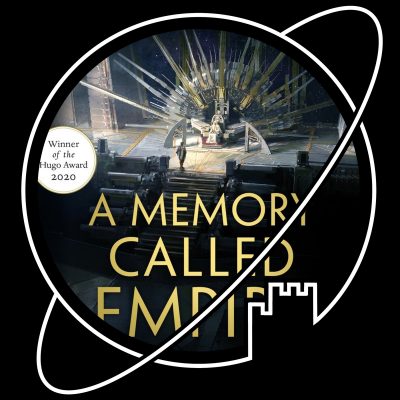
A Memory Called Empire is probably the best (new) book I’ve read in over a year. I’m recommending it to people left and right – and now I’m recommending it to you.
A Memory Called Empire is an intriguing mix between a political thriller, a cyberpunk detective mystery and a character-driven sci-fi drama. That may seem a lot, but what makes the book brilliant is that it is very lean in its choices – the worldbuilding, for example, is relatively minimal. It is deep where it needs to be and cursory where there is no more than a fleeting mention: there are no infodumps, just tantalising snippets in the pre-chapter codices. There isn’t a tonne of action, but just enough to keep up the pace and thrill. The character moments are far enough apart not to slow the story down but close enough together to keep you growing closer to the characters. Perhaps most importantly, Martine keeps revealing little bits of the central secret all the way through, at exactly the right pace (for me) to keep me hooked constantly.
In addition, in true science fiction fashion, the book explores a very interesting premise – what would happen if people in certain roles could carry the memories of their predecessors with them. The idea of Lsels ‘imago lines’ and some of their implications is evocative and intriguing, and makes me want to read more books in the same universe to delve deeper into the topic.
Finally, there is a fascinating undercurrent of loving and hating the culture of a conqueror – perhaps not an experience particularly near to me, but I am sure there are plenty of people in this world that, like Mahit, have lived their live studying a culture that is at once both beautiful and oppressive.
All in all, A Memory Called Empire is an incredibly well-written book that works on multiple levels. Yes, the politics take some wrapping your head around. But unless you really dislike that kind of reading, I would recommend you give this book a shot. Well deserving of the Hugo!


First off, I’m writing my review at the time of the Forged in the Barrens-expansion, and have to admit that I haven’t logged into my account in over a year (I quit the day I started my current job). However, I was a free-to-play player from vanilla in 2014 all the way up to Saviours of Uldum in 2019. I’ve kept up with the game mostly through streams so I feel I’m at least a bit qualified to give an opinion on its current state.
First off, in short, Hearthstone is a game that allows you to collect cards, build decks out of them, and take on the AI or other players with the decks you’ve designed. Cards are mostly obtained through packs, which can be earned in-game or bought with real-world money.
It is a bright, colourful, happy (if not to say: kiddy) TCG, and it embraces it’s silly nature in its art, voice lines, by introducing meme-cards every set, and by not shying away from random elements that might give games an insane twist. Of course, these elements mean that some games are decided by luck rather than skill – but then, that goes for every card game, since the order in which cards are drawn from the randomly shuffled decks is often a deciding factor. And despite the elements of luck, Hearthstone has a large e-sports/competitive scene.
I think compared to other TCGs, Hearthstone offers a somewhat lower barrier to entry, a lot of fun silliness at lower levels, and significant and enjoyable single-player content.
At its core it remains a relatively straightforward deck-building trading card game. Whilst there is a fair amount of new-player content, the meat of the game is supposed to be battling other players and climbing the ranked play ladder. However, the difference in power level between the first deck you designed and the well-honed decks that dominate the metagame is vast. Sadly, net-decking (i.e., copying other people’s decks from the internet) is very prevalent even at lower levels, so very soon, you’ll need to find yourself a real deck to compete. That means either grinding or shilling for cards, and once you start climbing the ladder, you’ll find you face up against one of three, maybe four relatively similar decks almost every game. Here, it is you’ll either (i) find the gameplay repetitive and unnecessarily competitive, and lose interest quickly; or (ii) find you love the challenge of memorising what cards your opponent played, researching the meta and the stats published online, finding that few extra percentage point win rates, fine-tuning your deck against your most common opponents, etc. There is a third option, since Hearthstone offers a number of other game modes – so you might find solace in one of those. But in general, to truly enjoy Hearthstone beyond the new player content, you’ll need to commit.
Three and a half stars might seem a somewhat mellow rating for a game that I’ve put hundreds of hours in over five years without ever spending a single euro. However, since I’ve stopped playing, I’ve realised that whilst I enjoyed the game, it was a huge time sink in the time that I played it – and I needed to keep playing it daily so as not to fall behind the paying players too far. I could have paid, of course, but to be honest I think the model where you buy packs containing random cards with a slim chance of a card you actually want for real world money to be exploitative. I was a student, I had the time then – but Hearthstone is not something I would generally recommend to someone that values their free time highly. At the same time, it is fun and if you are looking for something that is somehow both laid back and competitive, Hearthstone is the game for you.
I’ll add that now is probably the best time ever to start as a new player – there are a lot of single player adventures and there are a lot of rewards for trying things out and climbing through the apprentice ranks. And because there is a bunch of single player content, you can find a good few hours of enjoyment even without ever touching the ranked ladder.


Listened to the audiobook with Frank Rigter. The reader wasn’t this book’s problem.
Before I launch into this review, it is important to know something about the Dutch-language adult (as in, not children’s) fantasy market, and that is that it is virtually non-existent. My guess is that that is probably the case because most people that would be interested in reading fantasy in the Netherlands are more than happy to do so in English.
Despite the adverse market conditions, Ad van Tiggelen (pen name: Adrian Stone) has managed to get himself published – which is quite a feat, both because he is to my knowledge the only Dutch fantasy author with some level of commercial success, and also because of the deep mediocrity of his debut novel.
Profeet van de Duivel is set in a run-of-the-mill fantasy world, though the story’s set up – the boy rescued from the cult but marked by his membership and spurned by his peers – is not that bad. The actual story, however, is. It is a string of poorly re-used tropes and clichés, with flimsy worldbuilding, shallow characters, non-existent mystery and mediocre prose. Most names in the book sound like Italian desserts or Milanese fashion brands. The ‘twist’ at the end of the book is both highly predictable and entirely un-foreshadowed (remarkable, isn’t it?).
One of the book’s worst aspects is its treatment of female characters: within the first sentence of introduction of literally every female character, you know whether or not she is pretty, which seems to be the only aspect of any female character that matters. Armana, supposedy one of the main characters, is so damn sexy that literally every male character that comes in contact with her, wants to have sex with her. That is also about the extent of her influence on the plot – she makes the male characters in the party dislike each other because one of them got into her pants, and the others didn’t.
A star-and-a-half-rating might seem harsh, and maybe it is. Profeet van de Duivel is not absolute trash. It is functional, as a fantasy book. That is about as far as I am willing to go. I tend to be able to find some merit in most of the books I dislike – original settings, strong prose, an interesting character here and there. Often, I can see why, even though a book is not for me, it might be a recommendation for others.
Profeet van de Duivel has none of those redeeming factors. It is just mediocre in every aspect. I would recommend literally no one to read Profeet van de Duivel.
I would not even recommend it to Dutch readers interested in reading something Made in Holland. If you want that, try Thomas Olde Heuvelt’s HEX, which is original and actually features some delightful Dutchness.
Sorry Ad – but everyone, give Profeet van de Duivel a miss.

The Hero of Ages does what by now we’ve come to expect from the Mistborn Trilogy: it delivers long and detailed action scenes in solid prose, a highly original (if not always very engaging) world, a complex but well-functioning plot, and so-so characters. In that sense, I have very little to add to my reviews of The Final Empire and The Well of Ascension.
The Hero of Ages is somewhat different, however, in that it is the final part of the trilogy. In this book, Sanderson has got to deliver on two books of build up (if that is what you can call it), and finally solve some of the mysteries he’s been kicking out in front of him every time they come up in the story.
The good news is that Sanderson finishes all the arcs. The bad news is that the problem that plagued The Well of Ascension – the fact that the stakes could somehow never live up to those of the first part – haunts The Hero of Ages as well. The Lord Ruler is well out of the picture, and so are Straff and Zane Venture, the main antagonists of The Well of Ascension. The main antagonists introduced in the third installment are even less impressive when measured against the god-emperor of the first part. Of course, the real enemy of the series also finally steps out of the shadows – but because it seems to take about half the book for the characters to figure out who they are actually fighting, much of the first half of the book is a relatively mediocre set-up. It feels like the characters are just going through the motions and have a number of revelations thrust upon them (rather than actually discovering the clues themselves). Especially the sub-plot with Spook in Urteau feels entirely superfluous.
That also leads into another problem (and there are some slight spoilers here). Almost all of the book’s central characters are some form of mage – be it an allomancer or feruchemist. Elend is one of the few characters that wasn’t, which made him an interesting mirror – what does it mean to not have powers in a world ruled by allomancers? However, in this book, Elend has become a Mistborn, and, for some reason, a more powerful one than Vin. It takes away the one aspect of his character that made him interesting. A similar fate befalls Spook, the one member of the crew that always felt left out, because his power, he felt, was the least useful. Sanderson chooses to focus on him, and rather than making him interesting through his character, he makes him extra powerful and then changes his personality to fit that image. The above examples suggest that Sanderson is perhaps more interested in writing cool wizard-ninjas than in writing moving characters.
The conclusion to the book is not unsatisfactory, but by the time I got there, I was reading just to finish. Overall, I would recommend The Final Empire, for the interesting world Sanderson created, but not the other two installments in the Mistborn Trilogy. Jop and I have written out a more in-depth conversation on the Trilogy – but mind the spoilers!
This book, just like the rest of the trilogy, had its ups and downs for me. The scale of the conflict is very large, almost cosmic. The ending came somewhat abrupt, but most mysteries of the trilogy were neatly tied up. I enjoyed Sanderson’s plotting skills in this regard, even though I did not necessarily like all of his choices. On the whole, I’d probably give this trilogy a 3.5 star rating, the same rating I give The Hero of Ages.
Once again, it is undeniable that Sanderson’s prose reads easily. Action scenes, dialogue, exposition, it is all smoothly written. In addition, the worldbuilding and most plot elements are still well thought out and original.
Religion and faith are important themes in the Mistborn trilogy, but especially in this final book. Being a religious scholar, I could appreciate this. Even though I wasn’t ultimately blown away by the way these themes were handled, I suspect others might like the questions that are raised. What does it mean to have faith? And what do religions have to offer to society?
Many of the things I wrote regarding The Final Empire still hold true for The Well of Ascension. The setting Sanderson has created is very original. His magic system is interesting. His prose is solid. His plot works, there are a number of interesting and well-foreshadowed twists. It is lacking somewhat in soul and feeling. However, where The Final Empire was carried by the force of its premise and a fascinating central conflict, The Well of Ascension just doesn’t have the same things going for it.
There are two main things that go wrong. Firstly, with The Final Empire, Brandon Sanderson wrote himself into a corner. For if the crew beats the arch-villain in your first installment, what happens next? The Well of Ascension could have been an amazing opportunity for Sanderson to show that he is a true trope-breaker. Instead, we get a book full of lacklustre administrative challenges and personal doubts, featuring the same characters that murdered a literal god in the previous book. It is unimaginably jarring reading about Vin listening to petty politics in a parliamentary assembly, or Elend worrying about the next speech he is about to give. There is some charm, of course, to asking the question – what do you do after toppling the evil emperor? Most stories don’t venture there. But the complete collapse of the scale of the series makes the whole thing seem banal. If Vin and the crew were out of the picture, heroes of legend to look up to, and The Well of Ascension was just about Elend, it might have worked. Then again, Elend…
That neatly leads into the second problem. Vin and Elend. One of the core questions of the book is whether Vin can learn to trust Elend. The book is supposed to be about their relationship. But there just never seems to be a reason for Vin to actually like Elend. It feels like they should hardly be able to stand being in the same room. Instead, their love never really gets questioned (this is a theme that runs through to the next book as well).
Overall, with the collapse of the story’s scope and the regrettable choice to focus on Vin and Elend’s poorly written relationship, The Well of Ascension ends up being quite a lot worse than The Final Empire was. I’m in the final chapters of part three of this trilogy as I’m writing this review. We’ll see if the ending to the whole thing makes it worth dragging yourself through the second installment…

This book, just like the rest of the trilogy, had its ups and downs for me. The political plot is not particularly strong and (unfortunately for me) the story also contains an evil imposter mystery subplot. The plot twist at the end annoyed me at first, but gets more context in the final part of the trilogy.
Once again, it is undeniable that Sanderson’s prose reads easily. Action scenes, dialogue, exposition, it is all smoothly written. In addition, the worldbuilding and most plot elements are well thought out.
The thematic focus in this book is on identity. Normally, I would cheer at this theme, but in this book it was poorly executed. Vin’s inner conflicts felt completely forced, a disservice to her character. In that respect, the identity crisis worked better in Elend’s story, but was not particularly inspiring.
All in all this sequel is a fine read, but not as good as The Final Empire.

Review: The Tombs of Atuan – Ursula Le Guin
A small girl is taken to the temple complex of the Tombs of Atuan to be inducted as the high priestess of the Nameless Ones. Said to be the reincarnation of the previous high priestess, the young girl must take on the arduous and sometimes gruesome tasks of her office alone. The child’s loneliness and isolation only grow when she finds an intruder has penetrated into the great labyrinths underneath the Tombs.

Review: A Wizard of Earthsea – Ursula Le Guin
After a magic talent helps a young boy protect his village from a savage attack by sea-born raiders, the boy is sent of to learn magic from an ancient mage living on a nearby island. It is the start of a series of adventures across the many islands of Earthsea, in which the boy does not just learn about magic, but also about the dark side of himself and the emotions that will show him that side.
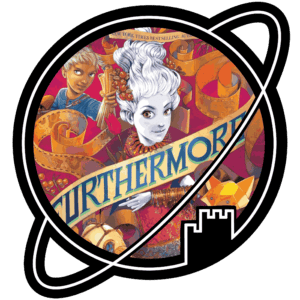
Review: Furthermore – Tahereh Mafi
Furthermore tells the story of Alice, who is a colourless girl in a magical, colourful world. She sets out to find her missing father and prove that she is just as magical as the colourful people who have made her feel like an outcast all her life.
Curator Question: 2025 Resolutions
Our Curators discuss their 2024 New Year’s Resolutions – what is on their to be read/watch/listen/play list for the coming year?
Yearly Wrap-up: 2024 in Review
Our curators look back at their 2024 resolutions, and their favourite fantasy and science fiction media of the past year. Which media on their to be read/watch/listen/play piles got their attention? And what else did the year bring?

Review: Six of Crows – Leigh Bardugo
Ketterdam is a place where anything and anyone can be bought for the right price, and the right price to get a group of teenage criminals to undertake a suicide mission is a whole lot of money. The question is: will they make it out alive to claim it?