






Like most video game nerds, I’ve been anticipating the release of Amazon prime’s Fallout series for a while. Netflix is currently developing a movie based on Bioshock, one of my favourite games of all time. Like many, I’ve been worried they’d ruin my precious, but watching Fallout made me worry a little less.
Of course the Bioshock movie will be developed by other people, but Fallout made me realise that a TV show based on a stylised, quirky game can work. We’ve seen that video game adaptations can be good thanks to The Last of Us, but The Last of Us is a pretty “realistic” story. It doesn’t take much suspension of disbelief. Fallout, however, is far from a realistic game.
I’ve played a bit of Fallout (Fallout 3? New Vegas? I really don’t recall) in the past, but I never got very far. The mechanics of Bethesda games are too clunky for me (and I’ll still happily play Bioshock to this day so that’s saying something – but enough about Bioshock). I was going into the TV show mostly blind, with the exception of having some general background knowledge that one learns from the tutorial of the game. I therefore won’t be able to judge how well they did at translating the game to the small screen. What I can do is give my perspective as someone who is relatively unfamiliar with the source material.
Overall, I really enjoyed this series. I though Lucy Maclean was a really fun main character. The humour of Fallout is quite whimsical and quirky, but it never gets tiring. They manage to capture the vibe really well. The other point of view characters are also well written and give you a much broader image of what life in the wastes is like. The way the whole thing comes together at the end is truly expertly crafted. I do feel there were some slight issues with pacing, but nothing major.
I think it’s pretty hard to make a show based on a video game that both feels like the video game, but also feels like a genuine piece of media in and of itself. I think Fallout really succeeded at this. Visually, the show doesnt fall into the modern trap of making things grim and gray. At the same time, the sets and props all looked “real” enough (or perhaps there was enough cohesion in the design of the show) that the show doesnt look weird.
I’m glad that video games are getting more adaptations, especially with this level of quality.
Prior to watching this series, I had little intimate knowledge of the Fallout universe. My only experiences with the video games have been through playthroughs by (less than serious) Twitch streamers, which left me with a vague idea of the atmosphere of the setting: post-apocalyptic bleak, but with the occasional quirky humour. When I heard there was an adaptation, I was intrigued and planned to one day watch it, but a recommendation from Lotte sped up this process significantly.
To be consise, Fallout is a well-crafted series. The acting, writing and cinematography are strong, succesfully balancing emotional drama with cold gore and funny absurdities. What could have easily been an uninspired MacGuffin plot, was made interesting by three layered main characters and fascinating worldbuilding. At no point was I really sure what to expect, and in the last episode the main storylines neatly came together. Bonus point for the many little stories hidden in seemingly irrelevant background characters and worldbuilding titbits. I wish more films and series would put that kind of effort in their storytelling.
Just some things that I liked (and random thoughts):
- Fallout reminded me somewhat of a classic spaghetti Western film, such as The Good, the Bad and the Ugly.
- Lucy’s character struggles. How to remain a decent person in a broken world?
- The way the post-apocalyptic setting is handled. Especially the lore behind the vaults and the use of Cold War themes.
- Vault 4.
- Every time when a person in power armour did something extremely human.
- The different factions and their motivations.
In summary, certainly a series that is worth a try.

Listened to the audiobook with the author as the narrator – very well narrated!
I’ve recently read some of Tchaikovsky’s sci-fi books, so when my audiobook app recommended a fantasy novel with his name on the cover, I was curious to see how he would hold up in another niche of the speculative genre.
(And also, this one also had spiders – which makes you wonder if Tchaikovsky was practicing for Children of Time…)
Spiderlight is a rare sight in the high fantasy landscape: a relatively short, self-contained fantasy book. It helps that it feels like it has a different objective from most fantasy out there.
Where many fantasy books are as much exercises in imagination and worldbuilding as they are narratives, Spiderlight is very lean. It borrows heavily from the ‘standard’ D&D high fantasy world, offering a comfortable exposition-light read for readers with more experience in the genre.
The world of Spiderlight never quite comes to life in the same way that other fantasy worlds do, but that leaves more room to focus on the interpersonal relationships between the members of the party and playing with the expectations of the reader.
Which brings us to what Spiderlight is really about: it feels like Spiderlight consciously sets up the tropes to subvert them, taking slightly unexpected turns without the book turning into outright satire.
I will not claim that Spiderlight is particularly ground-breaking; perhaps the tropes that the ‘standard’ high fantasy D&D-world is built on are so well-worn that even their subversions have become common place.
But Spiderlight does the subversions well. It presents a nice philosophical take on ‘othering’ persons who are not like you, and presents the outsider’s view by including such an ‘other’ as one of the point of view-characters.
Don’t get me wrong, Spiderlight is not high literature, but the commentary without pretention is at the very least more conscious of the dogmatic good-versus-evil than the average high fantasy world.
Overall, Tchaikovsky wrote an eminently readable, nicely paced and well structured high fantasy book, that is comfortable in its set up but also brings enough subversion to the table to feel refreshing.
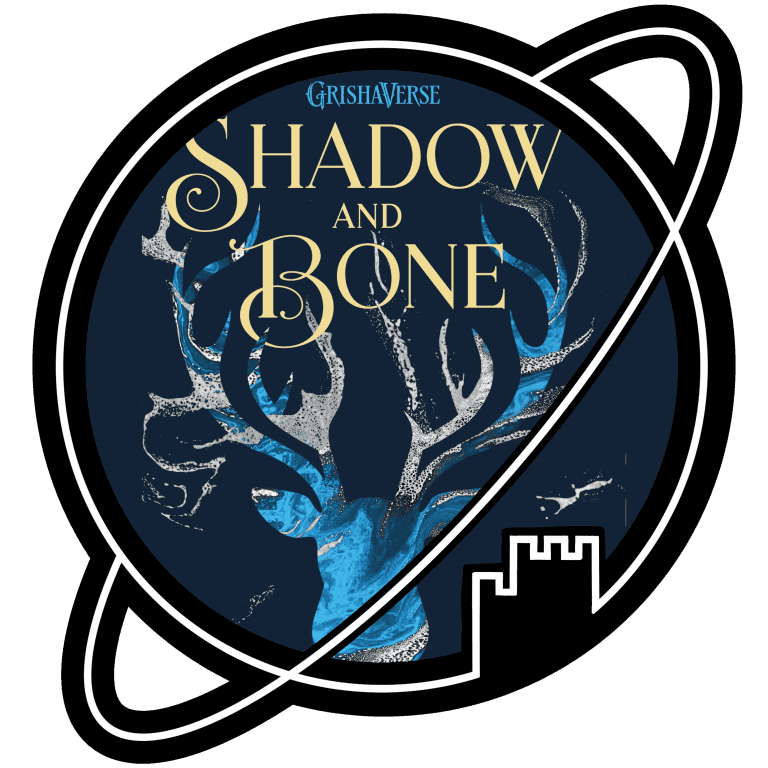
I watched Shadow and Bone on Netflix when it came out and I wasn’t super impressed. As I stated in my review, though, I would happily read the book at some point to see if I liked it more than the show. To be really honest, I wasn’t actually hugely excited about the prospect of reading Shadow and Bone. I was mostly just open to the possibility.
It wasn’t until I found another book by Leigh Bardugo, Ninth House, at the thrift store, that I realised she’s a very good author. Two years later, I finally found Shadow and Bone at the very same store for 1,50 euros. As the second season of the show had just come out, I decided to move it to the very top of to to-read list.
I’ll admit I rather enjoyed Shadow and Bone. Because I’d watched the show I knew what to expect. I might have enjoyed it less if I hadn’t.
Like the show, the book is pretty predictable YA fantasy. The pacing is super fast, much like the show. I think the story could definitely have benefited from 100 more pages, just to give us some more time to get to know the characters and get attached to them. I didn’t feel hugely connected to any of the leads, despite also having seen the show. Alina’s pretty funny, though. Overall, the pacing wasn’t a big issue. Shadow and Bone was super easy to get through and an enjoyable read.
I’d definitely recommend the book to anyone who enjoyed the show, or anyone else who wants to read some very accessible YA fantasy.
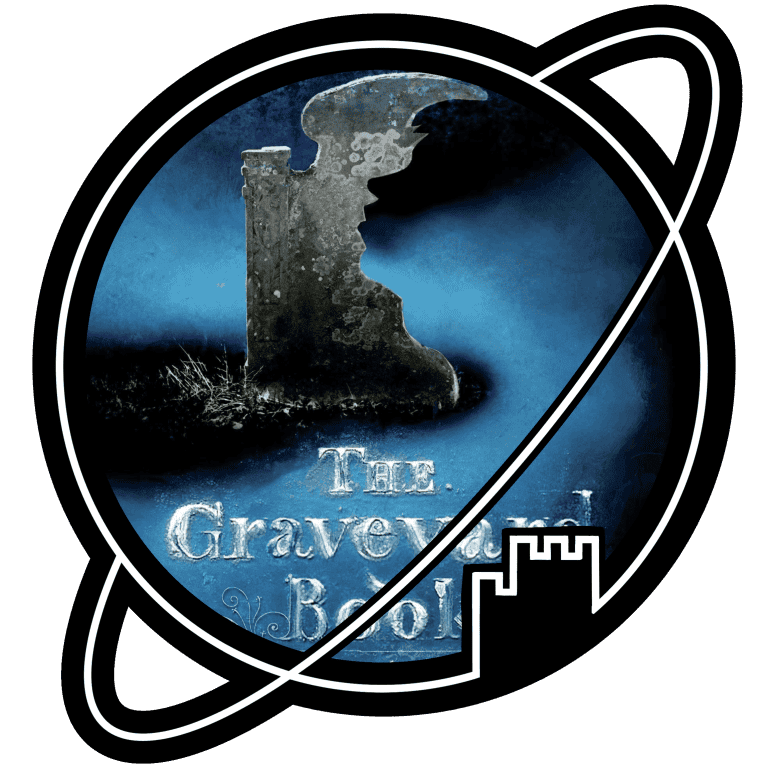
Listened to the full-cast audio book, which really added a lot to the experience. Great production!
I was in more of a low-energy mood and I didn’t feel like investing a lot in a book, so this week so I decided to put on something simple for younger readers. The Graveyard Book was a perfect fit.
I think a book like The Graveyard Book fits Gaiman’s style perfectly: I feel like he is the master of bringing children’s logic into a fantasy story, and The Graveyard Book might be the best example of it he’s every written.
The premise of this book – a child that grows up with the dead in a graveyard – is something that could require a lot of explaining to make work – but in Gaiman’s matter-of-fact style, all the pieces of the puzzle fall into place exactly because hardly any of it is ever explained. It works and feels logical like it would have if you were a kid, and to just go with that flow is a wonderful experience.
The Graveyard Book is very imaginative and whimsical, and at the same time it is mysterious and atmospheric. It has magic that relies on puns and reinterpretations of common phrases, it features children shouting down ancient ghosts – but the main character Nobody is also hunted by a mysterious gentleman looking to murder him.
Sometimes, those two sides of the story clash a little; going from one chapter to the next, The Graveyard Book might change from a wholesome tale on the interaction of the long dead and the living to a literal knife murderer chasing a child.
But in my experience the book was nicely balanced: with even parts of the sweet and the creepy, The Graveyard Book never became boring. It was just somewhat unpredictable in its mood. If those tone switches don’t sound like a bad thing, I think The Graveyard Book is a perfect read for a daring kid or a parent looking to read something to them that might also give them goose bumps.
And for readers like me, something like The Graveyard Book can be a great way to immerse yourself in a simple, well-told story without learning curve.
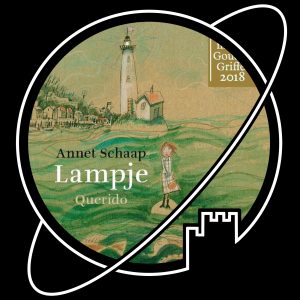

Listened to the audiobook with Tom Weiner – very well read.
I love reading old science fiction. When I am looking for a new book to listen to, I often go to Wikipedia’s list of winners of the Hugo Award for Best Novel and see if any of them are available on my audiobook app.
The title of the 1961 winner, A Canticle for Leibowitz, has always stuck with me, though I never bothered to click the link. When it appeared in the app, I dove in blind, loading it into the player straight away.
And I was treated to three great literary post-apocalyptic science fiction short stories! Each of the stories is set several centuries apart, following humanity in general and the abbey of Leibowitz in particular as they progress from pseudo-medieval through pseudo-renaissance into the nuclear age once again. Only when I finished the book did I find out that – as I might have known – they were not originally published together.
The narrative actually flows very well from one story through to the next. Because the story it told in three bursts, the pacing remains high. And while the cast shifts from one story to the next, Miller actually does a great job of limiting the number of different characters in each, allowing the different protagonists to come to life despite the relatively limited length of the story.
The stories are thoughtful, though never overly serious. The world is constructed very carefully through conversation and implication, never letting the world building weigh down the literary core of the story. Each of the three short stories has the right amount of depth and satisfying conclusion, never overstaying its welcome. While they are thematically coherent, I love that they each present a very different picture of the development of the society the abbey is in.
I feel like Miller could have easily written a book in each of those settings, but I actually love that he didn’t and left it at three short stories, a surface just scratched. Enough to be exciting, but not so much that it required detailed explanations or set up. In that sense, A Canticle for Leibowitz reminded me of the – otherwise completely different – Singing Hills Cycle of novellas.
A Canticle for Leibowitz has also withstood the test of time incredibly well. It has relevant themes and a literary style that doesn’t feel 60 years old. The only real reason one feels it could not have been written in the past ten years, is that the cyclical existential threat hanging over the story is not climate change but nuclear war.
Overall, I think A Canticle for Leibowitz deserves to be remembered, up there with the classics of the genre like Starship Troopers or Dune that won the Hugo in the same decade. It is a shame that it is not, but here I am recommending it to you – so go forth and spread the word!


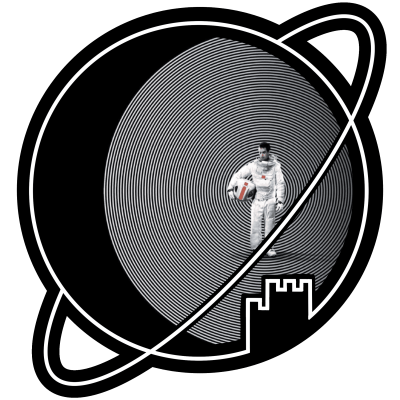

This is a difficult movie to review without giving away a couple of hints of the plot – so beware of some small spoilers.
Just like when I watched Prospect, I wanted a slower-paced movie to put on while I was doing things with my hands, so I looked for another character-focused low-budget sci-fi project. And while Moon ticks all those boxes, it struggled a bit more to convince me.
The ‘lone crew member on the base/ship’ has been done to death in sci-fi, but it is a trope for a reason: loneliness and fear are powerful emotions. It is also perfect for smaller projects like Moon, because it requires a little less of everything to still have an impact: fewer actors, fewer sets, fewer props.
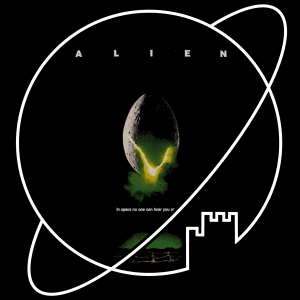
The problem with stories with this premise having been done so often, is that they start falling into a predictable pattern. I understand there are a couple of deliberate references and throwbacks to other sci-fi movies in here – I feel a lot of 2001: A Space Odyssey, Alien and The Martian in particular – but showing a sci-fi literate audience that you know you’re following in others’ footsteps does not make your movie any more original. A movie about the loneliness of survival in space needs a little extra to make me feel it is worth watching.
In Moon, I get the feeling that the interesting idea to have the main character appear on screen twice is supposed to be that ‘little extra’.
This script might have been written as an acting challenge for Sam Rockwell – he does all of his acting in this movie opposite a video, a prop, or, indeed, himself. Considering, he did a good job and I get that people are impressed with that. But I don’t think it was an Oscar-worthy performance. It is possible another actor could have carried this movie on their own, but Rockwell didn’t draw me in that way.
Because the focus is on Rockwell acting opposite himself, the main mystery of the movie (relatively predictable as it is) is actually revealed rather early on, breaking the tension arc and making the second half of the movie feel like an afterthought.
It is made worse by the fact that the plot is a big tangle of assumptions and just-so stories causing everything to function exactly as the plot demands.
It never made sense to me why Sam Bell had to be at the base in the first place, why he was there alone, why communications with the moon were so difficult, or why Lunar Industries when with the convoluted ploy/deception that is at the core of the lot in the first place.
I could go on, but the bottom line is that this movie was never about the plot. That could be fine, but in this case it left precious basically just Rockwell’s acting as a selling point – and nice as it is, it feels a little meagre.
In conclusion, this movie does some interesting things and looks convincing, but the premise is rather bland and the plot makes no sense. All the interestingness of Sam Rockwell talking to himself could not make up for the fact that Moon was just not that exciting.
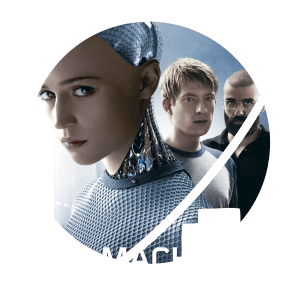
If you want to watch a sci-fi movie that is all about intense acting over flashy action, I would rather recommend something like Ex Machina.
You won’t waste an evening if you put on Moon, but I feel like there are better options out there.
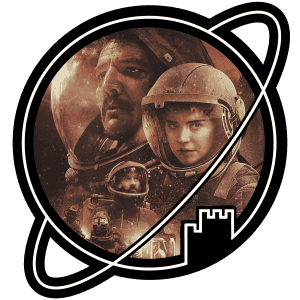
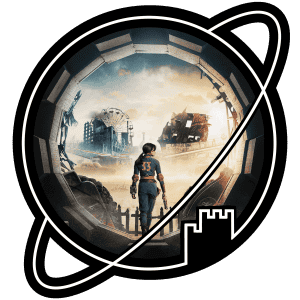
Review: Fallout – Amazon Prime
The bomb has gone off, but that doesn’t mean civilisation has to collapse. Deep underground, life goes on for a select few in the Vaults. 219 years later, Fallout follows Lucy Maclean, who has grown up with all the luxuries 1950’s life has to offer. After an incident in her vault, she ventures out into the wastes where she discovers what nuclear radiation has done to the people of America, in both mind and body.
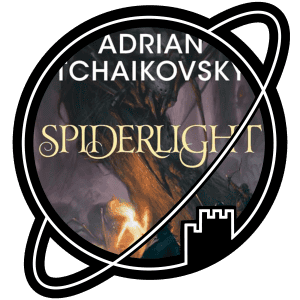
Review: Spiderlight – Adrian Tchaikovsky
A group of adventurers sets out to defeat the Dark Lord – meticulously following each of the steps foretold by the prophecy. The adventurers’ relationships are tested and their faith in the Light is challenged when their quest requires them to welcome a new member into their party. A creature of the Dark, transformed, bound to help them – but a creature of the Dark nonetheless. But if Darkness helps to fight Darkness, and the Light does not always shine so bright – where does that leave the quest, and what does the ever-lasting war between Light and Dark mean?
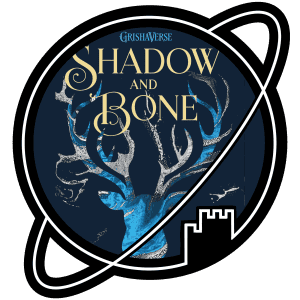
Review: Shadow and Bone – Leigh Bardugo
Alina is an orphan who serves in the Ravkan army as a cartographer. Together with her childhood friend Mal, she is sent on a ship through the Shadowfold, a rift populated by monsters. As the ship finds itself attacked by the terrifying creatures that live in the fold, Alina discovers she has a rare gift that makes her very powerful but also places a target on her back.
Review: The Graveyard Book – Neil Gaiman
Nobody Owens, Bod for short, orphaned as a toddler, grows up in a graveyard, raised by the dead in a cosy mausoleum. His vampire guardian brings him food, teaches him, and protects him from any threats from the world of the living. Though the world outside the graveyard is foreign and odd to Bod, as Bod grows up and makes friends, his urge to learn what is out there becomes difficult to resist. But he was not orphaned without motive, and he lives with the dead in the graveyard for a very good reason…

Review: A Canticle for Leibowitz – Walter M. Miller Jr.
A collection of three short stories set in a post-apocalyptic world, A Canticle for Leibowitz follows the story of the abbey of the Albertian order of Leibowitz. The monks of the order are the guardians of a collection of pre-war scientific texts that their patron saint Leibowitz saved from the chaos and anger following the so called flame deluge. As time progresses, society is rebuilt, the scientific texts are again understood, and humanity falls into old patterns.
Review: Moon – Duncan Jones
Sam Bell is nearing the end of his three-year contract as the single crew member of a mining base on the dark side of the moon. Due to an outage in the communications equipment, he has been unable to contact either his family or his employers live. With only an AI assistant for company, he feels like he is slowly going insane from loneliness. When his lunar rover crashes, however, things take a turn for the worse.