







The Paper Menagerie and Other Stories is a collection of novellas and short stories. I’m rating and reviewing the book as whole, but I’ll include a couple of lines on the separate stories below.
I have said before that I like short form fiction, because it allows writers and readers to explore themes and ideas without the investment and complications necessary for novel-length speculative fiction. I think Ted Chiang is probably the best example of that kind of storytelling I know.
So I was very interested in The Paper Menagerie, and it did not disappoint! The Paper Menagerie and Other Stories belongs on the shelf right next to Exhalation.
I was particularly impressed by the broad range of topics and genres that are included in the collection – they range from effectively fantasy, to alternate history, to historical fiction, to science fiction.
The stories in The Paper Menagerie do share a common theme: most of them, on some level, are about cultural interchange. In particular, many of them are about the experience of Chinese – or more generally, Asian – immigrants in the US. That may appear to be a strange theme for a collection of speculative fiction, but that literary theme married to interesting speculative ideas works surprisingly well.
And while The Paper Menagerie works as a collection, several of the individual stories also really stand out. Only one of the individual stories felt like a dud, and there are several that I am burning to recommend to specific people.
Overall, The Paper Menagerie is certain to delight thoughtful readers of more literary fare as well as curious readers of speculative ideas. Pick it up – I am sure there is a story in there you will remember for a long time!
The Bookmaking Habits of Select Species: 3/5. Fun thought experiments on how different alien species could be to us, through the lens of their possible writing; not the slam-dunk opener I would have gone for though!
State Change: 5/5. Really cute short story about metaphors for one’s personality having a physical shape. It takes a couple of pages to get into it, but I loved it, probably one of the best stories in the book.
The Perfect Match: 4/5. Poignant short story about algorithms deciding our lives. It overdelivers a bit at the end (surprisingly reminding me of Vigilance a bit).
Good Hunting: 4/5. More standard fantasy fare, a character driven, gaslamp-fantasy type short story about technology replacing magic.
The Literomancer: 5/5. Harrowing literary historical story about making friends across cultures and how Americans think they are saving the world, but it turns out they are not.
Simulacrum: 5/5. Very short story about how something more lifelike than a recording existing interferes with the privacy and personal lives of both the recorded person and the watcher.
The Regular: 3.5/5. Detective story, not quite novel length, very Black Mirror-esque, about the murder of an escort.
The Paper Menagerie: 3.5. The story gave its name to the book and won both the Hugo and Nebula award, but it is not the one that stuck with me most; but it is a well-written literary story, that might have speculative elements but that is not about those at all. I think that this one particular story is the one that most strongly exemplifies the through line in the book, of Chinese or Asian characters attempting to fit into a foreign world.
An Advanced Readers’ Picture Book of Comparative Cognition: 2.5/5. This one never clicked for me. It switches back and forth between descriptions of possible outlandish sentient life forms and the story of an ark launching into space. I honestly forgot it was even in the book until I made this list for the review…
The Waves: 3/5. An interesting short story about growing up, the meaning of immortality, and choices made to conserve resources on an ark ship in space, though the premise seemed a little forced to me.
Mono No Aware: 4/5. A Hugo-award winning short story, about the the peculiar culture of Japan holding strong in the face of the apocalypse, the mingling of culture on ark ships and the duty of sacrifice.
All the Flavours: 4/5. A novella, the longest story in the book. All the Flavours is about Chinese immigrants in the Old West, perfectly fitting the book’s overall themes, but it views those themes at just a bit more of a distance since we are separated by time from the characters in the book. I like that the story portrays two sides of the society the Chinese immigrated into: both the welcoming Americans that admire Chinese industriousness and food, as well as the inevitable racism of those that try to exploit them.
A Brief History of the Trans-Pacific Tunnel: 4/5. An alternate history short story that really tickled my imagination, though the plot itself is perhaps not the greatest.
The Litigation Master and the Monkey King: 3/5. A fine story about a clever lawyer and his inner monologue with a legendary figure, a couple of nice twists but not this book’s highlight.
The Man Who Ended History: A Documentary: 5/5. A great story about the geopolitics and activism in history, the emotional versus the academic side of history, and the personal attrition of a scientist that wants to do good.


Listened to the audiobook with Mark Boyett – well read.
Seldom have I read a sci-fi story that is at once so cynical and scathing and so true to life.
No, I don’t really expect TV networks to start organising mass shootings to bring ratings up. But all small elements that make up American society in Vigilance – the overt racism and sexism, the cynical appeals to patriotism, the casual audience manipulation – all resonate strongly with the kind of society that MAGA-republicans are actually on their way to creating. Bennett was writing in 2019, towards the end of the first Trump presidency, and I think he had a really good feeling for the direction the US had taken.
Especially in the first half of the story, Bennett does an amazing job of setting a great stage and defending his absolutely bonkers premise. I was sucked straight into his disgusting and fascinating dystopia.
I think Vigilance had the potential to be really good.
Unfortunately, Bennett wasn’t quite content with just a well-executed premise. Towards the end of the novella, Bennett attempts to place the story of Vigilance in a wider geopolitical context with a grand finale. I feel his conclusion takes the reader’s attention away from the Vigilance-event at the core of the book and takes it over the top to where my suspense of disbelief snapped.
I think it is a pity. I feel like that big finale wasn’t necessary to make the point Bennet was trying to make, and it detracts from the message it does send by taking the novella from unlikely but creepily familiar Black Mirror-territory to more safely impossible speculation.
Having said that, I think Vigilance is well worth your time despite its probably overambitious finish – the cynical picture of the US Bennett paints – even if it borders on caricature – is a good reminder of where the world might be heading if we don’t stand up and reject those politics.



The Years of Rice and Salt is certainly speculative, but it is also a little different from most speculative fiction that we review. We have labelled a number of the works we have reviewed ‘alternate history’, but most of those are masquerading as a fantasy world or have other speculative elements as well.
The Years of Rice and Salt is very pure alternative history in that it changes one historical circumstance – the lethality of the Black Death in Europe in the fourteenth century – and progresses history from there, in this case imagining a world ‘without’ Europe, in particular without the impact of European exploration, expansion and colonialism.
The big downside of an alternate history book that really wants to explore the impact of a single change over the centuries, is that it needs to describe those centuries and thus can’t follow the narrative of short-lived set of characters.
Robinson solves this problem by following a small cast of characters that reincarnate together into different societies at different times. They might not be the same people each time, but they share certain character traits and relationships and it allows for some semblance of continuity over a story that spans eight centuries.
Still, this is not a character-driven book but an exploration of what might be. The Years of Rice and Salt is very much a Kim Stanley Robinson book. It is dripping in research and laced with themes of the triumph of science, utopianism and rationalism. It is a book of ideas.
To be honest, that does show. The Years of Rice and Salt is well written, but it is slow going. It doesn’t suck you in the way more character-driven stories would. It relies on the reader’s curiosity to find out where history goes.
Still, some of the shorter stories that make up the book have some fun vignettes. For example, I liked the invention of the scientific method by a disgraced alchemist in Samarkand, and the accidental discovery of the Americas by drifting Chinese ships. It is these kinds of windows into what might have been that make a book like this so interesting. little windows into what might have been that make this book so interesting.
Overall, The Years of Rice and Salt is a tough book to get into. It takes commitment to get to the end and it won’t be for everyone. But I like Kim Stanley Robinson and his belief that scientist will usher us into utopia, so I enjoyed my time with it and I know many others will too.

Van Helsing… I don’t really adhere to the concept of ‘guilty pleasures’. Life’s too short to feel ashamed of things you like. However, if I had guilty pleasures, this movie would be one of them. The plot isn’t overly unique or complicated, yet at times still manages to clumsily deliver exposition. The story contains some heartfelt themes and scenes, but is paired with its fair share of truly campy writing and archetypal characters. The special effects of the many different monsters still hold up to this day, but this might not be said for other aspects of the movie… It’s a fun action movie, though, and a good homage to Gothic monsters.
It might mostly be the nostalgia talking – I was just a wee bairn when I first saw this movie, and was at the time enchanted by the fast-paced action scenes, the magic athmosphere and the melodramatic set pieces – but Van Helsing works because it’s authentic. Though the plot and the characters might have fallen flat in the wrong hands, actors like Hugh Jackman, Kate Beckinsale and Richard Roxburgh portray them with convincing fervour. Personally, I’m also still very pleased to see David Wenham in some very different role than that of a stoic man.
What does it mean to be alive? How do we decide on what is justice and what is not? These are some of the questions you may ask yourself while watching Van Helsing. Alternatively, you can just enjoy the werewolves and vampires on your screen and turn off your brain!

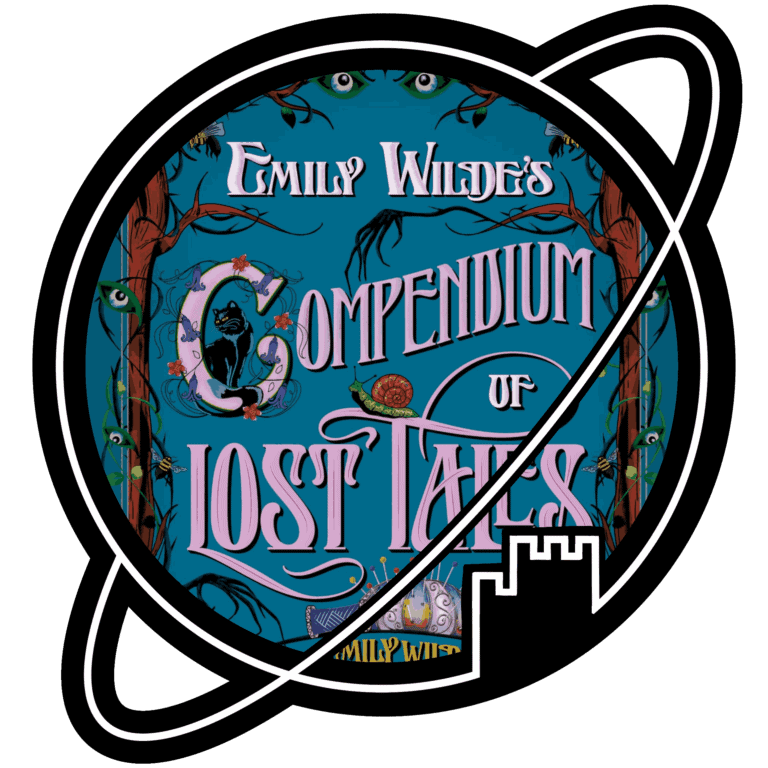
This is the third (and final?) entry in the Emily Wilde series. Finishing book two didn’t leave me, like, desperate to read the third, but I just don’t think that’s a reasonable expectation for a cosy fantasy series. This truly is one I read for the vibes.
I wasn’t obsessed with this book. Ultimately, I think the first book in the series was definitely the best.
Character wise, I wasn’t blown away. While I liked Emily as a protagonist in book one, I found myself not particularly caring for her at this point. I certainly didn’t hate her, I just felt very ambivalent about her. I also found myself enjoying Wendell a lot less this time around. There are some good side characters, but they are far and few between.
The plot once again isn’t super deep, but like I said in my reviews of the previous instalments, we’re not here for an elaborate plot. Nor do I want to nitpick about some other stuff that I didn’t really vibe with.*
Ultimately, that’s the saving grace of Emily Wilde’s Compendium of Lost Tales. It’s the third book in the series. We all know we’re mostly here for the cosy vibes. And on that count, the book delivers! Not quite as well as Encyclopedia of Faeries, but definitely enough to make this an overall enjoyable read.
*Yeah, I’ll say it. I’m tired of footnotes in fiction books. I also just finished Babel, and I don’t like it! If the information is relevant enough that I need to read it, put it in the text. If it’s not, then don’t! I keep reading these footnotes out of a sense of obligation. I GET that it makes sense for Emily as a character to include them because she’s an academic. But that doesn’t mean I want to read them.



Listened to the audiobook with Raquel Beattie, going against my own advice to read Arkady Martine on paper. I think the narrator did fine, but this novella too is just better suited to paper than audio format.
I really liked the Teixcalaan Duology so I was excited when I found a novella by Martine on my audiobook app. Unfortunately, Rose/House didn’t really work for me.
I like Martine’s atmospheric writing style, even if it tends to be a little opaque and fuzzy around the edges. Reading the Teixcalaan Duology took some brain power, but it was well worth the reward.
Rose/House is written in a very similar style, but unlike Teixcalaan, it was mostly just confusing to me.
My feeling is that the problem is the type of book that Martine was writing. Rose/House is a cyberpunk noir. We’ve seen that before – Morgan’s Altered Carbon is probably the most obvious example – and the genre can work very well.
However, for me, a core requirement of a detective story is that the plot works.
I grew up reading Agatha Christie and watching Midsummer Murders. I do not mind a convoluted story – that’s part of the fun. But I do want the ‘oh, of course!’-moment at the resolution.
I won’t spoil Rose/House for you, but suffice to say that I didn’t have that feeling at the end of the novella. The focus on atmosphere and mystery in the writing style let down the actual mystery in the plot at the core of the detective story.
Moreover, because Rose/House is quite short, I never really got invested in any of the characters, though I do think they did have potential. But if the plot isn’t doing it and the characters don’t reel me in, the atmosphere Martine creates simply doesn’t carry the novella on its own.
I think A Memory Called Empire is one of the best sci-fi books of the past decade. So a slight miss in a novella won’t put me off reading the next thing Martine puts out. But it is interesting how a style that works great for one type of story is quite frankly detrimental to another.
It has been a while since Martine has put out a longer form work, so I am really curious to see what she is working one. You can be sure that I will review it on this website!

Review: The Paper Menagerie and Other Stories – Ken Liu
What happens when a recording becomes too life-like? What happens when you can go back to actually review history, but only once? What happens when Chinese immigrants come to the States during the Gold Rush? What happens when algorithms start deciding our every choice in life? The fifteen stories in this collection focus on the role of immigrants and intermingling of cultures, especially the integration of Asians in Western society, as well as the impact of technology on our daily lives.

Review: Vigilance – Robert Jackson Bennett
In a not-too-distant future, the United States has ceded global hegemony to China. The young and bright emigrate and leave behind a society governed by fear, prejudice and gun violence. In this degenerate America, mass shootings have become an excellent marketing opportunity for advertisers.

Review: The Years of Rice and Salt – Kim Stanley Robinson
When the Black Death hits Europe, it isn’t just devastating, it flat out depopulates the continent. The world moves on. Without Europe, who will ‘discover’ the Americas and develop modern science? Who will repopulate empty Europe? Will humanity make the same mistakes it did under European hegemony? Nobody knows, but Kim Stanley Robinson is speculating and he is taking us with him.

Review: Van Helsing – Stephen Sommers
Van Helsing is a monster hunter with no memories of his early life. His current days are determined by the jobs the Church assigns to him, thankless jobs that most often leave him hated or feared by the general public. Van Helsing’s latest quarry requires him to travel to Transylvania to deal with the infamous vampire lord Dracula, in order to save the souls of a pious family. In these dark lands, he discovers a greater plot is in the works, something that might even relate to his own unknown history…

Review: Emily Wilde’s Compendium of Lost Tales – Heather Fawcett
Emily Wilde is a researcher specialising in dryadology, the study of faeries. Having previously managed to escape a faerie realm by tricking their king, she now finds herself facing a new conundrum entirely: finding her place in the realm of the faerie king she loves, and helping him defend his home.
Review: Rose/House – Arkady Martine
Rose/House is an AI, a smart home governed by an artificial intelligence. When its designer died, he left specific instructions that only one particular person be allowed to visit Rose/House, up to 7 days a year. But when the local police precinct receives a mandatory duty of care call from Rose/House informing them of a dead body on the premises, that one person allowed to visit is half the world away. This raises two questions: who is the murderer, and who is the victim?