




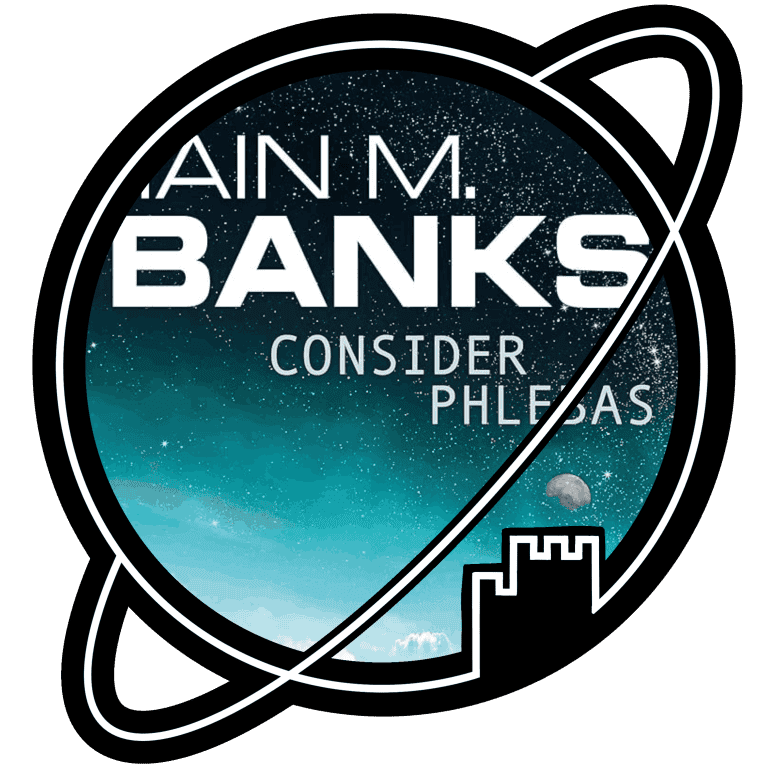

I decided to read Consider Phlebas because I have read a couple of later Culture-novels by Banks when I was in university and I think the Culture is a fascinating construct that raises all sorts of interesting questions: what do humans do in a post-scarcity society? Is it bad to be lorded over by machines if they give you Utopia? etc.
I had a vague idea that Consider Phlebas observes the Culture from the outside, and I figured that that the first instalment in the series would give us plenty of background information to help set the scene.
Unfortunately, even though Consider Phlebas has a couple of interesting peeks into the Culture, it is not really about hat society; it appears that Banks developed his ideas on the Culture throughout the series. In this first instalment, the Culture is in the hazy background instead of in focus.
Consider Phlebas is instead ‘just’ an adventure novel that earns its sci-fi chops mostly due to the potential of those interesting but half-formed ideas.
As an adventure novel, Consider Phlebas is decent but unremarkable. It took me a good while to finish Consider Phlebas, mostly because I checked out of the story a couple of times – I don’t think the rather traditional search for the McGuffin is particularly engaging.
Horza, the protagonist, goes through a series of almost episodic ordeals on his hunt for the Mind that aren’t exactly uninteresting (though one is rather gory) but that add little more than imaginative flourishes and length to the novel. The final episode ends up being rather convoluted in its detail (and, given the scale of the universe Banks created, perhaps somewhat pedestrian).
I think Consider Phlebas is saved by the easy flow of Banks’ prose and his pacing. The above description might make it appear as if the novel is boring or poorly paced; I wouldn’t say that – there is always action and there is always a clear intermediate goal Horza is working toward next.
Banks takes you with him very naturally and I think the book’s climax is a masterclass on describing quickly moving events from multiple points of view (I think there are a couple of minutes that take up 50 pages without the tension snapping).
It is mostly when taking a step back that Consider Phlebas doesn’t appear to be offering a lot. If you put it down in between episodes, there is very little to get you back in. The little tidbits of background in the appendices (which are more like and epilogue) are perhaps some of the strongest writing in the entire novel and they show that Banks’ imagination and easy prose, when coupled with a more ambitious plot, have the potential to be much more memorable than this first Culture-novel ends up being.
It pains me to rate Consider Phlebas as low as 2.5 stars, but the truth is that it I really had to put my mind to it to get through it. Perhaps I should re-read those other Culture novels and see why they stuck with me over all these years.
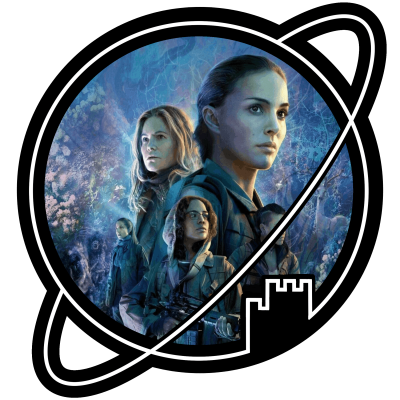

Generally, I like adaptations that stay true to the source material; too often, it appears movie or tv writers don’t really understand the story they are adapting.
In case of Annihilation, I was quite underwhelmed by the source material and I am happy that the movie was only loosely based on the book.
One of the main problems with the book (besides desperately attempting to come across as intellectual) is that it is full of mystery but never resolves any of those riddles.
I won’t say that the movie takes you by the hand exactly, but it at the very least attempts to make sense. There is a lot of meaningless technobabble (or I guess I should say, biobabble), but that is part and parcel of a Hollywood sci-fi movie. But beyond that, there is some amount of logic and recurring themes.
I think my differing reviews of Vandermeer’s novel and its movie adaptation say a lot about me and how I enjoy my media: in the end, I need the story and the world to make sense. That does not mean that they are not allowed to be surreal or out there, but the questions need to have answers, the characters need arcs, and the story needs to come full circle. As much as I might think that a lot of what Hollywood produces is absolute slop, I am clearly a child of that style of storytelling.
Besides, the tried-and-tested Hollywood formula is reused for a reason: where the book never once got me invested in the characters, the movie managed to tug on my heartstrings at least a little. In particular, Oscar Isaac made the most out of the small role he had; I think Natalie Portman had her moments.
While improving on the plot, the movie adaptation of Annihilation maintains the sense of the surreal that the book has. Moreover, the movie removes a lot of cringe and adds a layer of beauty and visual impact that drew me in in a way that the book never did.
To be honest, the surreality of the setting meant that Annihilation never really worked for me as a horror movie. No chills down my spine, no goose bumps. But the ending, while perhaps just a little confusing, was grand enough to keep me watching and the final scene was satisfying.
Annihilation is no masterpiece. It is perhaps a little action-heavy and plot-focused for my liking, but it works and is worth watching.

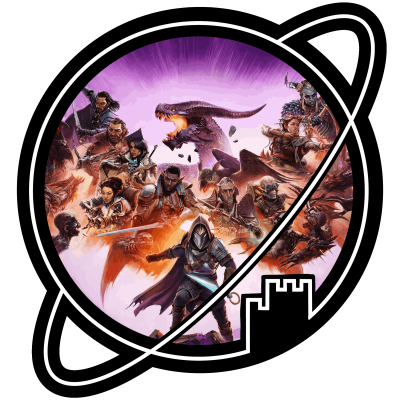

Dragon Age: The Veilguard was a long time coming. Ten long years, to be precise, with at times the very real possibility that it might never come again. And I was there during the whole wait, diligently checking the unofficial Bioware Social Network every day to see if there might be some news snippets (often finding nothing). This might seem a tad obsessive to some, but it’s the truth nonetheless. The Dragon Age games have always spoken to me on a deep personal level. Something in their DNA relates to me, something I haven’t really found in any other roleplaying games (not even Baldur’s Gate 3, even though I’ve enjoyed that game a LOT). What’s in their DNA, I hear you ask? Some thoughts I’ve lately had in regards to this – partially inspired by my spiritual care studies and some reflections by Dragon Age YouTuber Ghil Dirthalen – have led me to conclude that it might have to do with the emotional themes this series often touches upon and how they connect it to their lore and characters. Keep this in mind for later in this review.
Ten years. This is a long time to build a lot of expectations, especially if the end of Trespasser left enough of a mark on you. Dangerous things, expectations. They very easily lead to disappointments if you’re not careful. Luckily, Veilguard didn’t disappoint me. Was it different than what I had often dreamed up while I was waiting? Certainly. However, change is also very much part of Dragon Age’s essence for me. No game was ever like the one that came before it. Similarly, every game always circumvented my expectations of what the story would focus on. By now, I’ve come to expect to be surprised, my expectations challenged. And I can honestly say that (just like its prequels) Veilguard has managed to charm its way into my heart. I love it.
Before I dive too deep, let me preface the rest of my review by saying Veilguard isn’t perfect. Just like the games before it, there are thing that could have been better. For me, this pertains to some weird pacing at the start of the game – where characters also are prone to infodump worldbuilding in ways that lack elegance – as well as the rather abrupt ending. Although I’ll find a way to forgive Bioware for not planning for DLC’s for Veilguard, I really feel the game would benefit from a playable epilogue in which you can speak with your companions and allies just for a little bit. On the other hand, a decision I thought I would hate but ultimately didn’t mind too much, is the lack of choices from previous games that you can import. However, I do still hope that a next Dragon Age would find a way to include more.
In many ways, Veilguard seems the end of an era. Many lore mysteries are revealed – often confirming theories that fans had puzzled together years ago. In the case of the history of the Evanuris, the Old Gods, the Blight, the Fade and the Titans I was very excited to finally learn the answers. Furthermore, I very much liked how these answers were presented to us, through playable quests and flashbacks, memories to be thoroughly discussed with your companions and the occasional codex entry. Only in some cases, such as the lore surrounding the Forgotten Ones, I would have liked some more context. One critique I’ve seen online is that people felt the lore/worldbuilding of the earlier games was retconned. This is not a feeling I share. The lore of Dragon Age has always been presented in very subjective ways (yes, this also applies to you, Genitivi), resulting in somewhat of a challenge to try and extract what knowledge might be universally true. After recently replaying the other games, I recognised where the lore reveals built upon earlier (incompleted or warped) knowledge. I still love how these games present their worldbuilding, and I’d love to see where future games might take it next. The hooks that were presented in Veilguard (including the secret credits scene) have sparked my interest.
As for Veilguard’s writing, the plot of this game might be the most cohesive of the series yet. The protagonist, Rook, mirrors the history of one of Veilguard’s main antagonists, Solas. The overarching themes of regret and grief echo in multiple storylines and is at times deeply evoked in the choices we make and one particular plot twist that puts all that came before in Veilguard’s story in a new perspective. As mentioned earlier in this review, this is something that I can deeply appreciate. I really respect some of the writing choices that were made, though I understand they also came with controversy. Dragon Age: The Veilguard is also a story of putting aside differences to unite against a bigger threat. Moreso than in earlier games, this narrative is handled with a focus on radical hope and goodwill from all involved factions. As a result, some of the darker worldbuilding aspects of the setting are less visible than before, though we can still recognize them in environmental storytelling and codex entries.
Once again this Dragon Age installment contains some solid companions and NPC’s. Some of my personal favourites were Neve, Bellara and Taash. Unfortunately, just like in Dragon Age 2, we don’t have the ability to casually talk with them whenever we want to. Instead, they now ‘rotate’ around the player hub – a location I absolutely loved, by the way – and have conversations with eachother. At times, we can trigger cut scenes through which to know them better. Fitting for this game’s story, the companions form a very cohesive team and have little disagreements with eachother.
As can be deduced from the already insane length of this review, Dragon Age: The Veilguard is fresh on my mind. It’s something I have a lot of thoughts about. Still, to keep myself in check, I’ll share some of my remaining thoughts in manageable bullet points:
- The two main villains – Elgar’nan and Ghilan’nain – are delightful antagonists with an active presence in the narrative. They also have an intriguing dynamic.
- The combat system in this game is very different from the earlier Dragon Age games, less tactical and more fast paced. At first I was afraid I’d lack the gaming skills to enjoy this, but I quickly grew to love it (balanced difficulty) through my ranged rogue Rook. I don’t know if it’s also enjoyable on a easier or harder difficulty.
- I love how Dragon Age: The Veilguard gives you the opportunity to play as a transgender or non-binary character and I’m impressed by the reactivity the game presents to these options. This is very special. I haven’t encountered anything like this in other games and – though I hope the contrary will be true – I can’t imagine others will go to similar meaningful lengths.
- The level designs of this game are stunning. I was in awe with many of the set pieces. I especially liked the Crossroads, Rivain and Minrathous.
- Not all choices in Dragon Age: The Veilguard feel like they make very much impact. However, there are a lot of little choices you make that can have charming little consequences for background characters.
To conclude, I think Dragon Age: The Veilguard is a very solid Dragon Age game, one that I love just as much as the other Dragon Age games. I suspect it’s more friendly to new players than any Dragon Age Game until now, though I wonder if the amount of lore isn’t still very daunting. I also suspect returning fans might risk ambivalent feelings because of the legacy of the previous games and what they deem the most important traits of the Dragon Age franchise.
Like Jop, I’ve been eagerly awaiting this game for ten years. Unlike Jop, I was unfortunately NOT very excited with what we ended up getting.
Let me preface this review by saying that when you start disliking a game because of several small reason, eventually you start picking on everything. Sure, the previous games weren’t perfect either. Some of the things that started bothering me in Veilguard would probably have bothered me less if I found the game “good” overall. Out of Spite (because I actually know what Spite is, unlike some people apparently), I will be starting my review with some little things that bothered me:
- The music was bland an unmemorable. I only really remember the main theme. And why was it so electronic? This isn’t Mass Effect.
- What’s the point of having two gods when only one of them is designed well? Ghilan’nain’s design is absolutely stunning, and then there’s Elgar’nan? Who’s just some guy?
- Following up on that point, why does Mythal look like that??? Did they run out of character designers?
Tone
The tone of this game is one of my biggest issues. Previous Dragon Age games were relatively dark stories, featuring good comic relief and meaningful companion quests. All the games are relatively railroad-y, but you still felt like you got to think for yourself and make your own choices.
In Veilguard, you’re constantly taken by the hand and told what to do and what just happened (even if you were there to experience it). It’s like the game writers don’t expect you to understand the story. At a certain point a character was short with me because I hadn’t saved their home town. Instead of letting me interpret the dialogue with that character myself, the game gave me a pop up saying “X isn’t on great terms with you because you didn’t save their town”. It was obvious from the dialogue, don’t patronise me.
As many have already mentioned, the dialogue choices all feel the same. At a certain point I stopped caring what I chose, because none of my choices felt like they mattered. And my choices didn’t really matter, because everything even remotely controversial is stripped out. You can’t have a real discussion about anything. Rook’s just an enthousiastic yes-man who supports their companions in everything and never pushes back.
Rook doesn’t feel like a roleplayable character, but they’re also not distinct enough to feel like I’m playing an existing character. They’re just kinda there? Coming out of this game, I have no emotional connection to the character of Rook, despite loving all previous Dragon Age protagonists.
Characters/Romance
But who cares about the protagonist! The real stars of a Dragon Age game are the companions! Unfortunately, these were a very mixed bag for me. I really liked Bellara and Emmrich, but felt lukewarm about the rest.
I figured that at LEAST, Bioware would have made sure the romances were top tier. Unfortunately, I chose to romance Lucanis, who seemed the most interesting out of the bunch. An assassin who’s possessed by a demon? How can you mess that up? WELL, they did.
I’ve been disappointed by many men in life, but never quite as badly as I was disappointed by Lucanis.
His romance was deeply unsatisfying. Actually Lucanis was a boring character in general. His only real “thing” is that he liked coffee and unfortunately, liking coffee is not a personality trait. His “gimmick”, being possessed by a demon, had absolutely zero impact on the plot or his character arc (because he didn’t have one). WHY would they have him be possessed by a demon of spite and then never have him do anything spiteful? Like, is that just the least bad demon they could come up with? They’ve had a character be possessed by a demon before, and it actually impacted the game and the world that time! Why just rehash the same plot but do it badly?
To go back to the romace, there were very few romance-specific scenes with Lucanis. I think Rook and Lucanis kiss twice in the whole game? He never has anything to say to you. You can’t even break up with him (and I really wanted to).
Dragon Age
One big gripe I have with Veilguard, is that you encounter several locations that had a certain reputation in previous games but felt like regular places to be in this game. The Fade wasn’t anywhere near as scary and mystical as it was in Origins and Inquisition. Tevinter is supposed to be a country run by evil magisterium mages who oppress and even enslave people. In Veilguard, Tevinter was just… sort of Kirkwall but less charming? Years of build up just did not get paid off.
Many people speculate that Dragon Age: The Veilguard is meant to be a soft reboot of the series. However, I am unsure how it could serve as a soft reboot when there’s still so much lore that is confusing to new players. The inquisitor is there pretty often, and feels a lot more like a main character than Rook, because she actually KNOWS Solas. I accidentally made my inquisitor and Rook look very similar, which was confusing but mostly just super embarrassing because the inquisitor was present in quite a few important scenes.
Despite some lore from the last game being super relevant, a lot of worldbuilding is unceremoniously stripped away. For instance, why are no elves supporting the elven gods? (it’s actually because the elves are magically no longer oppressed in Veilguard)
While we’re at it: why is it called Veilguard? What was wrong with “Dreadwolf”? At least the name Dreadwolf is used regularly in the game. For the longest time I though the Veil jumpers (whatever they are, I’m still not sure) were the veilguard. I think the word gets used to refer to you and your merry band of boring friends maybe once at the end of the game.
Some of the Good Stuff
Somehow this game made me like Solas. Maybe because he’s the only character who seemed truly morally grey?
I didn’t like combat at first, but it really grew on me. I’m not a tactical player at all, so just getting to smash some buttons worked well for me. Mind you, I played the game on storyteller mode.
Bellara and Emmrich were really fun companions. Assan and Manfred were absolute highlights and being able to hug Assan and play rock paper scissors with Manfred was what got me through this game. I considered romancing Davrin purely to get more interaction with Assan (this is on brand for me as back in elementary school I used to befriend people entirely based on whether they had pets).
I really enjoyed the ending, especially the way Bellara featured in it because of the choices I made. I wish I’d felt like my choices mattered earlier in the game, but at least in the end stuff started feeling real. The final missions absolutely slap and finally have some meaningful impact. I actually cried twice during the final missions! At a certain point I thought Taash had died and I was actually relieved to find out they survived, which I wouldn’t have expected at all.
Overall, Dragon Age: The Veilguard won’t go above 2.5 stars for me. It would have been fine for a non-Dragon Age game (perhaps 3.5 stars?) but I don’t think it’s unrealistic to expect a certain level of quality after ten years. A level of quality that I personally couldn’t find in Dragon Age: The Veilguard. Luckily, I’m currently playing Baldur’s Gate 3, so I think I will recover.


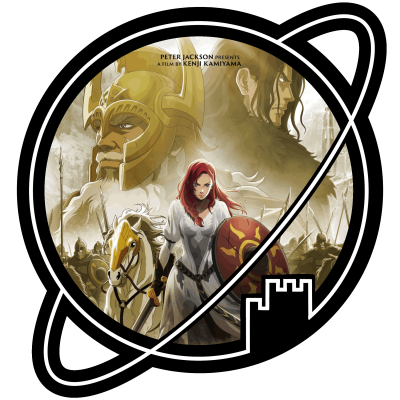

I didn’t really know what to expect going into this movie, and the first ten minutes didn’t give me a lot of confidence. They came in leaning heavily on the ‘Not like the other girls’ trope, and even worse: a villain with a facial scar. Not a good start.
It did get better after that though, and I actually found myself quite enjoying it. The story doesn’t have any major surprises, and you can see several important plot events coming from miles off. This would have been a bigger issue for me if it was a ‘new’ story, but since it is working with the original source material from Tolkien, I was able to cut it some slack and just enjoy it for what it was.
With good music and beautiful visuals, it was enough to keep me awake for the whole movie, even though it ended well after my normal bedtime. You might think that that’s a low bar to set, but I can’t say the same for most franchise adaptations I’ve seen recently!
So overall, I would say I was pleasantly surprised. Except for the use of a scar as a mark of villainy. Come on people, we can surely do better than that!
I am not usually the type of reviewer to go too much into the background of how or why a movie was made or a book was written; after all, the reader or viewer is mostly interested in the end product.
In this case, I picked up the rumour online that The War of the Rohirrim was mostly made because Warner Bros. needed to release a Lord of the Rings-movie to retain the movie rights to the franchise.
Don’t quote me on this, I couldn’t tell you what deal they made with the rights holders. But it would make a certain amount of sense. Because walking out of The War of the Rohirrim, I did scratch my head wondering why this movie was made.
Before I dive into this, I want to say that I enjoyed my night watching this movie – honestly, it was mostly a relief that The War of the Rohirrim was not particularly bad. Lately, it feels like big franchises are squandering their name left and right, and The Lord of the Rings is among them. Against that backdrop, I’ll chalk up any entry that is at least decent as a win.
However, The War of the Rohirrim is neither original in its story nor in its design. It is based on just over two pages in Appendix A of The Return of the King, and mostly follows the traditional story Tolkien set out in broad strokes there.
The adaptation does deviate on a fair few of the sparse details that Tolkien does give, however. While some of the changes were clearly made to accommodate the new female protagonist, I do wonder why others were made. I would have especially appreciated it if they could have included more of the few lines of speech Tolkien gives Helm on those pages.
Moreover, if the creators of The War of the Rohirrim were going to deviate from Tolkien, they might haven taken the opportunity to add a couple of fresh takes and interesting details to flesh out the story and move off the beaten track just a little.
As it stands, it the story is a very generic tale of adventure with more action scenes than character development that probably would have been entirely forgettable if it had not been part of a larger franchise.
Perhaps The War of the Rohirrim’s most subversive moments were also its weakest. The movie does have a serious dose of Tolkien’s gravitas, but the anime style got the better of the creators on at least a few occasions: this movie features a Watcher in the Water eating a Mumak. I know.
That scene is a clear example of one the issues haunting the Lord of the Rings-franchise: all new things need to remind the viewer of Jackson’s trilogy (looking at you, Rings of Power). Another particularly clear example would be Meduseld, the Golden Hall of the kings of Rohan – even though (slight spoiler alert) it burns down halfway through the movie, it looks exactly like the one we see in the Jackson trilogy right from the start. I feel like it might have been a nice nod if it started different and was rebuilt in the style we know, but apparently it had to be recognisable all the way through.
While I love the Jackson trilogy and appreciate that The War of the Rohirrim, despite being an anime, has squarely placed itself in the same universe, I think it is clear that all the heavy lifting was already done by Jackson and Weta Workshop.
As a result, this movie feels a little like a fan fic: a not-like-the-other-girls warrior princess protagonist, and a mostly unoriginal story leaning heavily on the existing imagery established by its predecessors.
To reiterate a previous point: The War of the Rohirrim is not bad and made for an enjoyable night – but it is mostly just a mid adventure movie with a Lord of the Rings-sauce. You decide whether that is worth watching.
If there was something on my list of things that I didn’t expect to ever witness, I’d say it was an anime movie on Helm Hammerhand and his daughter. Even after Peter shared the news with me, the upcoming release of this movie was hard for my brain to internalize. And then, suddenly, it was here!
It’s strange to be a Tolkien fan in these recent years. There is more content than ever, but – as, for example, Rings of Power has eventually proven to me after I failed to finish its second season – it seems to be pretty hard to capture Tolkien’s magic in Middle-Earth adaptations.
As such, I was unwilling to form expectations in regards to The War of the Rohirrim. When it arrived, I had to see it though. That’s how it goes, and everybody knows…(once again many thanks to Leonard Cohen and his ever applicable lyrics).
Since I’ve read all the appendices of The Lord of the Rings as a child, the legend of Helm Hammerhand was one of the stories that really stayed with me, if simply for two very iconic scenes with Helm the legend himself. As such, when I heard of the premise of this movie, I thought it made sense they had chosen this aspect of the lore to focus on.
When I learned the protagonist would be Helm’s daughter (unnamed in the source material), I was intrigued. It seemed a clever way to explore the legend of Helm Hammerhand – as well as the life of a woman in Middle-Earth – without the danger of completely demystifying some of the more magic elements of the original story. Additionaly, telling the story in a frame narrative (with Miranda Otto as Éowyn recounting oral history) really helps to keep this legendary feel intact.
I would say The War of the Rohirrim contains a decent plot, but it’s strongest points are without exception the scenes directly taken from Tolkien’s writings. Everything the writers of this movie have invented to link Tolkien’s scenes together, however, range from common tropes and archetypes at best to mental exercises that require some solid suspension of disbelieve to make much sense at worst.
Tropes and archeypes aren’t bad per se, of course, but in the case of The War of the Rohirrim, I at times felt they undermined the strength of Tolkien’s world – cheap and unnecessary references to The Lord of the Rings-movies were not the way to save this, by the way. Admittedly, I don’t have enough experience with anime to confidently say what choices in the narrative were made to accommodate that format/genre.
All in all – apart from some eye-rolling moments I joyfully shared with Robin – I will say I’m glad The War of the Rohirrim exists. It was thrilling to hear Rohan’s iconic soundtrack again, the animation was pleasant to look at and the voice-actors did a great job in bringing the characters to life. Also, as an inhabitant of the Netherlands, I could appreciate Lief was really ‘lief’. Sometimes, it’s the little things in life.


Listened to the audiobook with Carolyn McCormick. I feel she was perhaps part of why I didn’t like this book at all; quite often she didn’t really get the stresses right in her sentences, which didn’t work that well for the type of book Annihilation is.
I had a feeling I wasn’t going to like Annihilation, but after it was ceaselessly recommended to me by the audiobook app for years, I eventually caved.
I regret that lack of spine.
Annihilation is weird and surreal. Vandermeer leans into that: he doesn’t do a whole lot of worldbuilding, but just drops you straight into the action, leaving pretty much every aspect of the world mysterious.
That could be an exciting way to start a novel, but the problem is that Annihilation feels like an empty book. Borrowing a metaphor from George R.R. Martin, Annihilation very much feels like a heap of ice on a raft: from a distance it looks like an iceberg with a tonne of ice below the surface, but actually there is nothing there.
The mysteries keep building, but they never get resolved. To be fair, I never got the feeling that Vandermeer intended to resolve his mysteries. But that meant I was not the least bit invested in them. It felt like anything could happen at any time, and there were no rules and logic to the world. As a result, I just checked out of the story.
I don’t think that Vandermeer doesn’t have potential. For a book in which so little actually happens, Annihilation is nicely paced. I liked the flashback structure building up the protagonist’s character and some of the world. I liked some of the more minimalist choices Vandermeer made (for example, his decision not to name any characters). But despite all that, I felt like I just didn’t get what was supposed to make Annihilation good.
I usually write my review before going online and seeing what others think about a book. Indeed there are absolutely lyrical reviews of Annihilation online, people who read through the book crying in a single sitting.
I admit I raised an eyebrow at that, but I do understand that that is what Vandermeer was probably trying to achieve. I feel that Annihilation relies heavily on atmosphere and emotion to carry the reader through long passages of what is essentially really simple things happening.
I, however, never got into the atmosphere or emotion because of Vandermeer’s pretentious style. I am probably being a bit harsh here, but I sometimes felt like Annihilation was written by 14-year-old with a thesaurus next to his keyboard. There were whole passages that were probably meant to evoke emotions and elevate the story to a literary level, but felt more like a meaningless soup of big words strung together to me.
As a result, there wasn’t really a lot for me to take away from this book. Unfortunately, to me, the best thing about Annihiliation is that it doesn’t last very long.
The ending of this book is pretty open, but I won’t be spending my time on the next instalments in the Southern Reach-trilogy. Perhaps I’ll read a couple of summaries online to see how the mysteries wind up. Maybe I’ll watch the movie adaptation to see if it succeeds at building atmosphere any better than the book.
In conclusion, I think Annihilation is going to be pretty divisive, but there is a relatively simple test: read a couple of pages, and if the prose is to your liking, you might be sucked in and enjoy the book. If you get annoyed by the unnecessary use of sophisticated synonyms… you’d better try something else instead.



Review: Consider Phlebas – Iain M. Banks
In a galaxy-spanning conflict between the Culture, a post-scarcity human civilisation, and the Idirans, an empire of proud, reptilian three-legged warrior giants, one of the Culture’s artificial super Minds is nearly destroyed and hides on the forbidden planet of Schar’s World. Both the Culture and the Idirans send their agents after it. Bora Horza Gobuchul, a shape-Changer, is hunting the Mind on behalf of the Idirans – but it is a long way to Schar’s world in a war-torn galaxy, and his Culuture nemesis Perosteck Balveda, is on his heels…

Review: Renegade Nell – Sally Wainwright
Nell Jackson, previously assumed dead, returns home to reconnect with her family. Here she’ll soon discover the dark powers that are at work in England, as well as the mystery of her own powers that make her almost invincible.
Review: Annihilation – Alex Garland
Lena is a professor of cellular biology with a past in the army. When her husband leaves on a mysterious mission and doesn’t come back, she is heartbroken. But when he suddenly reappears, her life takes a turn and she, too, is dragged into the exploration of the Shimmer, a mysterious and slowly growing phenomenon from which no expedition has previously returned.
Review: Dragon Age: The Veilguard – Bioware
A long search for the Dreadwolf culminates in the accidental release of Elven Gods Elgar’nan and Ghilan’nain from their ancient prison. You are Rook, a nobody who finds themselves leading a band of adventurers called the Veilguard, tasked with stopping the elven gods, and preventing the dreadwolf from tearing down the veil.
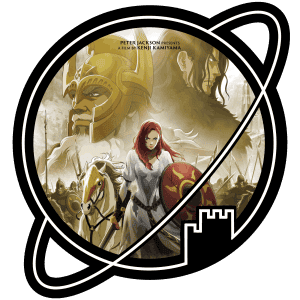
Review: The War of the Rohirrim – Kenji Kamiyama
200 years before the War of the Rings and the other events of the Lord of the Rings, Helm, king of Rohan, slew a Dunlending lord who sought a marriage between his son Wulf and Helm’s daughter Hera. In the ensuing war between the Rohirrim and the Dunlendings, not just Helm but also his daughter Hera will make a name for themselves that will go down in history.

Review: Annihilation – Jeff Vandermeer
A biologist is part of the 12th mission to discover the secrets of the mysterious Area X, an abandoned and poorly documented zone now overtaken by wilderness. From the moment she wakes up from the trance necessary to cross the mysterious border, the seemingly tranquil Area X feels oppressive. Tension between the mission member rise as they discover an unmapped feature: an underground structure with mysterious writing on the wall…