




Listened to the audiobook with Maarten Westra Hoekzema – honestly a terrible reading, constantly missing emphasis and sentence structure. Felt like a poorly conditioned AI – I recommend reading on paper instead.
We’ve discussed before that the speculative genre is not particularly well developed in Dutch language literature, so when a Dutch sci-fi book hits the mainstream, I jump.
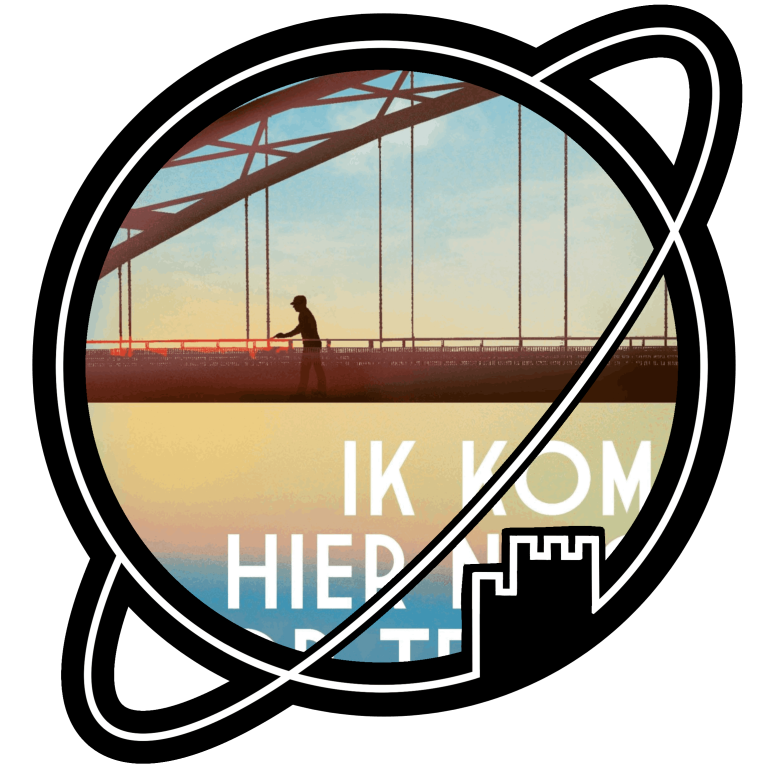
Ik kom hier nog op terug (’I’ll get back to this’) is typical of Dutch ‘genre’ literature in that it rubs up against ‘regular’ big-L Literature in many ways, including themes and conventions of style. It feels a lot more like magical realism than it does sci-fi. What distinguishes it from proper Dutch Literature is that it is neither about (i) the Second World War; (ii) how colonising Indonesia made Dutch people Sad™ nor (iii) sex, which is a welcome relief.
Still, it takes half the book for the first elements of sci-fi to appear. The start of the novel is frankly indistinguishable from traditional Dutch high brow Literature, with the exception that at some point Van Essen gives us a throwaway line that ‘he’ll get to the stuff about the time machine’. I’d argue that that seems like a pretty cheap way to keep your reader engaged, but it worked on me, so I’ll keep my mouth shut.
While the initial section of the novel is important for the plot going forward, it is slow and I really had to struggle through. The pace picks up a bit at about the 1/3rd mark of the book when we get to the protagonist’s adult life, but the novel is always going to remain a slow burn.
It is difficult to say much more about the story without giving away the mysteries that form the core of the novel, but once the ball got rolling on the main narrative, I happily returned to see it through and get some answers.
I felt the book ultimately fizzled a bit when the answers turned out to be few and far between (though I understand that that is, to some extent, the point). On the other hand, I think it is typical of the kind of book that Van Essen is writing that we’re focusing on the characters as opposed to the plot. The mystery is just a device to get us to think about certain questions, and we have to give it to Van Essen that the questions he poses are more than adequate to keep the reader involved.
The result of the mysteries sort of ‘hanging around’ for most of the book and the protagonists at some point mostly disengaging with them is that Ik kom hier nog op terug has a surreal vibe. The novel is also very clearly nostalgic for having studied in the 80s in Amsterdam, which I didn’t (big surprise: I wasn’t born yet), which might have added to that surreal feeling for me.
I think Ik kom hier nog op terug sits at an interesting, but difficult intersection: perhaps a bit too speculative for the reader of Literature, perhaps too literate for the fan of the genre.
Personally, I liked Ik kom hier nog op terug well enough as a sci-fi fan, though ultimately I probably wouldn’t call it a sci-fi novel. Ik kom hier nog op terug is not about the effect of possible future events or inventions on human society, but about the long term effects of seemingly innocuous choices on individuals, and whether these are things we (should) regret. The time machine in the novel only exists to make that question more tangible. As a result, I felt Van Essen didn’t really attempt to engage with the broader sci-fi genre, other than referencing H.G. Wells’ The Time Machine and its 1960 movie adaptation. This feeling was rather reinforced when he mixed up steampunk and cyberpunk in a throwaway line of dialogue.
In conclusion then, Ik kom hier nog op terug is well worth the read, but don’t trust the librarians and booksellers that file it under the science-fiction section!



Listened to the audiobook with William Dufris – the narrator was not the problem.
Oof, sometimes you decide to try out something new (”that’s a Hugo nominee, what’s the worst that could happen?”), and then this happens. Old Man’s War was definitely not for me.
I could list quite a few things I disliked – like the plot really only getting rolling in the final quarter of the book, or the completely unearned Marty Stu-ness and paper-thin character of the protagonist.
I could bring up that whenever the protagonist runs into a challenge or a possible antagonist, they are simply removed a couple of pages on.
I could mention that whatever is happening is constantly interspersed with lots of long combat scenes that are completely tensionless and are just no fun to read – Old Man’s War feels like a 14-year-old having a power fantasy while playing a shooter video game.
I could bring up that Old Man’s War seems to be glorifying violence (or attempting to make violence funny?).
I might wonder why this novel’s attempts at humour constantly fall flat (though I might have the answer which is that I just don’t find alien gut splattering the pages laughable).
I could continue, but I think I got my point across.
Old Man’s War got under my skin in more than one way, but perhaps the most frustrating is that it forgets its premise about a third of the way in – the novel starts with some mystery on how old folks will be fit to fight a war – but once that mystery gets resolved, the fact that the characters are supposedly all 75 years old stops playing any role in the story. That’s frustrating, but it is especially annoying because of the book’s title, which makes it at least appear as though it would matter.
Overall, the novels just drips in poor sci-fi B-movie energy.
Old Man’s War felt like Heinlein’s Starship Troopers, but without any of the originality or the (admittedly, deeply problematic but still) philosophy;
It felt like Paul Verhoeven’s Starship Troopers movie adaptation without any of the irony;
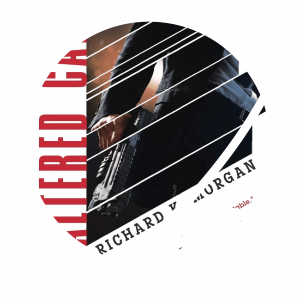
It felt like Richard Morgan’s Altered Carbon without any of the thought spent on any of the implications of the possibilities introduced by the sci-fi elements of the plot;
It even felt like Warhammer 40.000 without any of the shameless over the top grimdark bullshit that makes that setting compelling.
In short: Old Man’s War just felt extremely derivative, a rehash of old tropes with nothing new to add – and neither the plot nor the characters can save it since those, too, are unoriginal in the extreme.
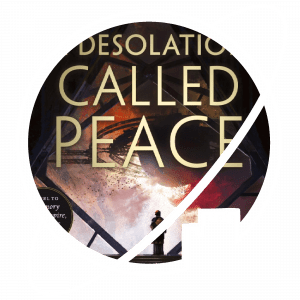
Looking at some of Scalzi’s other writing, I see a couple of satirical takes on well-worn sci-fi tropes. I’ve seen people online argue that Old Man’s War somehow satirises Starship Troopers. Perhaps I’m not smart enough to get it, but I don’t get how taking a trope, playing it straight, but removing the (again, admittedly sometimes icky) philosophy is satire. But perhaps more importantly, that has also already been done: the Paul Verhoeven movie adaptation of Starship Troopers exists (and existed at the time Old Man’s War was written) and it does not feel that dissimilar, just a lot more scathing.
I disliked Old Man’s War rather badly, so I’m not continuing the trilogy – but I am still open to giving Scalzi another shot. Perhaps I should find something that is more explicitely a satire and see if that works for me?


This review relates to the first season only
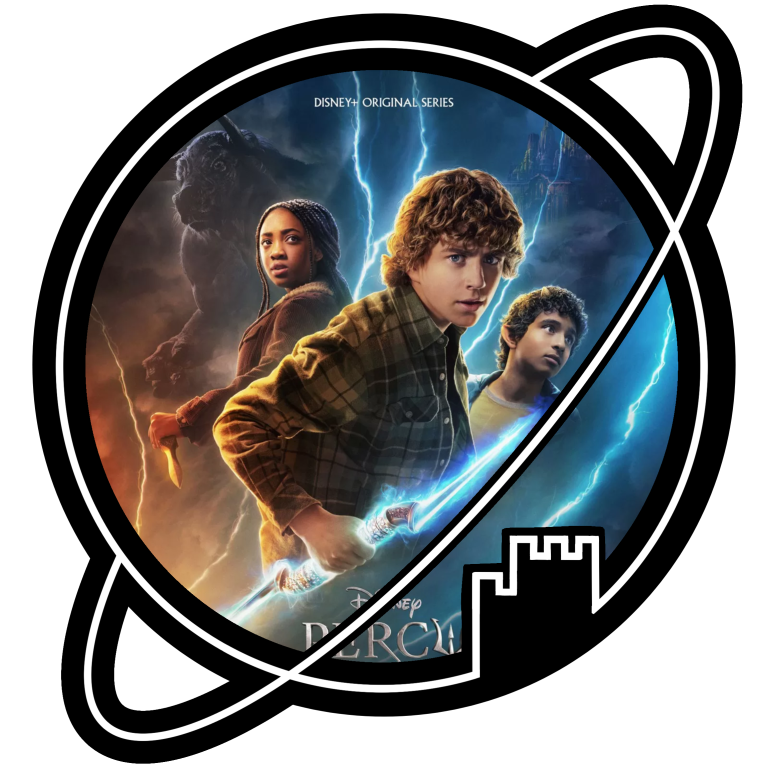
There wasn’t much thought behind Jasmijn and me watching Percy Jackson and the Olympians. I was aware that Rick Riordan’s books are very popular, and – despite the bad movie adaptations some ten years back – I hadn’t seen any fuss about this latest adaptation. So when we were looking for something new to watch, this seemed like a good enough reason to discover what this franchise was about. Also, ancient Greek mythology is neat.
By the Muses, this show did not disappoint me. In fact, I liked it even more than I dared to hope in the best of circumstances. Though I thought the first episode was just okay, the episodes thereafter had me hooked every time. Everything just clicks: the pacing, the humour, the incredible acting (both from young and experienced actors), the insane production value.
Let’s elaborate on that last point. Clearly, there’s a lot of money in this show. In fantasy/science fiction productions this often means that everything is enhanced with CGI that’s barely convincible. However, Percy Jackson and the Olympians used this money to create incredible set pieces and props, with the CGI mostly in a supporting role. The highlights for me were probably the few mythological creatures that show up throughout the series.
The cast and crew were clearly driven while filming this series. I think it helped that Rick Riordan was also very involved with the production. There is – what I would like to call – ‘soul’. Rick Riordan once started writing his books to help his son feel better about his ADHD and dyslexia. It’s at its core a story about accepting each other’s differences and recognizing the strength in this diversity. Growing into your own and daring to question why people do things as they have always been done. Strong themes, that all those involved seem to clearly understand. Another relatable subject for some: the challenges that can come with family. And as we all know, the Greek gods are an excellent example of great family dynamics.
The main argument I can think of to dislike Percy Jackson and the Olympians, is when one doesn’t like watching younger actors and a story that’s also aimed at a younger audience (and thus all the effects this has on the storytelling choices). The acting skills of the three main actors are excellent though, and their dynamics are fun to watch.
For those who tend to get attached to the same actors as I; I was pleasantly surprised by the appearance of Toby Stephens, Lin-Manuel Miranda , Lance Reddick (who recently passed away, tragically), and Timothy Omundson. I also really liked Adam Copeland and his portrayal of Ares. Gods are cool.

Listened to the audiobook with Greg Wagland – good narrator.
Borderline 2.5/3 star review.
When I set out to write this review, I had an idea in the back of my mind to comment on the difficulty of translating 1950’s science fiction, which was often serialised and published in magazines (see for example, Foundation), to the modern reader, who expects coherent novel-length stories.
You may imagine my surprise when I found out that Childhood’s End was (mostly) published as a single novel, with (most) of the discontinuities of the stories a feature rather than a bug.
Whether intended or not, I found Childhood’s End a rather disjointed novel. It contains several only superficially connected themes, plotlines and characters, each vying for the reader’s attention. As a result, I felt none of the themes, none of the plotlines and none of the characters got the attention they really deserved. I didn’t dislike any of them – each of the lines is individually interesting – but there was just not enough space to go around.
That is a pity, because the themes are good. I was particularly drawn in by the question of how humanity might change after first contact if the aliens stuck around to babysit us. Clarke’s vision – of vanishing ambition and disappearing artistic and intellectual merit – is very interesting, but I don’t feel like Clarke really delved into it. Childhood’s End presents the idea but never gets the emotional impact across because the novel is much to busy grappling with everything else it wants to show. That sense of missed opportunity was illustrative for the novel as a whole.
Admittedly, Childhood’s End is an ambitious and imaginative novel and I think Clarke deserves praise for trying to tackle a number of interesting themes. Still, I can’t shake the feeling Childhood’s End would have been better of as a three separate stand alone novels.
I want to add that Clarke was surprisingly accurate with several of his predictions, foreseeing the space race between the US and USSR (even though he misjudged the timing) and critiquing a society that was so flooded with entertainment that people had up to three (!) hours of screen time a day. These kinds of gems never fail to bring a smile to your face and these types of revelations alone make reading science fiction from the Golden Age worth it for me.
Whether Childhood’s End is worth your time depends on what you want from your novels – it is not a streamlined or thematically coherent novel that modern publishers would sell. If you want to read Clarke and that is what you’re looking for, The Sands of Mars is a much better fit. But Childhood’s End is brimming with interesting ideas. It is well-written and well enough paced that it never gets boring – and exactly because it would never see print in the 2020s, it might be fun to give it a shot.

This book was a ‘slow burner’ for me. It wasn’t one of those books that you finish almost in one sitting because you cannot put it down, but weeks and even months after finishing it, this story still regularly pops up in my mind without warning.
The drama is portrayed on a very human level, zooming in on the domestic. You find out about what is going on in the wider world mostly though the consequences that it has for the daily lives of the main characters, but you don’t find out much beyond that. The characters are not necessarily all that likable, and their decisions are at times very frustrating. But because of that they are all the more realistic.
The book isn’t some epic thriller with lots of action, but I think that made it only more terrifying. Slowly but steadily you are being led from a familiar world to one that is completely unrecognizable. It slowly leads you along, until, like Eilish, you realise that it might already be too late. Moreover, this book does not offer you the consolation that it is ‘only a story’: part of the terror is that this is the daily reality of so many people around the world.
The ‘regime’ in this book is faceless and untouchable. There’s no evil dictator, and you don’t get to know the names of any of the major leaders. There is also no clear religious, political or otherwise ideological motive for their actions, except for the universal hunger for power and control. This heightens the sense of powerlessness that you feel while reading this book: you can vividly feel Eilish’s immense frustration and anger, but above all her fear that anything she does will bring harm to her children. The decision not to give the regime a face or an ideological background makes sense, because this book is not about those in power. It’s about the terrible choices that people have to make in the face of violence that is inflicted upon them by forces outside of their control.
While reading, you cannot stop wondering: what would I have done? I hope I will never have to find out the answer.