




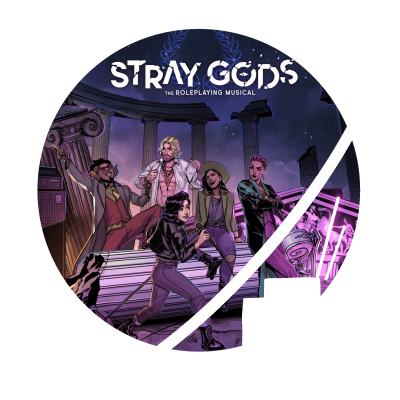

I’ve had my eyes on Stray Gods: The Roleplaying Musical since it was still in its early kickstarter days. Being a big fan of Bioware, Telltale Games and musicals in general, the fundamental idea behind a musical choice matters roleplaying game was already more than enough to spark my interest. The fact that it would revolve around Greek mythology with Laura Bailey voicing the main character was honestly just the cherry on top. There was no doubt I would play this game when it would finally release.
At the time of writing this review, a few weeks after my first (and as for now only) playthrough, I find myself still haunted by the story and its characters. Ironically, despite my initial excitement, this is not something I expected this game to evoke in me. Though I’ve loved Greek mythology since my early primary school years, I tend to be very critical of reinterpretations and retellings of these ancient stories. There’s a lot of them out there, and more often than not they are lacking creativity. It’s hard to take these well-known story beats and archetypes and craft something original with them. Admittedly, reimagining (Greek) gods in a modern day urban setting already helps with circumventing expectations. Still, I went into Stray Gods thinking the Greek mythology would more be flavour than anything else. I was wrong.
Though the main plot is a murder mystery with a rather predictable perpetrator, most of the side plots touch upon sensitive themes involving grief, trauma, regret and resentment. As you might expect from immortal beings, a lot of the gods and creatures you meet are stuck in the past. As Grace you have the chance to help them find a new way forward. The writers didn’t shy away from controversial subject matters, and they handled it with grace (pun somewhat intended). Additionally, the worldbuilding explaining how the gods ended up where they are now had me intrigued. I suspect much of the created lore didn’t make it into the game, but hopefully it will find a way to us in the future. I have many questions.
As for the game mechanics, these are fairly simple. The gameplay is a mix between a visual novel (pleasant art with minimal animation) and a Bioware dialogue wheel. In the beginning you choose one of three character traits for Grace, and this chosen trait will unlock specific extra dialogue options. During musical acts there’s a timer for your choices, but you can easily turn this mechanic off.
Speaking of Stray Gods‘ unique selling point, I was very pleased with the variable songs. The first time I saw the mechanic in action, I was squealing with delight (truth be told, Khary Payton’s suave performance also didn’t help). Each song gives you several opportunities to influence the direction it’s taking. Similar to the three personality traits Grace can have, there are three “vibes” you can choose for the songs. Though sticking to a specific vibe results in a cohesive song, it’s entirely possible to mix things up. During my playthrough, I mostly chose a combination of vibes per song and I didn’t feel like this had a negative impact on my experience. In fact, since then I’ve listened to the four different albums on Spotify and I’ve come to the conclusion that some lyrics only come up when you use certain combinations. In other words, you’ll need to replay Stray Gods a LOT if you want to hear every possible song. Though some songs could have used more polishing, there are some living in my head rent free. Also, there were some (musical) jokes I could greatly appreciate.
One thing that could use some improvement is the sound mixing during dialogues. Some characters are much louder than others, while others were hardly audible. If this were to be fixed, I would immediately change my rating to four and a half stars.
Oh, I almost forgot to mention there are four romance options in this game! Well, I neglected all the ancient Greek gods and their emotional shenanigans and romanced Freddie. Then I cried. Loved it.

This review relates to season 1
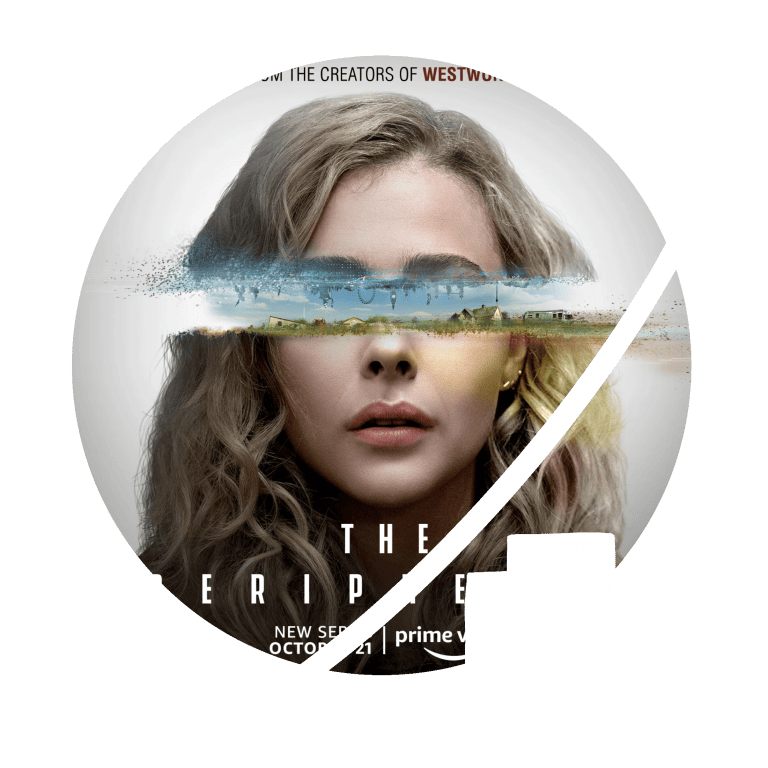
While I enjoyed watching The Peripheral, this is another tough review to write because I felt there is a big quality difference between the different elements that came together to make the show.
As I wrote in my review of the Gibson novel that The Peripheral is based on, the novel’s universe is an interesting synthesis of several science fiction ideas, though the plot is perhaps a bit thin. In this case, I think it makes a lot of sense that show creator and writer Scott Smith took the novel’s storyline as inspiration rather than gospel.
Unfortunately, the additions and embellishments to Gibson’s story are hit and miss. Some additions add a lot to the story – particularly, the expansion of Flynne’s world and the attention given to Netherton’s childhood. But others appear to be included mostly to create opportunities for action scenes, or to fit into the pattern of the Game-of-Thronesifying of television: the need to have ‘complex’ politics, betrayals, subversions, alliances, etc. I think that element of the rewrite is overambitious, and I have trouble buying into the villain Smith introduced.
This paragraph might contain a couple of slight spoilers – but I think the biggest ‘miss’ in the television adaptation of The Peripheral is how the rewrite changes the ‘power dynamic’ between the ‘real world’ and the stub, and the perception of the stub of the main characters. In the book, the ‘future’ characters – including the ‘good guys’ – happily rewrite the entire history of the stub because of a criminal investigation in their own world. In the series however, the stub and characters in it are taken much more seriously, treated like ‘real people’ in a way that the book simply doesn’t. I think that is an element of social commentary that made the novel fascinating that simply got lost in translation.
But like I hinted at, while the story and sci fi are decent, this adaptation of The Peripheral is very much about the visuals and action sequences. The visuals are good – I love the merger of near future technologies with a very grounded background, and the production value is great. I don’t generally watch TV for the action sequences, but the fight scenes in The Peripheral really pop. I’m sure Chloe Moretz did a lot of training to get all the choreography down.
I think I am mostly a little disappointed because the novel has a lot of potential that didn’t make it onto the screen. Some of the adaptational choices show that Smith recognised that potential, but I feel like he unfortunately failed to tap into it. Overall, a relatively weak three star rating – I didn’t mind watching, but if you can stomach a bit of 18+ television, I would recommend something like Altered Carbon instead.
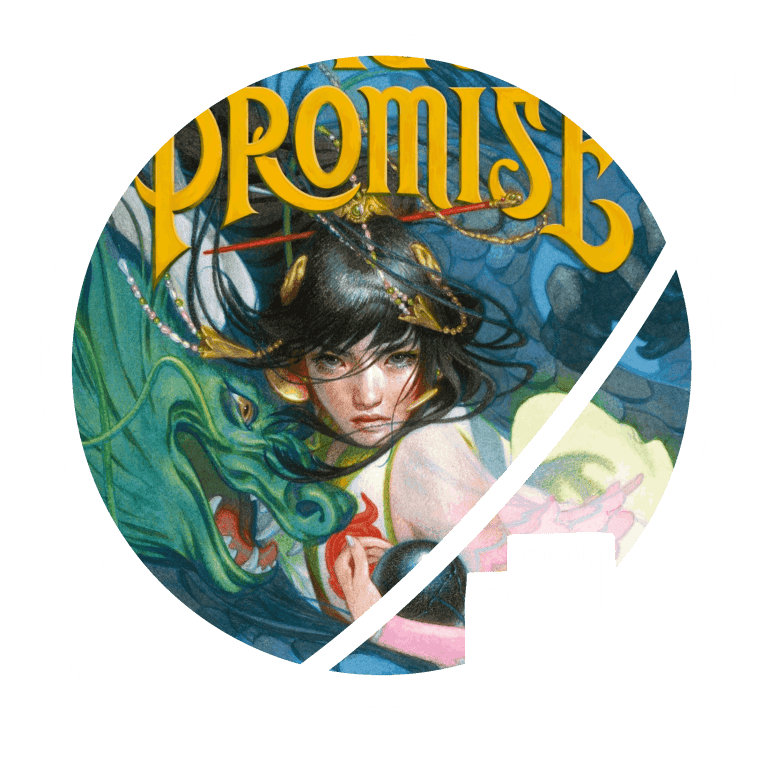

I recently read Six Crimson Cranes by the same author. This is the sequel to that book, and to be fully honest, I wouldn’t have purchased it if I hadn’t accidentally bought this one first without knowing it was a sequel.
As I stated in my review of Six Crimson Cranes, Lim’s work is perhaps just not for me.
Shiori as a main character is still not very interesting to me, and the same goes for pretty much all the other characters in this book. The first couple of chapters, which take place in the Dragon realm under the sea, start off promisingly. Unfortunately, these chapters have very little to do with the rest of the book. A wildly unnecessary love triangle is implied, but fortunately not delivered on. I stated in my previous review that Seryu would become relevant in this book, which to be fair was an assumption on my part. Past page 150 he’s basically gone again, which is unfortunate because he occasionally does threaten to be interesting.
The plot of The Dragon’s Promise is very convoluted and I would honestly struggle to summarise it. I didn’t find myself wanting to find out how it would end at all.
Overall, if you really loved Six Crimson Cranes then you’ll probably enjoy The Dragon’s Promise. As I didn’t care very much for book one, I suppose it makes sense that the sequel doesn’t really do it for me either.
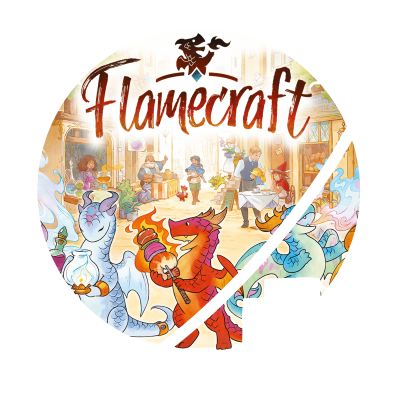

Jasmijn and I stumbled upon the deluxe edition of this game at a Dutch Comic Con, and decided to buy it on a whim because of the cute art and the bag of ‘gold’ coins that came with it. Luckily, this is one of our best impulse purchases ever.
All in all, Flamecraft isn’t a very complicated game. You and your fellow players gather dragons and various resources in order to upgrade the different shops in town, vying for the love of the townspeople. The player with the best reputation at the end of the game wins. That’s it. Though the game is technically competitive, you’re mostly focused on your own plays and can’t really sabotage other players. In fact, you’ll have more chance being rewarded for helping other players. I really love this, and it perfectly suits Flamecraft’s feel.
Despite the simplicity of the game mechanics, there is enough variability in shops, dragons and enchantments to make every game feel different. Additionally, this game has extra rules to spice things up or to play it solo.
In summary, I love this game. Frankly, I wish I could live in this magical town full of happy and wonderfully diverse people. Every time I play Flamecraft, I immediately start to relax and smile at the art. It’s just so comfortable and sweet. Especially a recommendation for people who love cozy fantasy.

Listened to the audiobook with Katie Leung – I liked her characterisations and accents, but she really dropped off at the end of her sentences so I had to listen a little louder than usual.
It has become a bit of a meme among our curators that I often feel “this book could have been written in fewer words”, which is often mostly a reference to what I feel is a relatively weak editor (or perhaps an author not listening to them): too much words spent on tangents, too few darlings killed.
In this case, I feel like this book could have been written in fewer words because when I finished it, I couldn’t shake the impression that it should probably have been a novella or even a short story.
Let’s take a few steps back. William Gibson is a master of science fiction, best known for Neuromancer, which is one of the most influential works in all of science fiction and spawned the genre of cyberpunk all on its own. Neuromancer, as well as Gibson’s other works, show that his sci-fi is centred around out-of-the-box ideas – technological concepts that are not that implausible but that are new. Given how derivative the speculative genres can sometimes be, Gibson’s original concepts can be really refreshing.
Interestingly, many of the more technological concepts of The Peripheral aren’t that new (ironically, that’s new for Gibson!). We’ve seen video game alternative universes in the likes of Ready Player One and The Three Body Problem, and we’ve seen transfer-of-consciousness technology in the likes of Altered Carbon (or, if you prefer watching over reading, Altered Carbon). And while Gibson does a great job of integrating these elements into The Peripheral, I feel the real innovation is perhaps not so much the technology but rather the society around it (as well as the weird philosophical implications of – slight spoiler alert – time travel and simulation theory). Gibson is really good at triggering the imagination with a few throwaway lines, and the reconstructed pet thylacines one of the characters owns are a great example of that. It’s tough to describe without giving too much away, but Gibson’s pre- and post-apocalypse are surprisingly real in a surreal way.
The Peripheral is let down by its plot, however. It just feels like… not enough happens for a 14 hour audiobook. It’s all just a little to simple – only barely enough framework to carry the worldbuilding. It is a pity, because I would have loved to read more about the world. I feel like Gibson would have been better off writing a number of short stories in this world, exploring the different possibilities of the transfer-of-consciousness technology and the existence of – spoiler alert – multiple timelines. It would, for example, have been fascinating to get a view from the bad guys’ perspective in this book.
So, where does that leave The Peripheral? It is not a bad book by a long shot, but I feel there is a lot of unrealised potential. Perhaps a bit of a weird critique. I have no trouble recommending it, but it could have been a five star.
Luckily, people have caught onto that. Gibson has written another book in the same world, Agency, which I am looking forward to getting my hands on. And I have also seen that The Peripheral has been made into a TV series, and I actually think that is a brilliant idea – I think the relatively simple plot will translate to the screen very well, and I’d love to get well-done visuals on some of Gibson’s descriptions. So I’m putting that on my to watch-list next!
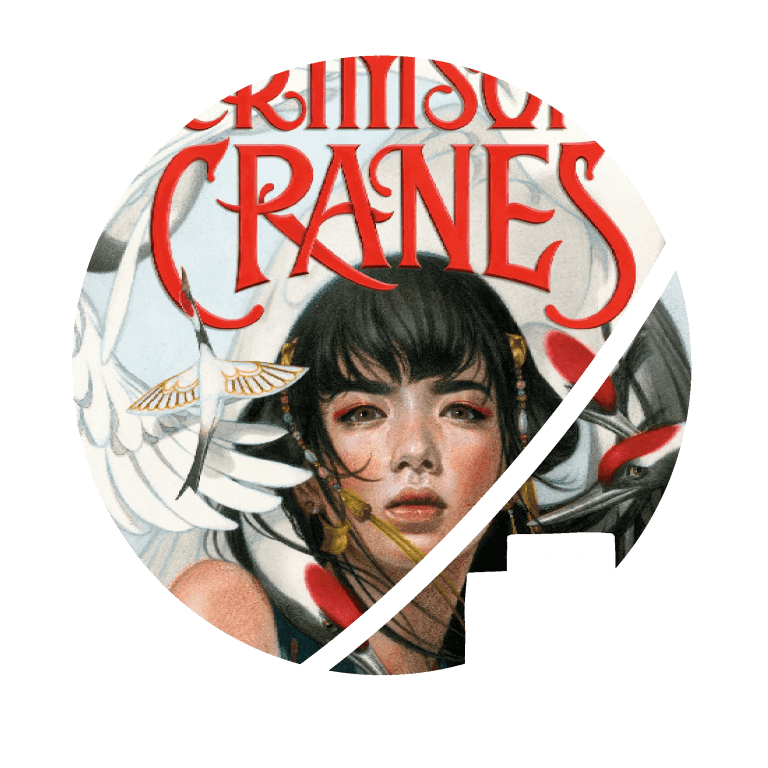

I bought this book because of the stunning covers of this series. I have the Kelly Chong version of this novel and let me tell you: she’s a real beauty.
Unfortunately the actual story just wasn’t quite for me. Six Crimson Cranes is a retelling of the fairy tale The Wild Swans by Hans Christian Andersen. It follows the original fairy tale pretty directly, although it is set in an East Asian fantasy world.
I think my main issue with the book is that, while it is about 450 pages long, it never really seems to go much deeper than a fairy tale would. The main character Shiori is a stubborn spoiled princess who learns to work hard and respect others. She has magical powers, which is a Big Deal, except she never really uses them, and the story would have been no different if she hadn’t had those powers.
Her brothers never get much development because there are 6 of them (and also they spend half the story as birds, so there’s that). The main love interest is nice and brave but not much more, and also there’s a dragon we are led to believe will be an important character, but he won’t actually be relevant until the sequel. The dialogue is a little clunky and unrealistic, and the descriptions are often lacking, which meant I spent a good amount of time wondering where certain characters were, or how they got from one place to another.
I really liked the East Asian setting, but I didn’t feel like it was developed well enough to really intrigue me.
The ending also didn’t quite satisfy me, which ultimately led me to give this book 3 stars instead of 3.5. The main villain was someone I didn’t even remember being part of the story and I’m still not sure how Shiori ended up breaking the curse.
Overall, I certainly didn’t have a bad time reading this book. I definitely think this is suitable for younger readers. I think this is classified as Young Adult, but I personally think it’s most suited to teen readers.
Review: Fallout – Amazon Prime
The bomb has gone off, but that doesn’t mean civilisation has to collapse. Deep underground, life goes on for a select few in the Vaults. 219 years later, Fallout follows Lucy Maclean, who has grown up with all the luxuries 1950’s life has to offer. After an incident in her vault, she ventures out into the wastes where she discovers what nuclear radiation has done to the people of America, in both mind and body.
Review: Spiderlight – Adrian Tchaikovsky
A group of adventurers sets out to defeat the Dark Lord – meticulously following each of the steps foretold by the prophecy. The adventurers’ relationships are tested and their faith in the Light is challenged when their quest requires them to welcome a new member into their party. A creature of the Dark, transformed, bound to help them – but a creature of the Dark nonetheless. But if Darkness helps to fight Darkness, and the Light does not always shine so bright – where does that leave the quest, and what does the ever-lasting war between Light and Dark mean?
Review: Shadow and Bone – Leigh Bardugo
Alina is an orphan who serves in the Ravkan army as a cartographer. Together with her childhood friend Mal, she is sent on a ship through the Shadowfold, a rift populated by monsters. As the ship finds itself attacked by the terrifying creatures that live in the fold, Alina discovers she has a rare gift that makes her very powerful but also places a target on her back.
Review: The Graveyard Book – Neil Gaiman
Nobody Owens, Bod for short, orphaned as a toddler, grows up in a graveyard, raised by the dead in a cosy mausoleum. His vampire guardian brings him food, teaches him, and protects him from any threats from the world of the living. Though the world outside the graveyard is foreign and odd to Bod, as Bod grows up and makes friends, his urge to learn what is out there becomes difficult to resist. But he was not orphaned without motive, and he lives with the dead in the graveyard for a very good reason…
Review: A Canticle for Leibowitz – Walter M. Miller Jr.
A collection of three short stories set in a post-apocalyptic world, A Canticle for Leibowitz follows the story of the abbey of the Albertian order of Leibowitz. The monks of the order are the guardians of a collection of pre-war scientific texts that their patron saint Leibowitz saved from the chaos and anger following the so called flame deluge. As time progresses, society is rebuilt, the scientific texts are again understood, and humanity falls into old patterns.
Review: Moon – Duncan Jones
Sam Bell is nearing the end of his three-year contract as the single crew member of a mining base on the dark side of the moon. Due to an outage in the communications equipment, he has been unable to contact either his family or his employers live. With only an AI assistant for company, he feels like he is slowly going insane from loneliness. When his lunar rover crashes, however, things take a turn for the worse.