





Listened to the audiobook with Cindy Kay – good narrator as with the previous instalments.
Finally, Chih returns home!
I’ve been reading the Singing Hills Cycle with a certain level of awe at how Vo is constructing her series of novellas – how she balances the main plot and frame narrative, worldbuilding versus character development and plot.
Mammoths at the Gates is perhaps the best instalment in the Cycle so far. It completes the transition from a series focussed on the stories Chih encounters to a series focussed on Chih’s own story. And of course it does so in a novella focussed on Singing Hills monastery, Chih’s home.
I think this timing is perfect: three novellas into the series, the reader is starting to get really curious about Chih’s background and character. Mammoths at the Gates gives us that exactly that worldbuilding hit that we crave. I especially loved the attention lavished on the until now mysterious neixin, the talking spirit-birds with infallible memory that accompany the clerics of Singing Hills.
What is even better is that Vo uses the opportunity not just to solidify the readers’ understanding of her world, but also of her main character. Chih returning home is the perfect plot device to tell us a little about their upbringing at the monastery. Mammoths at the Gates is also full of little character moments for Chih, like the way they interact with the novices of Singing Hills, that help flesh them out as a character.
The cherry on top is that Vo manages to stick with the formula of the series by perfectly integrating a round of storytelling in the story, even if the emphasis this time around is squarely on Chih’s own tale.
Perhaps Vo’s greatest achievement is how much storytelling she does in so little space. I can’t quite wrap my head around how Vo manages to include so much narrative in a novella format. But Vo is showing us what is possible, and I sure hope this format catches on.
Overall, I think Mammoths at the Gate is both great individually and also does a lot of work for the series as a whole – I am looking forward to the Singing Hills Cycle become a long-running fixture of the speculative genre. If there is any series that should have 15 instalments, it should be this one!





Listened to the audiobook with Cindy Kay – good narrator as with the previous instalments.
In my reviews of both The Empress of Salt and Fortune and When the Tiger Came Down the Mountain I praised the format of the Singing Hills Cycle and I will continue to do so here: I really like the novella format for the speculative genre and I think it could be explored more.
Clearly, the challenge in short-form speculative fiction is that there is less space for worldbuilding alongside everything else, and that forces the writer to make choices (and it forces the reader to fill in more of the gaps themselves). That difficulty is what I think kept the Murderbot Diaries from winning me over entirely.
Vo has not made it easy for herself with the structure of the Singing Hills Cycle, combining both frame narrative and main story in the space of the novella. Over the series, I feel the balance between the frame narrative and the story inside the frame is shifting. And Into the Riverlands occupies an interesting place in that.
While the characters in the novella tell each other stories in an almost The Canterbury Tales-esque fashion, the novella is very much about what occurs to Chih and her travelling companions in the ‘frame narrative’. The stories the characters tell each other are there to support that main story.
I understand the move towards a narrative that focusses on the recurring main character and I look forward to getting to know Chih and Almost Brilliant better.
So Into the Riverlands sits in an awkward transitional spot where the back-and-forth between the stories can be messy. At the same time, I think Vo uses that the transitional tale very well. Vo really leans into the unreliable narrator-trope by having her characters ask questions about the origin and the different versions of the stories they tell.
And I should not give the impression with all that analysis that the story of Into the Riverlands is not worth reading; it certainly is! I really like that Into the Riverlands, even better than The Empress of Salt and Fortune, ties the different stories in the novella together. Into the Riverlands has a number of evocative atmospheric scenes and Vo delivers another satisfying twist at the end of the story.
With Into the Riverlands, Vo proves that she is a master of the novella. She shows that she keeps reinventing the Singing Hills Cycle – and to give a sneak peak of Mammoths at the Gates, which, yes, I’ve already started: that exploration will continue. I certainly hope that Nghi Vo will continue to bring us novellas like these, because I will keep eating them up!


Listened to the audiobook with Cindy Kay – again, a great narrator. I particularly liked her husky tiger-voice.
I rolled straight from The Empress of Salt and Fortune into When the Tiger Came Down the Mountain – novella-length stories are perfect to whet my appetite and get me craving for more.
When the Tiger Came Down the Mountain is similar in structure to The Empress of Salt and Fortune: it features a frame narrative of Chih on a journey and a main narrative told by one of the characters.
An important difference between the two novellas is that the focus in When the Tiger Came Down the Mountain shifts somewhat from the main tale to the frame narrative. In fact, I found I was far more invested in the frame narrative than I was in the main story.
I suppose this is to be expected if the story of cleric Chih is to be the through-line in the Singing Hills Cycle, but it shifts the balance of the tale.
Vo manages this shift by having two of the characters bicker over the ‘correct’ version of the tale being told, taking turns to tell their version of the story. As a result, there are a lot of breaks in the main tale in which the frame narrative comes back in view.
I like this emphasis on the unreliability of the different narrators as a narrative device, but I think this repetition, alongside the fact that Vo spends more words on the frame narrative, means that there is a lot less space for depth in the main tale.
I still liked the story told by the characters of When the Tiger Came Down the Mountain, but it has more of a fable or fairy tale-esque quality to it, and less plot and emotional depth than the main tale of The Empress of Salt and Fortune.
Then again, in this case, I was happy to lose some depth in the main tale in order for the frame narrative to get some more room – especially because the frame narrative features those mammoths Vo hinted at in The Empress of Salt and Fortune.
I’m only two novellas in so perhaps I’m too quick to judge, but the piecemeal, very limited worldbuilding of the Singing Hills Cycle might solve the worldbuilding problem I ran into with the Murderbot Diaries.
I’m already looking forward to the next instalments in the Cycle. I’m curious what direction Vo will take the series in – wills he focus more on Chih or will she continue the style of a frame narrative and a main story? With some luck, you’ll be able to read my review of Into the Riverlands very soon!

My review of the Mortal Engines novel concluded that it was a middling teen adventure story that was enjoyable enough to read but that it was mostly set apart by its evocative worldbuilding.
That would appear to be the perfect kind of story to turn into a big-budget blockbuster.
So how did the Mortal Engines adaptation turn into one of the biggest box office bombs of all time?
Well, the first ingredient for a big loss is a big budget, and the production value of Mortal Engines really shows. The opening sequence of London chasing down and devouring a little Bavarian town looks gorgeous and spectacular and everything I had dreamed up while reading the novel. That mostly holds up throughout the story: the costumes and CGI are good and blend together well enough. So far, so good.
How about the acting? Mortal Engines isn’t full of big names and Oscar winners, but the actors do a decent enough job – I didn’t feel there were standout performances, but then, the movie doesn’t leave a lot of room for character moments – which bring us to…
The plot feels a bit rushed – like the book, the Mortal Engines adaptation is very highly paced, with the action driving the movie forwards constantly with very little room for reflection or character. Still, we’re watching a teenage adventure action flick so I’m having a tough time accepting that the sub-par plot sunk this movie. If sub-par writing tanked movies, most movies would tank.
So what’s going on?
I don’t find it easy to put my finger on what made this movie a commercial failure, but if I’d have to guess, it is that it ultimately feels a little incoherent and just too derivative.
The grab-bag of settings and tropes that I mentioned in my review of the novel is also present in the movie: steampunk airships, dieselpunk mobile traction fortresses, a terminator robot, a future-past miracle weapon… with all these separate influences, it is not easy to define a coherent visual style that is easy for the viewer to latch on to. Whatever you go with, something will always feel out of place.
As such, it may be uniquely difficult to suspend your disbelief for all elements of the Mortal Engines movie.
And if you’re not fully absorbed, some of those scene start looking awfully familiar. Especially the visual comparisons with Star Wars, The Matrix or Terminator are easily drawn. And if the plot progresses at a breakneck pace while bringing nothing new, if the characters are decent but not quite convincing, and the villain rolls his future-past lightning-crackling energy weapon up to the gates of the cliché orientalist good guys…. you might just tap out.
At least, if you’re expecting depth and emotion and not just a rule-of-cool visual spectacle. Because if a rule-of-cool visual spectacle is what you’re after, you could do far worse than Mortal Engines. And as an adaptation of a teenage adventure novel, that is not a particularly bad spot to land.
Overall, Mortal Engines is certainly not exceptional, perhaps not even good, but I would venture to say that it is good enough. Good enough for a rainy weekday evening with nothing else to do and no expectations at risk of being disappointed.
Whether I would have recommended you to watch it in cinemas though….
It was a lazy evening desperately in need of some simple enrichment that led me to streaming Mortal Engines. I had some vague memories of Peter Jackson’s involvement in this movie (though apparently he didn’t direct it). This, along with a glimpse of the trailer, was enough for Jasmijn and me to give it a shot.
The worldbuilding was the first thing that really excited me. It’s no news that post-apocalyptic settings quickly appeal to me, though it’s not necessarily easy to do completely original things with them (after a few zombie and nuclear apocalypses, you have a general idea of what a desolate world looks like). As such, the concept of mobile cities that ‘devour’ each other for resources had me captivated. Bonus points for the sheer decadence of London having incorporated St Paul’s (including catacombs) on top of their moving settlement.
The visual effects, costumes and general designs of the locations really help sell the world of Mortal Engines. Though the wow factor of the opening scenes weakens somewhat thereafter, everything is a delight to look at en feels like a real (lived in) location. Some additional things that stood out to me were the gigantic tracks left by the mobile cities and a settlement existing of floating air balloons.
The plot of Mortal Engines is entertaining and manages to keep you on your toes, though it is not necessarily as unique or gripping as its worldbuilding. Additionally, it’s very fast-paced. Though this means there is always some action to keep your attention, it also means that the main characters never really get time to breath. Their relationships have difficulty developing in a way that feels organical and subplots and mysteries are often wrapped up in ways that left me wanting for more emotional depth. The only time this movie really made me feel something was in the subplot involving Shrike (which also contains some interesting themes, by the way). I would have loved to see the care taken with this personal storyline reflected in the rest of the narrative.
Even though the pacing of Mortal Engines leaves little room for its characters, the cast is fairly solid. Hugo Weaving makes a convincable antagonist, and Hera Hilman and Robert Sheehan (whom I love in The Umbrella Academy) portraying the protagonists with as much emotion as the writing allows them.
On the whole, I would say Mortal Engines deserves more love than it apparently got. There were some (action) scenes that had me squeeling enthusiastically. This is more than I can say of most Marvel movies I’ve seen.
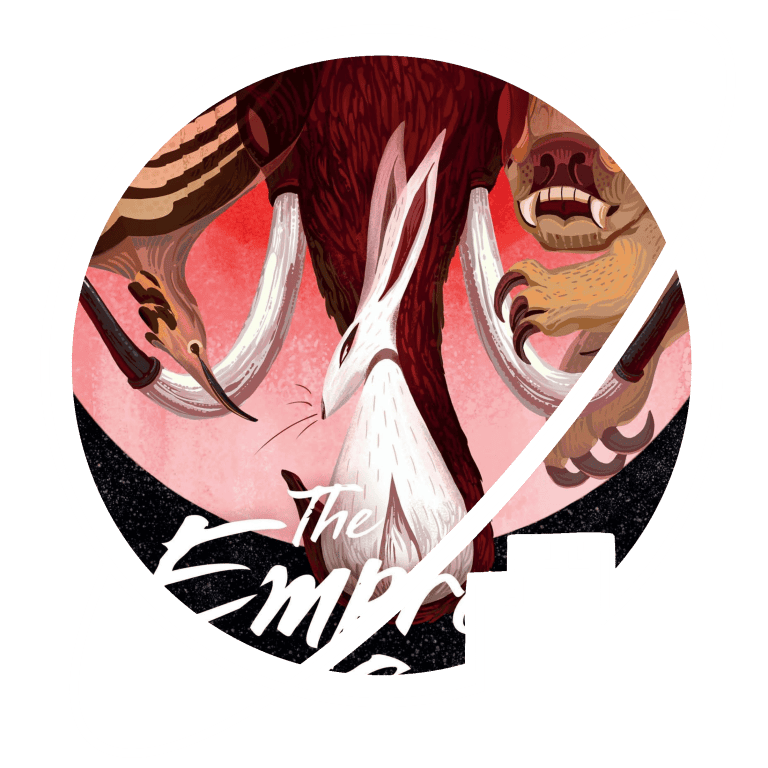
Listened to the audiobook with Cindy Kay, who has a nice, almost whispering quality to her reading, which adds an extra layer of mysteriousness to the story. Well read!
Empress of Salt and Fortune is a story with a frame narrative, and for some reason I find the frame narrative to be one of the most exciting narratives devices out there – it’s probably the thing I like most (the one thing I like?) about the Kingkiller Chronicles for example.
In Empress of Salt and Fortune, the frame narrative and the main story are satisfyingly intertwined, and even though the main character in both sides of the tale are different, I felt I got a good sense of both subjects.
Considering that Empress of Salt and Fortune is only a short novella, I think that is an impressive feat.
I think Vo in general does a great job of respecting the limits of the medium. A fantasy novella is very different from a fantasy novel, especially because fantasy is a genre that produces stories with a learning curve: it takes the reader some time to adjust to the ‘rules’ of the new world they’re delving into.
I think Vo made all the right choices: her worldbuilding is focused on neat little details and implications and borrows liberally from well-understood tropes about a historical reality.
Yes, this is medieval China, but what’s this about mammoths?! Vo resisted the need to explain (at least in this Novella), and leaves the specifics up to the reader’s imagination.
Similarly, Vo generally focusses on scenes over the narrative. I’ve criticised this in movies, because movies sometimes have trouble getting the plot across and building up their characters. But in books I think focusing on scenes is something that writers should feel more at liberty to do: strong character moments are more important to some stories than narrating the exact sequence of events that leads from A to B.
In Empress of Salt and Fortune this leads to numerous gaps and time jumps in the main story and that is great: the novella feels lean and light and quick, and yet the story is told without core elements missing. The story even has some nice little twists towards the end.
In conclusion, Empress of Salt and Fortune is a deceptively simple but very well constructed novella with a story that might not be ground breaking but is satisfying nevertheless. The strong female and non-binary characters are the cherry on top. I’m hooked – I loaded When the Tiger Came Down the Mountain into my audiobook player straight away!
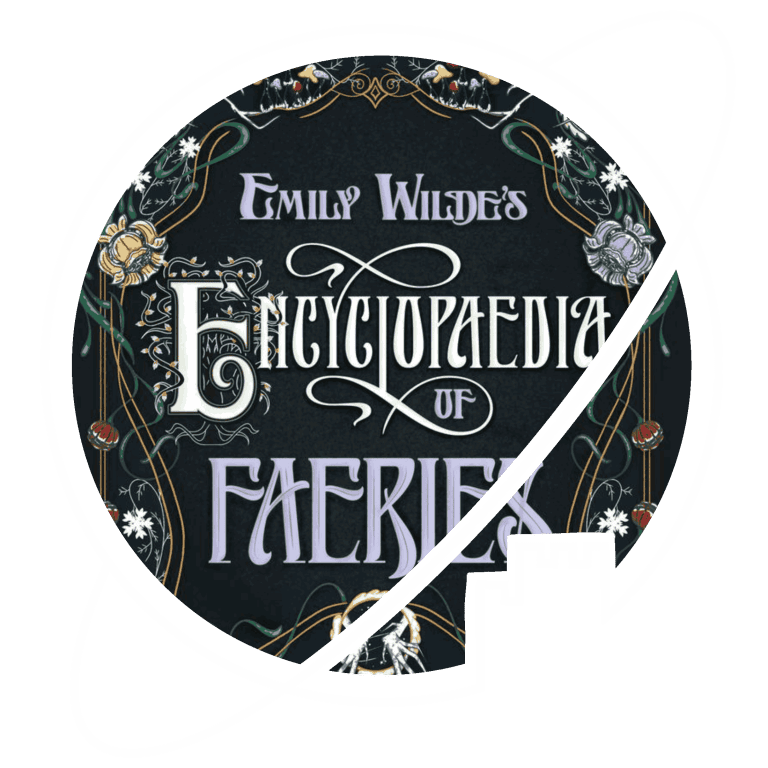

I read this book after seeing it discussed by a book YouTuber. Emily Wilde’s Encyclopedia for Faeries is apparently popular on BookTok, and with all due respect to the TikTok community, I wasn’t hugely optimistic that it would be up to my standards. I’ve previously reviewed another wildly popular cosy fantasy novel, Legends & Lattes, and I wasn’t that impressed. I was expecting to feel similarly about Emily Wilde’s Encyclopedia of Faeries.
Instead, I found myself very charmed by this novel. This is exactly what I think cosy fantasy should be. A fun, character-driven story that has stakes, but the stakes never get too high. When the stakes are high, the reader knows that all will be well in the end.
The characters are really the highlight of this book. Emily isn’t super likeable as a person, but she’s a very good protagonist. Meanwhile, Wendell Bambelby (whose ridiculous name actually makes a lot of sense for his character) rather reminded me of Howl from Howl’s Moving Castle.
Plotwise Emily Wilde’s Encyclopedia of Faeries isn’t the strongest. Especially the ending felt rushed and not super satisfying. If the plot had been the main selling point of the book this would have bothered me more. It’s not, though, which makes me a little more forgiving.
I would say this book is great for fans of the cosy fantasy genre, as well as people who loved Howl’s Moving Castle or the work of Naomi Novik. Granted, this novel doesn’t quite have the depth of something like Spinning Silver, but in many ways it scratches the same itch.

Curator Question: What is your favourite The Lord of the Rings-meme?
Our curators share their favourite memes based on Peter Jackson’s Lord of the Rings movie trilogy!
Review: Fool’s Assassin – Robin Hobb
Fitz is slowly adapting to his new life at Withywoods.However, he still struggles to let go of old friends and the echoes of his past. When his wife Molly comes with a surprise announcement and a mysterious messenger appears, it becomes clear his former life still haunts him in more ways than he knows…
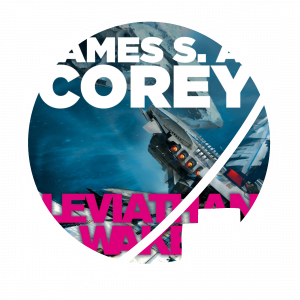
Review: Leviathan Wakes – James S.A. Corey
Jim Holden serves on an interplanetary ice hauler when disaster strikes. He and a handful of his crewmates are thrust into the center of an encroaching conflict between the superpowers of the solar system: Earth and Mars. Joe Miller works security on the most populous space station in the Kuyper Belt until his investigations lead him to a mysterious connection with the cause of the looming war.

Review: Avatar – James Cameron
In this visual spectacle, a disabled marine, travels to the distant moon of Pandora to join a corporate mining operation. He will enter the avatar-programme, whose members transfer their consciousness to human-alien hybrid clones to communicate with the local population.
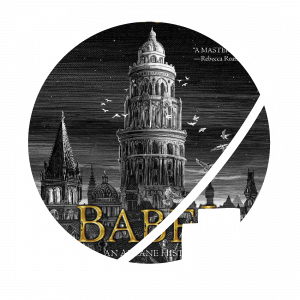
Review: Babel, Or the Necessity of Violence: An Arcane History of the Oxford Translators’ Revolution – R.F. Kuang
Robin Swift is taken from his native Kanton to Oxford to study translation: the art of producing magic from the difference in meaning between translated words in different languages. He is torn by the contradiction between his love for Oxford’s translation institute Babel and the study of languages on the one hand, and his growing unease at Britain’s role in the world and Babel’s role in Britain.
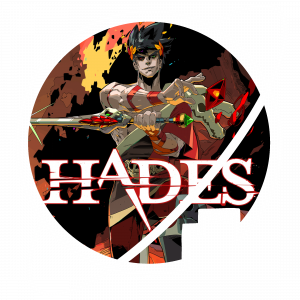
Review: Hades – Supergiant Games
Zagreus, son of Hades, god of the dead, wants to escape from the underworld to see the surface, where the mortals live, and to discover his heritage. His father is dead set on preventing this from happening. In this rogue-like video game, battle through chambers filled with hordes of Hades’ minions, slain heroes, and mortals undergoing punishment as you enlist the help of the Olympian gods to fight your way to the surface.