





Listened to the audiobook with Jenny Sterlin – well-read.
Usually I am a big fan of shorter form fiction: I love shorter stories that focus on ideas, on showing different sides of a character, or that really build a world.
I think Tales from Earthsea tries to be the latter – the final ‘story’ in the book is even a very explicit reference section on the history and cultures of Earthsea. But perhaps somewhat surprisingly, while I enjoyed Tales from Earthsea fine, I don’t think it added that much to the worldbuilding Le Guin already did in the previous instalments of the series.
I got the feeling that Tales from Earthsea was three or four Earthsea-novels condensed into one book, just with the stories told in fewer words. Usually I am a big fan of efficiently telling stories. In this case, however, I felt like some tales would have benefited from just a little more time to let the characters grow on me. As it was, the stories moved just a little too quickly for me to ever really be invested the way I was in, for example, Tehanu.
I think this is telling on what makes The Earthsea Cycle great for me: it is the characters in emotionally moving stories against a backdrop of interesting but ultimately very simple worldbuilding that draws me in, not the depth or details of Earthsea itself.
Having said all that, Tales from Earthsea does include a number of moving stories and learning about the history of the school of magic on Roke island is lovely. The collection of stories also continues the feminist theme that Le Guin put at the heart of Tehanu.
The honest truth is that while Tales from Earthsea is a fine book, it felt a bit like a stepping stone between Tehanu and the The Other Wind for me, a quick stop in between the rest of The Earthsea Cycle that Le Guin almost seems to have written for herself more than for the reader.
Still, armed with the knowledge that I have now, I am more than curious to dig into the final instalment of the Cycle, and learn about the final episode in Ged’s and Tenar’s life!


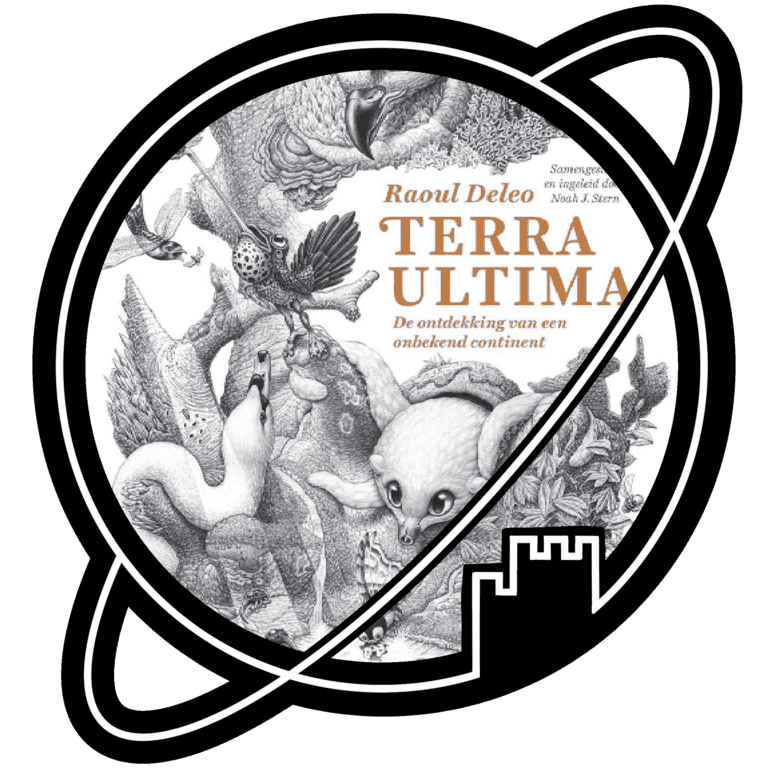

Sometimes children’s literature can be works of art, literally. If you ask me, Terra Ultima: The Discovery of a Hidden Continent is a clear example of this. It’s challenging to explain the charm of this book, without risking completely spoiling it. To still reveal something of the premise: Terra Ultima presents itself as a reflection on a few scientific expeditions towards an unknown continent full of wonderful new creatures. We view these expeditions through the eyes of biologist Noah J. Stern, who has compiled the notes and zoological illustrations of fellow scientist and world explorer Raoul Deleo. The result is a truly unique book with stunning, fantastical illustrations and a narrative that transported me back to more mysterious times in which we humans had yet to categorize the majority of our world’s species.
Apart from the imaginative illustrations – I can’t stress enough how cool these are – Terra Ultima consists of writing that neatly balances between pseudo-scientific, humorous and accessible language. Where children might read this book and enjoy a (semi-)realistic adventure story, “grown-ups” can entertain themselves with the numerous little jokes hidden throughout the binomial nomenclature.

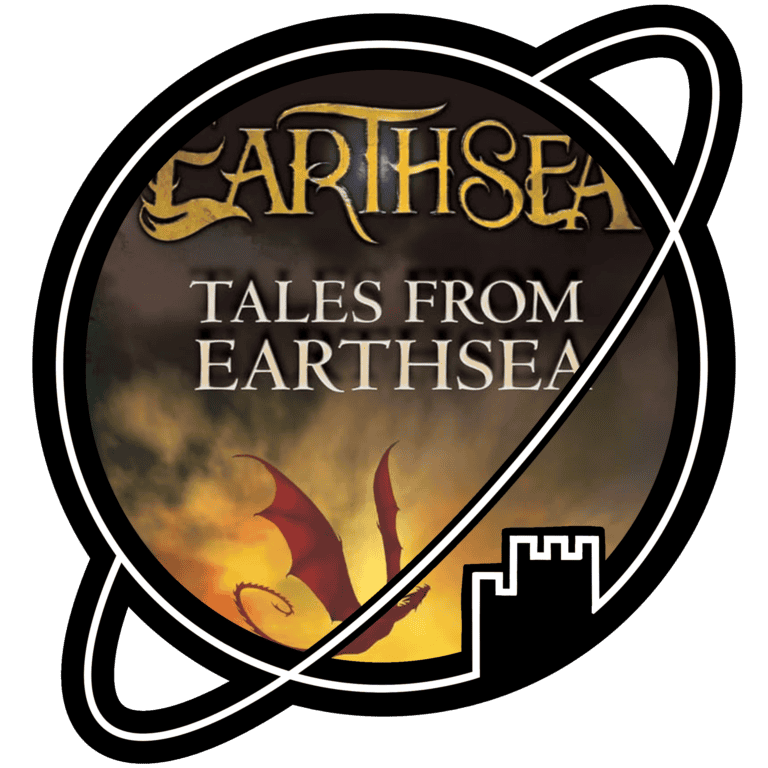
Listened to the audiobook with Jenny Sterlin – well-read.
Usually I am a big fan of shorter form fiction: I love shorter stories that focus on ideas, on showing different sides of a character, or that really build a world.
I think Tales from Earthsea tries to be the latter – the final ‘story’ in the book is even a very explicit reference section on the history and cultures of Earthsea. But perhaps somewhat surprisingly, while I enjoyed Tales from Earthsea fine, I don’t think it added that much to the worldbuilding Le Guin already did in the previous instalments of the series.
I got the feeling that Tales from Earthsea was three or four Earthsea-novels condensed into one book, just with the stories told in fewer words. Usually I am a big fan of efficiently telling stories. In this case, however, I felt like some tales would have benefited from just a little more time to let the characters grow on me. As it was, the stories moved just a little too quickly for me to ever really be invested the way I was in, for example, Tehanu.
I think this is telling on what makes The Earthsea Cycle great for me: it is the characters in emotionally moving stories against a backdrop of interesting but ultimately very simple worldbuilding that draws me in, not the depth or details of Earthsea itself.
Having said all that, Tales from Earthsea does include a number of moving stories and learning about the history of the school of magic on Roke island is lovely. The collection of stories also continues the feminist theme that Le Guin put at the heart of Tehanu.
The honest truth is that while Tales from Earthsea is a fine book, it felt a bit like a stepping stone between Tehanu and the The Other Wind for me, a quick stop in between the rest of The Earthsea Cycle that Le Guin almost seems to have written for herself more than for the reader.
Still, armed with the knowledge that I have now, I am more than curious to dig into the final instalment of the Cycle, and learn about the final episode in Ged’s and Tenar’s life!


I bought this book new at the store. That’s unusual for me – normally, I find my books at the thrift store. I’ll read whatever comes my way, I don’t tend to go out of my way to read a specific book. Despite having plenty of books to read at home (relatable, I’m sure), I decided to pick this up because I was genuinely excited to read it.
Like many, I’m sure, I’m a little bit tired of the way we depict vampires nowadays. Vampires have always been cool, but I’d love to go back to the type of vampires who don’t quite fit in. I like classic, flamboyant vampires, like those in What We Do In The Shadows. I guess I just don’t really like it when vampires wear jeans.
I should preface this by saying that Lestat is technically the sequel to Interview with a Vampire, which I haven’t read. I didn’t feel like I was missing out on much, except perhaps at the very end of the book. Even the last chapters are perfectly understandable, as long as you’re aware that the book Interview with a Vampire exists.
Storywise, The Vampire Lestat didn’t start off very strong. It really didn’t grab me until after he was turned into a vampire. Unfortunately, quickly after this, some stuff happened that made me go “Hmmmmmm, no thanks”. This is followed by a whole lot of no plot, until we get some insight into the history of vampires, which I did enjoy. There are perhaps three scenes in the whole book that take place in the “now” – the 1980’s.
Ultimately, I think the strongest part of this book is the exploration of what a creature that’s been alive for over a thousand years might be like. Lestat himself is probably the least interesting character in this novel, but I think he’s supposed to be. He is intentionally kept quite “human” so the audience can connect to him. However, this does mean that I was left wondering if I wouldn’t have preferred to read a book about his mother, Gabrielle, instead.
It’s hard to write an elaborate review on a book that didn’t inspire much emotion in me. I definitely didn’t hate The Vampire Lestat, but I also wouldn’t say it’s particularly… worth reading? You’re probably better off reading something like A Discovery of Witches, which will actually make you feel something (unbridled rage, but at least that’s something).


Listened to the audiobook with Jenny Sterlin – well read.
Of the first Earthsea trilogy, I liked The Tombs of Atuan the best – on the hand hand because it tells the most unified story, but also in particular because it is different: different both from the other two books in the first Earthsea trilogy, but also different from fantasy books in general.
Fantasy stories generally focus on extraordinary people experiencing extraordinary adventures. The extremes of human experience; characters formed by their continent-spanning journeys and battles with monsters and evil men. A Wizard of Earthsea is like that, and so is The Farthest Shore. In Tehanu, however, Le Guin returns to her characters from The Tombs of Atuan – and to the style of story telling that breaks the mould of standard fantasy adventures.
Tehanu focuses on heroic characters that are no longer heroic. Some because they chose a different life, others because they were forced into normalcy. In doing so, Tehanu shows that even the small people are important. They matter. And they don’t just matter because they used to be great, they matter because they are human.
As a result, the story is very personal, and surprisingly tense exactly because the stakes are smaller and more relatable. It is not a story about slaying dragons but rather about raising and protecting children or finding value in yourself outside of your abilities.
Moreover, I like that Tehanu is more explicitly feminist – it was written a fair bit later than the earlier Earthsea-trilogy (long after her commercial and critical success with A Wizard of Earthsea and The Left hand of Darkness), and Le Guin probably felt more at ease adding more political or personal themes to her writing. I like that she tells sexism the way it is – often not overt or even conscious, but rather endemic, ingrained and subconscious.
For example, when told by prophecy to look for an archmage by finding a ‘woman on Gont’, the mages don’t look for a female archmage, but rather assume the women will, in turn, lead them to their (obviously male) archmage. And Le Guin is also clever enough for the story to not then revolve around a female archmage being denied her right and claiming it through revolution, but for this bitter truth to be accepted by all characters as a fact of life.
I like the Earthsea Cycle, but I think Tehanu is easily the best of them so far – subtle and subdued but no less powerful than any of the others. In and of itself a reason to start reading the Earthsea Cycle if you still needed encouragement!


This is not the first game from Josef Fares that I have experience with. Years ago I was charmed by Brothers: A Tale of Two Sons. Furthermore, I enjoyed watching a playthrough of It Takes Two, also a game focused around co-op gameplay. Ever since the first trailers, I had no doubts about giving Split Fiction a try. I mean, a story about (fantasy) authors? That’s kind of a no-brainer…
As expected, Jasmijn and I had a lot of fun with this game. Hazelight Studios seems to fully understand that a co-op game like this not only benefits from multiple puzzles, but also from small opportunities where players can just muddle along and explore the stunning environments in hope of finding little easter eggs or crazy things to do – to simply play without an overarching goal. I mean, did the swimming pool area in the futuristic science-fiction city serve a narrative purpose? No. Did we spend a half hour fooling around there nonetheless? Certainly!
Similarly to Brothers: A Tale of Two Sons, the story of Split Fiction isn’t very complicated. However, it is delivered in a heartfelt manner by the two amazing voice actors and efficient writing. When emotions need to hit, they hit. Additionaly, there seems some clever commentary on the use of AI versus human creativity hidden between the lines…
If you’re in need for a game to play with a friend or partner, fun but not too difficult and with a nice story to boot, Split Fiction certainly is a recommendation.

Review: Terraforming Mars – FryxGames
In this 2-3 hour strategic board game, players get victory points for their contribution to the terraforming of Mars and for advancing human infrastructure throughout the solar system.
Review: The Crew: The Quest for Planet Nine – KOSMOS
In this co-operative trick-taking game players set out as astronauts on a space adventure looking for a ninth planet.
Review: Bioshock – 2K Games
Review: The once magnificent Underwater City of Rapture is deserted, and as you make your way through its dangerous corridors, you slowly discover what happened to what was once Andrew Ryan’s Utopia.
Review: Sweet Tooth – Netflix
Ten years ago, a deadly virus spread through the world while pregnant women suddenly gave birth to hybrid babies, part human, part animal. Gus is one of the first of these hybrids, who, because of his sheltered life, is blissfully unaware of the brokenness of the world.
Curator Question: Fantasy Races
Time to get to know the curators from the Escape Velocity Collection! How? By asking them the questions that really matter! This week’s question is: From all the many fantasy races that exist, which one resonates the most with you? And why? Though I’d like to come up with something original, the simple truth is that I have a great fondness for dwarves. Something about their core (archetype) concept really speaks to me: Short but brave, creative and loyal, but often also prone to greed and unhealthy isolation. I think these traits lend themselves for perfectly tragic narratives, as well as great heroic stories. However, I also like dwarves when they don’t fit the above archetype, so perhaps I simply like their aesthetics and the idea of misleadingly small people that easily perform great deeds… Jop Key Hmm, I think I’ll choose wizards. They are not always a race, granted, but always mysterious and powerful. They are mostly calm and deliberate, but regularly mixed with a little (or a lot) of crazy genius. Not that I am mysterious or powerful, but I like to see my self as intelligently composed most of the time, and a little crazy and unpredictable some of the time. Of course, I can only hope to aspire to their wizardy wisdom. Ok, I guess I have to admit that I’m really just basic Elf trash. Like Jop, I wish I could come up with something original but this is all I’ve got. I’ll be honest: it’s mostly the aesthetic for me. The pointy ears, the fancy hair, the architecture… I feel like Elves are just like me but hotter? Though in D&D, I tend to gravitate towards half-elves. Is it just an aspirational enjoyment of rich fancy people in fiction? I’m not above admitting that. I guess I like Elves the way I liked Blair Waldorf in Gossip Girl. Lotte Robin I find it hard to choose, but I definitely have a big soft spot for all of the woodland, Fae-like creatures such as Nymphs and Satyrs. I like their playful and carefree attitude, but also their mischievousness and the slight edge of danger that tends to cling to them. Above all I love the mystery that surrounds them. While I am convinced I would not enjoy running into one of the Fae, I do love reading about them when they are safely locked between the covers of a book. Without a doubt, the great miners and craftsmen of the mountain halls! Jop and I share our loves for dwarves (we played two dwarven brothers in our first D&D campaign), though perhaps for somewhat different reasons – I have always loved the dwarves’ unshakeable stoic attitude in times of hardship, their unflinching steadfastness in face of danger, their unwavering stubbornness of grudges and grievances. Dwarves may be a bit predictable at times, but they’ll hold their ground and they’re tough as boiled leather and I’ve always loved that kind of grit. The fact that many tales cast those same immovable objects as artisans of the highest order only makes their story better. Peter Jasmijn I’m not sure which race is my favourite. There are so many to pick from and I can’t even name half of them. But if I had to describe a race that resonates with my soul the most, I think it might be something undefinable from the fey realm. It would probably have wings and no concept of time whatsoever. Darkvision is a must. And maybe there is a far ancestor that can be traced back to the sea since I always end up in lakes, rivers or oceans (sometimes on purpose). That’s it: another soul-searching question answered! Still curious? Visit each curator’s page to see what they’ve recently been up to!
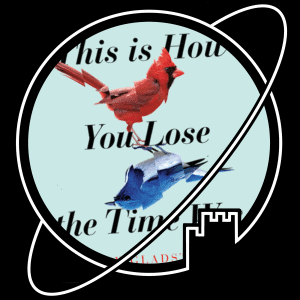
Review: This is How You Lose the Time War – Amal El-Mohtar & Max Gladstone
Two agents fighting on opposite sides of a time war start off a secret correspondence. Writing to each other from the different strands of time in which they are fighting their battles, they start to question what winning the war would really mean to them.