






Escape Velocity

A curated Collection of Fantasy and Science Fiction Media

Welcome to the Escape Velocity Collection!

We are an opinionated group of friends reviewing all sorts of fantasy and science fiction media. Don’t forget to get to know the curators and visit our curated Collection, where we discuss the stories that never cease to transport us to another world.

Will you escape with us?

LATEST POSTS:

Reviewed by:

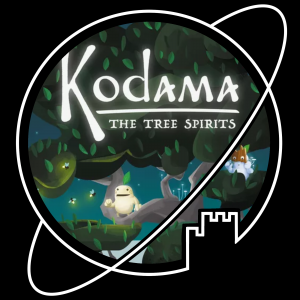
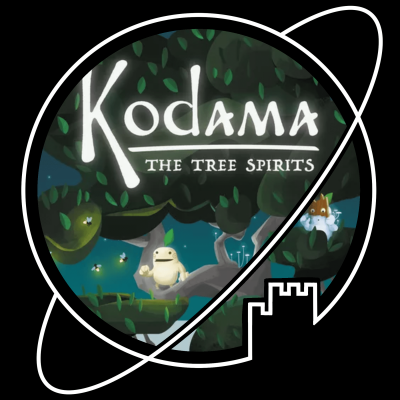
Kodama is a card game where you take care of a tree by placing cards to grow its branches. By choosing cards with the right symbols, you collect points over three growing seasons. At the end of each season, one of the Kodama (tree spirits) will award you extra points based on how well you have chosen your cards to suit its needs.

Passepartout_Review (1)

This is a pretty quick game, perfect for when you have about half an hour to kill before dinner. It has very beautiful artwork and I really enjoy how your tree looks after you have been adding branches to it for a couple of rounds. There is not a lot of interaction between the players, you are mostly just focusing on building your own tree with the cards that are available to you. However, since a turn only consists of choosing and placing a card, you are not endlessly waiting for other people to finish their turn. The game is partly based on luck, but mapping out a good strategy at the beginning can get you pretty far. Because the Kodama that you are dealt at the beginning are different every time you play it, your strategy has to change too. So far, this has kept the game interesting to me even after having played it quite a number of times already.

Look, anyone who knows me, knows that I don’t like tabletop games. It’s just not my thing. I like learning new things, just not “live” in front of people, and especially not if someone’s going to end up winning but it won’t be me because I didn’t know the rules from the start.

Occasionally I will be convinced to play one, as was the case with Kodama.


I’m pretty smart, but the rules sounded complicated at first. They always do, though.  I don’t usually try to keep up because I never understand board game rules when I hear them explained. I also don’t read instructions and often skip tutorials in video games. It’s a personality flaw and I get that. I’ll keep doing it, though.


ANYWAY, it was actually very easy when we started playing it. The art is cute, too.

I didn’t win so it could have been more fun, probably.

I think Robin summed it up pretty well in her review: Kodama is a nice fast-paced game with captivating artwork and a good replayability. Although luck is part of the game mechanics, the right strategy could still bring you victory.

Personally, what I really like about this game is how it invokes my inner peace. I don’t have to anticipate other gamer’s moves and can just focus on my own tree. Because I’m usually not a very competitive player, Kodoma’s set-up is perfect in that regard.

Kodama looks beautiful and is quite fun to play with a non-competitive mindset. However, on the part of game mechanics it is limited. The way you score points is simple. It gives you a little bit of space for strategic gameplay, but no more than that. As for placing the cards, they rarely fit perfectly. And if you want them to, you can place very few. Therefore you need a good deal of collective leniency to play this game. Kodama can be a nice little group activity, but as a game, it does not offer enough for me.
Tagged:

Hi guys, and welcome to our first Monthly Update!

Collection

This month, we’ve been busy building up our Collection. We started by adding some classics, such as Peter Jackson’s The Lord of the Rings and The Farseer Trilogy. Both of these are widely loved by our curators. Another classic, Frank Herbert’s Dune, is a little more controversial in the group. What is it about Dune that makes it so good? Peter will tell you all about it here!

Reviews

Do you need a new thing to read/watch/play? We’ve been busy reviewing a nice mix of media this month. A lot of Fantasy, with the exception of Frank Herbert’s Dune. Peter has been verrrry excited about the new Dune movie, so be sure so check out our reviews on that!

Other Posts

Do you want to get to know our curators a little better? Be sure to check out our two curator question posts, where each curator answers a question about the things they like in Science Fiction and Fantasy media. This month: Who is your favourite mentor character? and How do you prefer to read (or listen to) books?


On top of that, we have a recommendation post for those who like their Fantasy media a little more on the light hearted side. Be sure to check out the post here to see what Lotte thinks you should check out next!

That’s it for this month folks! If you want to be kept up to date, be sure to follow us on your favourite socials to know exactly when we post!

Reviewed by:

In Denis Villeneuve’s adaptation of the first half of the classic sci-fi novel Dune by Frank Herbert, House Atreides receives orders to take control of the planet Arrakis, the rich desert world that produces the spice that allows for interstellar traffic, and take control of the fief from their arch-enemies, the Harkonnens. Paul, the Atreides heir, must quickly learn to be at home on a foreign planet in the ensuing struggle, as Harkonnens, the desert, and the Fremen, the planet’s native inhabitants, close in on the new rulers.

DuneMovieReview

I have literally been waiting for this movie to happen for years, and since the moment Villeneuve was announced as the director, I’ve been on a hype train without breaks preaching to everyone who wanted to listen (and those who did not find an excuse quickly enough) about how great this movie was going to be. I forced the people in my book club to read Dune. I forced my parents to reread it. The hype train only sped up when the first shots and later the trailer came out. My girlfriend baked cinnamon buns and cinnamon cookies to eat in the cinema when we finally got to go.

AND VILLENEUVE DELIVERED!

It is as if Villeneuve and I had the exact same experience reading the books. He managed to translate what Dune is to the screen so incredibly well I still have a hard time believing it.

To start, the visuals of this movie are absolutely stunning. The space ships, machinery, ornithopters, everything is beautifully designed. The size of the transports and sandworms are awe-inspiring. Villeneuve understands the importance of the planet to the story, and gives us ample time to admire the different types of desert that Arrakis has to offer. Every other shot just completely knocks you over in your seat with the immense scale of it all.

The casting is equally spot on. Rebecca Ferguson as the Lady Jessica and Stellan Skarsgård as the Baron Vladimir Harkonnen particularly stand out to me as the perfect faces for their role, but in my opinion, there are no duds in this movie’s casting. Sadly, not every actor gets their chance to fully flesh out the iconic character they are portraying, but that is an unfortunate byproduct of the medium – a movie can simply fit less story than a book.

That leads us to the question – how does Dune do as an adaptation of its source material? I think we can be glad that Villeneuve decided to split book over at least two movies, for as his – very faithful – adaptation goes to show, there is so much worldbuilding in Dune that it threatens to bog down the movies at times. I am in love with the books so perhaps ask Lotte whether she felt she understood everything, but I can imagine it is a lot to take in if you are not familiar with the novel. The result is also that the ending is not the stongest. It does not end with a cliffhanger – but with a large portion of the central conflict unresolved.

What is most important though, I think, is that this is an adaptation of the story that ticks almost all the boxes with fans of the novel: it tries, and achieves, to capture not just the same spirit, but also the same plot beats and visuals based very closely on the book’s descriptions.

So can people who do not light a candle at their Frank Herbert altar every night like me expect a similarly satisfying experience? I think yes, because even though the movie might be long and a lot might happen, none of it is filler and every shot individually keeps you on the edge of your seat. You’ll definitely walk away a little exhausted, but Dune, I feel, is a phenomenon in the making.

Just as it is often posited that Herbert’s novel is to sci-fi’s what Tolkien’s The Lord of the Rings is to fantasy, so Villeneuve’s Dune wants to offer a sci-fi epic to rival Jackson’s The Lord of the Rings. I’ll hold off on my judgement of whether it is succesful on that account until I’ve seen the (at the time of writing still uncertain) sequels – but I am already looking forward to Dune Trilogy movie marathons.

I have a lot more to say, but I think I should conclude by repeating that this movie looks absolutely stunning and you should go see it in cinema if you can to be blown away by the visuals and the deep reverberating sounds of space ship engines and worms tunneling through the sand.

I was conflicted about going to see this movie because I haven’t read the book yet. Still, there’s a certain kind of movie you really have to see on the big screen, and Dune is definitely one of those movies.

In many ways, Dune reminded me of The Lord of The Rings. This is old school science-fiction, which often means that the line between Science Fiction and Fantasy gets blurred. The only thing that really solidifies this as Sci-Fi is the space travel.

The reason I would really recommend seeing this in theatres (if you can) is because of the ~vibes. The soundtrack of this movie is really beautiful, and the sound design as a whole is really on point. The cinematography in this movie is also… chef’s kiss.

Dune is quite long, and I was pretty tired when we to see it. It never quite drags, though I must admit the ending was a little slow (but as I mentioned I was pretty tired and the end of the movie takes place at night so there was very little light to keep me awake).

All in all, I would really recommend checking Dune out, especially if you love (old school) Sci-Fi, but also if you’re not a huge fan of Sci-Fi, but you do really enjoy epic Fantasy stories, because that’s basically what Dune is.

As someone who thought Herbert’s writing was quite arduous, I had high hopes for the movie adaptation of Dune. Luckily, I was not disappointed. The movie fixed many things I struggled with in the books, such as the characterization of the protagonists and the suspense of the story. And, not unimportant, the movie delivers some truly stunning cinematography, as well as the radiant presence of Zendaya <3.

To elaborate on the cinematography; almost all of Villeneuve’s athmospheric shots contain symbolic meaning or little references to the book. Because I’ve read the book, I could really appreciate these little nods to the source material. However, Villeneuve also really takes his time with them, which results in quite a slow movie. I wonder if those who have no previous experience with the Dune-universe might find the pace forgivable. Personally, I thought it started te drag a little towards the end.

All in all, I think  fans of the genre will be quite pleased with Villeneuve’s Dune. Others should just watch it at least once to marvel at the stunning views. And at Zendaya…

Surprising aboslutely nobody, I was not very entertained by Dune. Dune the movie PART ONE. This movie is not the whole story and nobody told me. My only expectation was to find out how the book ends. This expectation was not met. Ironically, the movie ended EXACTLY where I stopped reading the book, which was quite something.

I saw many angry men and a lot of sand. Since everyone around me was mesmerized by it, I felt like I watched a completely different movie. Which left me with the question: why? Why didn’t I like this movie?

The first thing I realised was that there was no real music. Sure, there are soundscapes and ambiances. By Hans Zimmer, nonetheless. But apparently I need more. Music is my language and Dune just cut out that whole part of the experience.

Something else that got on my nerves real fast were the many, very slow shots of ‘look at how much sand there is’. I’ve been to the beach before, I know what a lot of sand looks like. You’re going to show me again? Now I’m bored.

I never expected to be blown away by the storyline. It just feels like nothing is happening. I knew it wasn’t for me. But I hoped there would be some redeeming factors when watching the movie. I only found one: seeing the joy on Peter’s face. I was happy I got to experience this movie with him.


Tagged:

Reviewed by:

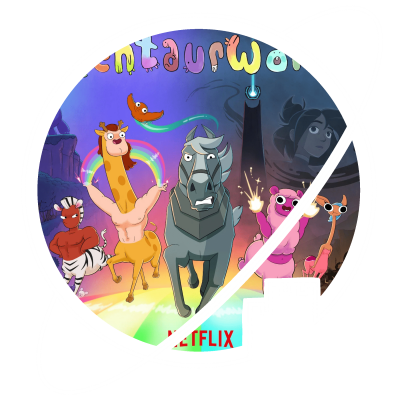
Native to a war-torn world, Horse knows how to brave all kinds of danger, as long as she and her Rider are together. When an unknown magic separates them and banishes Horse to the colourful Centaurworld, she is determined to find her way back to her own world as quick as possible.


In this new strange lands, Horse has to build on her own strength and the help of a peculiar herd of centaurs to succeed. Shall she be reunited with Rider?

(This review only relates to S1)

Songs! Emotions! Chaos! Animation! If you’re looking for something unconventional and not too long, this is a fine series Netflix has created. I would describe Centaurworld as the love child of the random whacky storylines from Adventure Time and the emotional songs from Tangled: the Series. At first, it takes some getting used to, but when you just accept whatever is happening it is actually quite enjoyable. Casually throwing in seasoned Broadway stars like Kimiko Glenn, Renée Elise Goldsberry and Lea Salonga the performance of the songs in this musical series is sublime. And to be honest, they’ve got me waiting for the second season with anticipation.

Well, this series was an unusual ride…

In the first scenes, you’re thrown into a cool, grim fantasy setting with a corresponding art style and a hauntingly moving song sung by a warrior girl to her war horse. I thought I was hooked. Then the story abruptly brings you to the titular ‘Centaurworld’, a colourful and nonsensical world inhabited by bubbly centaurlike creatures. A stark contrast, to say the least.

It took me a while to adjust after the initial switch. Perhaps I was a little dissappointed I didn’t get to see more of the world promised in the first scenes. However, the premise of the story – a horse trying to find her way back to her rider – resonated enough with me to keep me watching. Also, there were well-sung songs, and that’s something I can always appreciate.

I’m glad I sticked with this series. Though the humor was not always my cup of tea – too random, abstract, or simply childish – there were also times I wholeheartedly chuckled. Furthermore, this series contains some sincere emotional character arcs and intriguing worldbuilding. In my opinion, the first season is stronger than the second, which seemed to lack any sort of coherency, except for in the finale. Also, I wasn’t necessarily a fan of season 2’s additonal characters. 

The voice-acting of Centaurworld is truly excellent, and the same applies to the singing. Kimiko Glenn is just… wow; and there are many more great musical-talents (such as Renée Elise Goldsberry!?). As such, this series blesses as with a score of memorable songs, of which ‘The Nowhere King’ will always haunt me.

Those who ever enjoyed Adventure Time should give Centaurworld a try.
Tagged:

Reviewed by:

The House in which Piranesi resides consists of innumerable halls whose walls are lined with thousands of statues. The tides sweep through these halls in a pattern only Piranesi can decipher. While he has forgotten many things, he knows this: the Beauty of the House is immeasurable, it’s Kindness infinite.

Passepartout_Review

It’s not often that a Fantasy book wins a major literary prize such as the Women’s Prize for Fiction, but I am really glad that this was the case for Piranesi. It is a beautiful but unconventional novel which leaves you wondering for a long while what it is exactly that you are reading.

The book’s main strength is definitely the unique narrative voice of Piranesi himself. I was immediately charmed by him, and although I felt quite sorry for him in the beginning I soon started wondering whether this feeling was entirely warranted. I really love the way he is able to fit into and take care of the House. His descriptions of it make the House seem like more than just a backdrop for the story, but like a serene presence in its own right.

I enjoyed the mysterious atmosphere of the book so much that I felt almost reluctant to read on as the plot progressed and some of the riddles were solved. However, the ending was well worth it as it left me feeling bittersweet but hopeful, and very glad to have picked up this rather extraordinary book.

I really enjoyed this book. Robin recommended it to me after she reviewed it.

Piranesi is very hard to compare to other books. It’s deeply atmospheric and unpredictable. The first 100 pages or so, you’re just trying to get a sense of what’s going on. Normally this would bother me, because I don’t like to be confused. However, Susanna Clarke’s writing is so compelling that it didn’t bother me at all. It’s also not a super long book, and the pacing is just right.

It’s definitely not fantasy in the traditional sense of the genre, but it’s definitely worth reading!

Tagged:

Paul, heir of House Atreides, and his family receive orders to move to the planet Arrakis, the rich desert world that produces the spice that allows for interstellar traffic, and take control of the fief from their arch-enemies, the Harkonnens. Though they sense a trap, his father’s honour does not allow them to defy the Padishah Emperor’s orders. In the struggle for the dominion of Arrakis that follows, Paul catches a glimpse of a terrible future that lies ahead if he does not act to change his fate.

Jop: Welcome to this in-depth, spoiler-free discussion of Dune by Frank Herbert, a classic science fiction book and the first installment in the Dune universe, which by now consists of multiple series. Our curator Peter added Dune to the Escape Velocity Collection, a series of items that we believe represent the absolute peak of what the speculative genre has to offer.


I challenged Peter to defend his addition to the Collection – why should every fan of speculative fiction pick up Dune immediately?

Defended By

PETER

Versus

JOP

Although the opinions on Dune might strongly differ among our curators, there can be no doubt about your love for this story. So, to start off – when did you first read Dune and what did it do to you?

I first read Dune somewhere halfway through high school. I remember asking my mum to recommend me a book to read in English, because I was practicing – back then, it was right on the edge of what I could understand. It was (and is) one of her favourites. I took the crumbling, well-used vanilla-smelling copy with the colourful sunset on the cover from the bookshelves and I absolutely loved it to bits. I’ve reread it at least three times since, and everytime I am afraid the magic will be gone, but it’s there every time.

There are two important reasons why Dune keeps working so well for me. The first is that Herbert respects the reader’s ability to figure things out on their own, and doesn’t feel the need to explain everything in the text of his novel. As a result, the strange world feels both natural – because the characters do not behave as if everything they do needs explanation – and mysterious – because some things hover just beyond the edge of explanation all the time, and I don’t think you’re intended to get them.

That leads into the second point: Herbert, for me, perfectly manages to write people that are just incredibly smart. Paul and Jessica, in the way they observe and analyse the world, are superhuman in a – to me – believable way.  I know none of it is true, but for some reason, I constantly find myself in awe when reading about them. It makes me want to be like them in ways I have almost never experienced.

Worldbuilding

Without spoiling too much, when I was reading Dune, I can honestly say I was most impressed with its worldbuilding. Most of the story might take place on the inhospitable desert planet of Arrakis, home of the much coveted ‘spice melange’ drug, but there are many glimpses of a greater universe full of intricate politics. Arrakis itself is also well thought out, with a believable interpretation on how the ecology and cultures of such a place would develop and influence one another. I thought it was an original setting, though I myself have little frame of reference in the field of science fiction.

Is Dune’s worldbuilding one of the things that stood out to you, Peter?

I agree with you that the world the story of Dune takes place in is probably its greatest achievement. Herbert takes time to explore the ecology of Arrakis in detail: the difference between the different types of deserts, the habits of the few existing species of wildlife, the importance of conserving water in every thinkable process. On top of his ecology, he layers a fascinating local culture centred on the sand of the desert and conserving water. On top of that, he layers a high society culture of the Arrakeen elite, centred on wasting water and harvesting spice. And on top of that, he layers the politics of the Great Houses of the Landsraad, centred on intrigue and selling spice. Each of the layers influences the ones above and below it, and the whole takes place against a backdrop of a mysterious ancient history of human colonisation of the galaxy. The entire system functions very well, and, importantly, the worldbuilding is integral to the plot.

The world of Dune is so expertly crafted that I believe it is worth reading the novel exclusively to get to know Arrakis – I know people that even twenty years after reading the books remember little details on how the characters preserve water and how to walk across the sand undetected.

You already mentioned the fact that Herbert respects the reader’s ability to figure things out on their own. Though I certainly respect that sentiment in a writer, even I was somewhat overwhelmed by the worldbuilding infodump you get in the first 150 pages of the story. If you’re not careful, you’ll find yourself lost in the terminology appendices at the back of the book after every two sentences.

Even though the quality of the worldbuilding is outstanding, one could argue it’s clumsily delivered. So much so even that it scares off (novice) readers. Do you think this is a fair assessment?

Well, I’ll give you that Dune has a steep learning curve, but I strongly disagree with the notion that Herbert infodumps. Rather, the worldbuilding is a continuous trickle (perhaps to some readers, more of a flow than a trickle) that constantly keeps you guessing. But that’s the point! I believe that Dune is intended to be a mysterious book. Don’t go look up terms in the appendices – you’ll figure it out by yourself in a couple of chapters. Paul, our main character, is dumped in a world he knows very little about, and is constantly learning – and so is the reader. Accept that you might not understand everything immediately – you’re not intended to. And it is all the more satisfying if you end up ‘getting it’ on your own.

No, I cannot deny that Dune is not exactly a light read. There are a lot of complex conversations, a lot of complex politics, a lot of original worldbuilding. But I would argue that the worldbuilding is actually presented in a rather subtle manner. You’ll need to pay attention, but it is one of the most well-constructed science-fiction books I’ve ever read, and entirely worth the effort it takes to learn about its universe.

Something I specifically noticed about Dune’s worldbuilding, is the incorporation of Middle-Eastern and Asian inspired elements, especially in regards to the religions. As I’m mostly familiar with fantasy worldbuilding, in which Christianity and ancient pantheons are commonly used as the basis of self-built religions, I thought Herbert’s choices were interesting.

However, I’ve come to understand there are some who criticize these same aspects. These people accuse Herbert of religious appropriation and orientalism, for example describing his depiction of the desert-dwelling Fremen warrior culture as harmful (muslim) terrorist stereotypes.

On the other hand, others praise Herbert for the clever and positive way he’s included non-Western elements, pleasantly surprised to recognise things from their own cultures in a science fiction setting.

What do you think of this discussion?

I think it is important to place Dune in the time in which it was written – the first half of the 1960s. I’ll skip the history lesson, but if I understand correctly, the pervasive (and toxic) link between ‘muslims’ and ‘terrorists’ in modern culture dates from after the 1967 Six Day War between Israel and its neighbours, when several anti-Israeli terrorist organisations sprang into life. I cannot deny that that link exists today, but at the time, I feel like Dune would more likely be read in the tradition of Lawrence of Arabia (and, admittedly, all the colonial ickiness that comes with that) than 9/11.

That said, it is true that the Fremen culture is based on a relatively western orientalist interpretation of Middle-Eastern (or West Asian, if that’s your preference) and Persian culture. Cultural sensitivity and the woke brigade weren’t a thing sixty years ago, and it shows.

Herbert kind of wears this on his sleeve, though – he writes of cultural/religious amalgamations such as Buddhislam and the Zensunni faith, the result of the mixing of Asian cultures throughout the centuries-long colonisation process of the Galaxy. In his view religious and cultural identities are constructed (sometimes literally and deliberately), and the cultures of the various ethnic groups in the Dune-universe are (to some extent) intended to be caricatures of their origins on Earth.

Herbert does still use the Arabic-coded Fremen as an ‘other’, a group that is intended to be alien to western audiences. And in that sense we can’t really applaud him for his progressive writing. But given the time he was writing in, I think that his positive, human portrayal of the Fremen (and, compared to his contemporaries, women) should be grounds to forgive him his sins.

Characters

You already spoiled some of your thoughts about Dune’s characters, namely that you enjoy how they are written so much that you’d almost like to be them. For people who know how picky you are about characters in general, I believe this is an incredible telling compliment.

Is their intelligence the only reason you were attracted to Paul and Jessica as main characters? And what were your thoughts on the other POV-characters? In your opinion, do they hold up next to Paul and Jessica?

The intelligence and Bene Gesserit training of Paul and Jessica make them fascinating characters to read about, but they are also interesting because they are portrayed as primarily rational characters, inwardly very observant of their emotions and the actions caused by their emotions. This is a welcome change from characters with a lot of inner monologue in most books, who have a tendency to be very emotionally driven. Plus, they have a beautiful awareness of their fate that puts each of their actions in a different light.

None of the other POV-characters are as well-defined as Paul or Jessica, but I feel Herbert has made the right choices in picking his viewpoints, allowing the reader to experience each of the pivotal moments in the saga up close. Their chapters give great little insights into the thinking of some of the other characters and factions.

Circling back a little to the smartness and strong rationality of some of these characters, you’d expect that they’d make less crucial wrong decisions than the emotionally driven characters in most other stories. Interestingly enough, this is not the case. Dune’s characters still make these kinds of mistakes, not because they are too emotional though, but because of the opposite: they don’t dare to trust their intuition. It’s an original divergence.

Plot

Every synopsis and flap text of Dune paints a picture of a vengeful revolution story full of politics, a captivating premise for a plot. Quite early in the story, however, it occured to me that many plot elements are spoiled in advance by the codices at the start of each chapter.


Do you think these codices undermine the plot’s strength?

No, on the contrary, they add to it! I can’t quite say, ‘Dune is not about the plot’, because that wouldn’t be true. The plot is an important part of what makes Dune great. But the plot of Dune is not about surprising the reader with clever twists. The reader is supposed to unravel the mystery of how the plot will get to where it has announced it will go. In a way, this mirrors Paul’s own experience: he gets told his fate, and the rest of the story is about figuring out how it will unfold – and fighting it.

And this is a conscious choice on Herbert’s part. You’re supposed to know how it will end, and to hope against hope. The codices and the POV-chapters from the perspective of the ‘bad guys’ allow Herbert to showcase the complexity of the world and the clever plans of all factions to the reader. It makes for a different reading experience, watching a tragedy play out from every angle and seeing the struggles of the characters caught in the flow.

I think Dune would work far less well if you wouldn’t have the ‘spoilers’ the story gives you, because a lot of the behind-the-scenes cloak and dagger would be lost on you.

There are a lot of instalments (several dozen, give or take) in the Dune-universe, and Dune itself is only the first book in a trilogy. It’s somewhat remarkable you’re only adding Dune to the collection. Is it a conscious choice that you’re disregarding the rest of the series?

So, the honest (possibly embarrassing) answer is, I have only just read the second part, Dune Messiah, in preparation for our conversation here. And of course, I haven’t lived underneath a rock so I know more or less what will happen beyond the second instalment too. But one of the reasons Dune works so well for me is the mystery that permeates from the pages. And I don’t want to shatter that by learning too much about the world. Dune Messiah is a good book, and I think that people who really enjoyed Dune are going to like reading it too and seeing where the story goes. But the scene is already set, so there is only little of the amazing worldbuilding that Dune has. And the book makes explicit some of the things that you might have guessed at the end of Dune, but you felt clever for figuring out on your own. Overall, it’s good, but simply not on the same level, and not necessary to deeply love Dune.

Age

Dune is universally seen as a science fiction classic and has been of a major influence on the genre. Though this is impressive, it comes with the fact that the story dates from 1965. That’s a respectable age of 56 years.

We’ve already touched on this a little. In your own words: cultural sensitivity wasn’t a thing back then. However, everyone that has experience with high school reading lists might think of some other pitfalls that could come with books that old, such as stuffines and extreme wordiness. Can these traits be applied to Dune, or is the prose as flashy and fast-paced as people have come to expect of modern science fiction?

Dune is not a light, quick, read. A lot of the tension in the story is built up over long conversations between people fencing with words, not swords. Herbert has a tendency to be very descriptive (which I love), and to use relatively flowery language (which I love). It’s not snappy in the way that some action packed modern novels are. But it’s also not Asimov! Sure, some of the conflict will be narrated from a distance. But if there is fighting, you’re sure to catch at least some glimpses of steel-on-steel. Blood will flow from the pages before the tale is over.

I don’t think that pace or tension arcs are this books traps – it’s rather getting lost in the complex plot, politics and  world building, or not buying into the Bene Gesserit training or the carefully constructed conversations. Dune takes itself rather seriously (which I love!), and if you do not, it’s unlikely you’ll reach the end.

Conclusion

In summary, Dune is an intricately crafted, multi-layered story with some excellent worldbuilding, justly a praiseworthy science fiction classic. Although this book was ultimately not for me, even I can appreciate the many unique ideas it has to offer. In fact, despite our thoroughness, there are still many aspects of the story we have left undiscussed, such as Dune’s many intriguing themes.   

Peter, is there something you’d like to add before we close off?

We’re sadly running out of space to discuss everything there is to discuss – most importantly the themes and threads of religion and fate that run through the books, but also the interesting way in which Herbert mixes fantasy elements into his science fiction setting, Herberts ideas on ‘hard men’ and ‘soft men’, fascinating elements of world building like the Butlerian Jihad and the origin of Mentats…


Maybe what I want to say is: there is so much to find in Dune, that I feel that almost anyone can find a theme or a layer or an element to enjoy. And if that is the case, then anyone that professes to love science fiction should at the very least give a genre-defining masterpiece such as Dune a shot.

That’s it for now folks! Go read Dune if you haven’t already, and soon we’ll be back for another addition to the Collection!

Review: Kodama – ActionPhase Games

Kodama is a card game where you take care of a tree by placing cards to grow its branches. By choosing cards with the right symbols, you collect points over three growing seasons. At the end of each season, one of the Kodama (tree spirits) will award you extra points based on how well you have chosen your cards to suit its needs.

Read More »

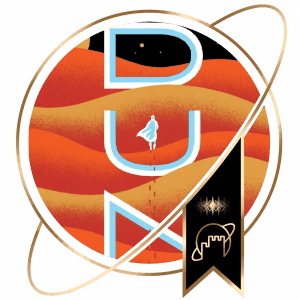
Review: Dune: Part One – Denis Villeneuve

In Denis Villeneuve’s adaptation of the classic sci-fi novel Dune by Frank Herbert, Paul, heir of House Atreides, and his family receive orders to take control of the planet Arrakis, the rich desert world that produces the spice that allows for interstellar traffic, and take control of the fief from their arch-enemies, the Harkonnens.

Read More »

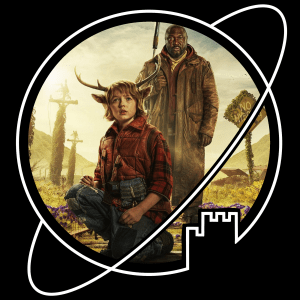
Review: Centaurworld – Netflix

Native to a war-torn world, Horse knows how to brave all kinds of danger, as long as she and her Rider are together. When an unknown magic separates them and banishes Horse to the colourful Centaurworld, she is determined to find her way back to her own world as quick as possible.
Read More »

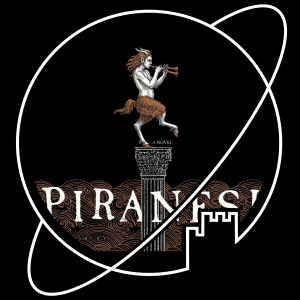
Review: Piranesi – Susanna Clarke

The House in which Piranesi resides consists of innumerable halls whose walls are lined with thousands of statues. The tides sweep through these halls in a pattern only Piranesi can decipher. While he has forgotten many things, he knows this: the Beauty of the House is immeasurable, it’s Kindness infinite.
Read More »

Collected: Dune by Frank Herbert

COLLECTION: Paul Atreides and his family move to the desert world Arrakis, to take control from their arch-enemies. In the struggle for the dominion of Arrakis that follows, Paul catches a glimpse of a terrible future that lies ahead.

Read More »