





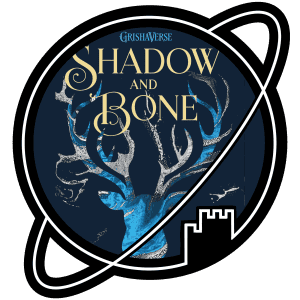
I picked this book up while trying to claw my way through Brandon Sanderson’s Mistborn series. I wanted to read something easy and fun. I’m not sure this book is necessarily intended to be “easy and fun”, but I finished it in three days, so it’s doing something right.
I liked the setting – it’s historical fantasy, though I’m sure Peter would absolutely hate this for whatever inaccuracies I didn’t personally spot.
I wasn’t super blown away by the main characters or by the side characters, to be honest. Valentina was probably my favourite, and definitely had the most character growth. Luzia and her love interest (whose name I’ve already forgotten, which probably is an indication of something…) are a little bit forgettable. Bardugo is certainly capable of writing “better” characters than this, but I sort of didn’t mind it, to be honest. The romance was fine as well. Once again, a little bit forgettable but not outright bad.
Overall, if you ask me anything about The Familiar in a year or two, I won’t be able to tell you a single thing. However, I found myself sitting back down to read a bit several times a day, so it’s a solid 3.5-star rating from me.



Listened to the audiobook with Stefan Rudnicki and Gabrielle de Cuir. Fine narrators.
With the relatively recent news concerning the de-extinction of the dire wolf, I thought it would be fun to review a novella by Ray Nayler on the de-extinction of the woolly mammoth.
The Tusks of Extinction isn’t so much a fun story as it is a thoughtful one, with a literary style and themes. It is a science fiction story on paper, but I would argue that the story might be more about the threatening extinction of the elephant than it is about the de-extinction of the mammoth.
That is not unusual of course, many science fiction stories are meant to reflect on the present by presenting a possible future. But The Tusks of Extinction makes the link rather explicit by incorporating the experience of rangers protecting the last elephants into a story about the mammoths – in a very interesting way.
I don’t want to give away the ‘twist’ that happens early in the story, but The Tusks of Extinction personifies the mammoths in a very literal way. I will have to say that the twist made the start of the novella a little confusing – it does get cleared up, but after the first 30 minutes or so I thought I missed something so I rewound back to the beginning to double check.
Overall, the de-extinction angle of The Tusks of Extinction is a good hook, but the science fiction elements are honestly not that special. The novella is most worth reading for the little melancholy vignettes of the three main characters’ origins. I like how Nayler gives us an very neutral view of each of their lives and allows the reader to decide on their morality for themselves. I am not sure there are good guys or bad guys in The Tusks of Extinction – but I did like asking myself that question.


Listened to the audiobook with Helen Laser. Well-read.
I know this is website is supposed to review speculative media. Last week’s Kindred was kind of cheating, though it is arguable that that is portal fantasy. Yellowface, though, is definitely cheating. The only reason I’m uploading it anyway is because it is written by an author that also writes fantasy.
So, if Yellowface is not a fantasy book then what is it?
Yellowface is a book about authorship and plagiarism, about lying to yourself and starting to believe your own lies, about race and perceptions of race. And it is also an absolute page turner. I finished the 9-hour audiobook in less than a weekend because I was actively looking for things to do that I could combine with listening. Sure, I’ll go for another run! Sure, I’ll clean the kitchen!
The book’s hook – one author stealing another’s manuscript – is good, but what makes this book so interesting is that Kuang uses the premise to write a scathing satire on the publishing industry. In particular, she explores tokenism and racial attitudes, the idea that certain stories can only be told by certain people, and the idea that a certain descent can be a advantage or a disadvantage in publishing.
I don’t view myself as particularly well placed to contribute to the debate on race and representation in media, but I can see that there are extremes on either end of the spectrum that might be worth satirising. Kuang certainly takes a position, but she does so with subtlety, provoking thoughts rather than sparking outrage.
Yellowface is told by and focusses on June Hayworth/Juniper Song, who is both the story’s main villain and protagonist. Even though the premise of Yellowface isn’t exactly close to my own experience of life, Kuang does an impressive job of making June a character I could empathise with. So good, in fact, that I found that I had to remind myself a couple of times of who actually was the perpetrator and who was the victim in this story.
The one thing that takes Yellowface from 5 to four-and-a-half stars is that Kuang – like her fictional June Hayworth – seems to struggle just a little with how to wrap up the story. With how good this book is, though, I didn’t mind at all.
Overall, Yellowface is one of the best books I’ve read recently, and I heartily recommend it: it is a literary book without pretence, and if you recommend it to your non-speculative fiction-loving friends, it might serve as a gateway to Kuang’s other work!


I was expecting this movie to impress me a bit more, with how much attention it got. I’ll say this: The Hunger Games is really popular again, and I’m not sure why. I’m all for nostalgia, but the world was different when the original Hunger Games trilogy came out. Aren’t things bad enough in the real world at this point?
That said, I enjoyed this movie – sort of in the way that one can enjoy cheap cookies. There’s a lot missing, but if there’s sugar in it, I’ll bite.
In this case, the “sugar” comes mostly from my familiarity with the world of the Hunger Games. The overall production value is amazing, but that’s only to be expected for a movie of this scope. I keep trying to think of other good qualities of this movie but I genuinely can’t!
I’m pretty sure everything I didn’t like about the movie could have been fixed by fixing the pacing. This movie is TWO AND A HALF HOURS long. At one point I expected the movie to be nearing the end, only to realise I wasn’t even at the halfway point. In a world where everything seems to need a sequel, I’m baffled by the choice to turn this into a single movie instead of splitting it up into two movies. You could have the first movie be about the Hunger Games, and the second movie be about the events after the Hunger Games. This way, both stories could have been developed further. The romance would have worked better, and the events of the second half would have gotten more time to breathe, making the ending feel way less rushed.
The characters didn’t really do very much for me. Lucy Gray felt pretty two-dimensional, and Coriolanus Snow didn’t have much going on other than being an ambitious but overall good guy. Of course, he ends up as the Big Bad of the Hunger Games, but despite this movie being about him and his rise to power, we never really get the sense of him having the potential to be a ruthless dictator until the very end.
There’s quite a bit of singing in this movie, as being a performer is Lucy Gray’s whole thing. While I’m a big fan of musicals, the singing in this movie doesn’t quite work for me. I think you can really only go for the full musical route if singing is such an important part of your character’s arc. Anything less than that is just kinda cringe and won’t work.
I may end up reading the book to see if the pacing issues are purely a result of the adaptation to the big screen. I just don’t get how in a world where they turned The Hobbit into a trilogy, they decided to stuff this much material into one movie!



Listened to the audiobook with Kim Staunton – well read.
Octavia Butler herself named Kindred a fantasy story, but honestly it feels a little like cheating to upload a review of a novel like Kindred to our fantasy- and sci-fi-dedicated website.
Sure, the main character Dana travels through a portal to a past time and a different place, but that is no more than a contrivance to tell the story of a black woman from 1976 trying to survive at a plantation worked by enslaved persons in 1815.
That story is told expertly, though.
The introduction of a more-or-less present day character in such a different time gives Butler plenty of opportunity to confront the reader with just how different – and terrible – that time was. Because Dana is sometimes and outsider, Butler gets to reflect on some events at some distance. But as Dana spends more time in the past, she gradually get roped into the lives of the characters there and she experiences the harsh reality of being a black person on a plantation.
I’m no expert on 19th century American history, but I don’t get the impression that Butler held back much in her portrayal of the practice of slavery. I am sure she could have described much worse conditions without becoming unrealistic. But even if the Weylin plantation is not a representation of the very worst place to be as an enslaved person in America in 1815, Kindred can be difficult to read at times. It probably should be: I think Kindred has great educational value that way.
Kindred does not have a particularly special plot, and none of the time portal stuff is ever really explained. But it is thought provoking and has great characters, deep emotions, and a gripping story. And we have to give it to Butler: the why and how of the time portal might never be explained, but in true speculative fiction fashion, she does explain the rules of triggering it, meaning it never feels random.
I don’t have that much to say about Kindred as a work of speculative fiction – really, it is a literary historical fiction novel cosplaying as fantasy, and I don’t really feel qualified to comment on it from a literary perspective.
What I can say, though, is that I enjoyed the novel. It is not exactly a fun read, but it gripped me, and I hope it will grip you too.

For a short while, I had access to one of the million streaming services that are floating around nowadays: Apple TV. This allowed me to watch fantasy and science fiction hits such as Wolfwalkers and Severance (as well as the less speculative Ted Lasso). However, to the joy of our inner musical fanatics, Jasmijn and I also stumbled upon Schmigadoon!, a musical comedy series, a genre that’s far too uncommon if you ask me. Is Schmigadoon! also speculative fiction? Well, hardly. Luckily, due to a technicality we can interpret it as a portal fantasy, allowing me to write a review without any qualms of conscience!
The two modern day main characters of Schmigadoon! are struggling in their relationship and suddenly find themselves stranded in a realm where people can burst into song and dance while conveying their deepest emotions and thoughts. One of the main characters (Cecily Strong) is familiar with musicals and can relate, while the other (Keegan-Michael Key) loathes it. Still, they’ll need each other and the inhabitants of this musical realm to eventually find their way home.
As you can imagine from the premise, Schmigadoon! is both a homage and satire to the musical genre on the whole and some of the most famous musicals in history. They manage this with a lot of self-referential humour and even a few surprisingly touching emotional arcs (though you shouldn’t expect a deep dive into the nuances and repercussions of these emotions). I can really appreciate how the writers and actors took fairly common archetypes and tropes, yet still managed to portray them in fresh ways.
Ultimately, I suppose Schmigadoon! still has more charm to those who love musicals than those who don’t. But if you do love musicals… oh boy. You’ll be spoiled with clever parodies of famous songs and the performances of musical veterans such as Ariana DeBose, Aaron Tveit, Kristin Chenoweth, Patrick Page and many others. Certainly a recommendation, if you ask me. And that leaves me with nothing clever left to say, but: “Flooby wabba noody, Rizzo, Cha Cha, Doody, Flooby nooby wicky, Zuko ‘n Kenickie”.