





I think Neal Stephenson is an acquired taste.
When I first read Termination Shock, I don’t think I really ‘got’ it. I’ve read a few of Stephenson’s books since then, and the more of them I read, the more they grow on me.
His books are technology-focused but mostly rooted in actual possibilities; they are imaginative but also well thought-through; they are complex but he brings all the different strands of story together nicely in the end. Snow Crash is a very early Stephenson book, and while some of the elements of his style appear to still be developing, they are all already there.
One thing that sets Snow Crash apart from some or Stephenson’s later work is the bold surreality of the dystopia he creates. In Snow Crash, the world has fallen apart to the extent that nations have become franchise stores and franchise stores have become nations. The main characters care the rather on the nose names of ‘Hiro Protagonist’ and ‘Y.T.’ (’Yours Truly’). It is a world where the Mafia is a pizza company and security is contracted out to Admiral Bob’s National Security, where one man can be a nuclear power and where brains can get hacked or infected with a computer virus.
Snow Crash is so profoundly weird that it took some real work to get into the mindset – the first third of the book is funny but really difficult to follow because the world is so alien. Once I bought into it and suspended my disbelief, though, Snow Crash turned into a surprisingly gripping high-paced, high-tech mystery.
It is worth keeping mind that Stephenson wrote Snow Crash in 1992, in the early early days of the internet, when there were only a couple of hundred of websites and only big institutions were online.
Against that backdrop, the world he imagined is incredibly impressive. He popularised terms such as ‘metaverse’ and ‘avatar’ and While some aspects of the world of Snow Crash have been overtaken by reality, a lot of the trajectory Stephenson sketched might actually still come to fruition. Even a reader in 2025 can feel this is a somewhat plausible near future for our society.
That might be because Neal Stephenson manages uniquely well to bring the ‘tech bro’ mindset to paper. Even in 1992, it seems he was already plugged into that scene, and he has continued to evolve with it over the years. It is no wonder that Stephenson is so popular in Silicon Valley: the futures he writes are the ones tech companies are trying to create.
That the influence has been mutual may be deducted from an interesting development in Stephenson’s writing that struck me: in Snow Crash, the billionaires are still the bad guys, but by Termination Shock, the billionaires are the only go-getters that are actually doing something to save the world.
Given the recent actions of real world billionaires, I would argue that Snow Crash was more prophetic in that aspect than any of Stephenson’s more recent works.
A final note: I don’t want to condemn a book on the basis of a single scene, but there is rather icky and rather unnecessary scene of statutory rape at about two-thirds into the book that I would love for newer editions to lose – proceed with caution.
Overall, though, Snow Crash is a bit of an investment, but once you get into it, it is very entertaining and the world surreal but thought-provoking. Definitely recommended for those who want to tap into the mindset and imagination of the software engineers that dragged us into the modern world.



I honestly don’t have a lot to say about why I enjoyed this show so much. And I shouldn’t have to. Jeff Goldblum plays Zeus. Isn’t that enough for you people?
Kaos is a story about the Greek gods, but if they were the family from Succession. These Greek gods are likeable yet unlikeable, and exactly as complicated as the ancient myths made them out to be. The costume design is also really fun. The “Olympians as out of touch rich people” things works So Incredibly Well and is very funny.
I truly wonder why I haven’t heard more about this show! I’m also sort of surprised that we haven’t seen a retelling of Ancient Greek myths in this style before (or at least I haven’t). The closest I can think of is Lore Olympus, which I have so many issues with that I really won’t be recommending it, or maybe Percy Jackson.
A lot of Choices were made in Kaos. You can tell the writers love Greek Mythology. Even though they made some #Choices about the way they portray characters from myth in ways that I maybe wouldn’t have, none of them disappoint me. Everything in the show serves a very clear purpose, and the whole thing is just really well put together.
The show has apparently already been cancelled, but I would have really liked to have seen what they do with the Gods we didn’t get to see in the first season. I would also have loved to see how the story ends but we all know Netflix hates good television so sucks to be us I guess. Maybe if Netflix wants people to see their shows they should market them a little.

Listened to the audiobook with Robyn Holdaway – well read and characterised.
The first line of this review has to be that this is not a bad book, so don’t immediately write it off. It was, however, not for me.
I absolutely love the book’s setting – the Arthurian post-Roman, pre-Anglo-Saxon period in 6th century Britain. But while Holland uses names and some historical context, Sistersong does not really feel like a historical fantasy. The setting does feel distinct from the ‘standard’ high medieval setting of many fantasy novels, which I applaud! Still, I think that Holland could have done a better job of tying her story into the many legends that survive to this day about that time in Britain (and to be honest, I have opinions on some of the historical elements of this book, but I don’t think they’ll add anything to this review).
Instead, however, Holland tells a story that is loosely based on an early-modern folk ballad. While, that, too, is an interesting idea, I think the two do not go together that well.
Without revealing too much about the ending of the novel, I found the final chapters to be a bit forced: the story had not really built up to the ending of the ballad, which then felt a little shoehorned in.
This might in part be because I can’t help but feel that Sistersong tries to do too many things at the same time. There is the story of the encroaching Saxon conquest, the story of the mysterious stranger arriving at Dunbriga who incites sibling rivalry, the story of the Christianisation of the Britons, the story of a transgender man in a 6th century society, etc.
This is not helped by the novel’s style and structure. Holland chooses to go through the plot in many scenes, some of which I feel might have better been cut. And the plot developments in Sistersong feel a little back-loaded; there is a lot of build up in the earlier sections of the book that set up all the different story lines and themes that will then feel rushed in their execution later.
That said, I think that each of the storylines individually is interesting – it would perhaps just have been better to loose a few of them to focus on the main lines.
If I were Holland’s editor, I think I would have known which plotlines to cut, though looking at interviews, I think Holland would have resisted those changes.
I recognise I am on thin ice here, but I think Sistersong has an element of representation for the sake of representation: for example, I get that trans rights and a diverse representation of genders are a hot issue right now, but I am just not convinced that a story about 6th century Britain is the best way to address these politics, especially if they are not even the focus of the story (though we know it is possible to do it right).
Sistersong is a book that I have a long list of thoughts on. I think some elements are great and I did not regret listening to it. In the end, though, I think it probably bit off more than it could chew and the result is that the many storylines felt a little underdeveloped. Still, I think many readers – especially those who care more for representation and less for historical authenticity than me – will enjoy this book. So if you feel that is you, pick it up and give it a go!
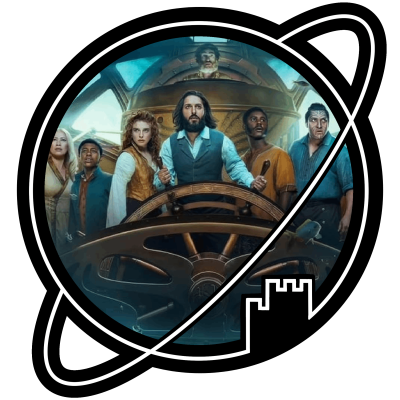

I had seen a trailer of this series on Amazon Prime (which included a kraken, by the way, a significant detail for those who know me) and had made a mental note to give this series a try. A few months later, when I was craving something with an adventure vibe, Nautilus seemed the smart choice. Though I have never read Twenty Thousand Leagues Under the Seas by Jules Verne, I once watched The League of Extraordinary Gentlemen, which very conveniently introduced me to the most iconic literary characters from Western European literature. The concept of an advanced, giant submarine was my main takeaway from the character of Captain Nemo. It’s also one of the things that made the original story a science fiction story. Science fiction, at this time, still isn’t my preferred genre. However, science fiction that takes place in the past somehow feels more like fantasy to me, and thus boosts my enjoyment more efficiently. All this to say that I basically expected the equivalent of a pirate adventure story when I started watching; nothing to complicated when it comes to plot, but hopefully with a strong enough sense of exploration and maybe also some compelling characters.
Luckily for me, my expectations were met and at some points even exceeded. Nautilus is a charming series that neatly balances adventure, drama and humour. Furthermore, despite its more light-hearted moments, it doesn’t shy away from tackling more heavy themes and subjects, in the case of Nautilus: the concept of self-determination, identity and loyalty, as well as the horrors of imperialism. I find that this dichotomy between heartfelt cheerfulness and seriousness is something I appreciate more in media nowadays. Maybe because I’ve encountered both too much superficial and ‘grimdark’ stories in the last few years and now crave authentic stories that more reflect the ambivalence of real life. Or maybe it is just a balance I currently miss in reality with all what’s going on all around the world… Whatever the case may be, Nautilus has a loveable, diverse cast of characters -with actors that clearly enjoyed this production- with sufficient emotional depth to portray both light and dark emotions. Furthermore, the sapiophile within me could really appreciate that most characters were very capable, and that conflict within the story was seldom the result of incompetence, but rather of conflicting goals or emotions. Nemo, Humility, Benoit and Millais (portrayed by Luke Arnold, by the way, something that made me nostalgic for Black Sails) were all intriguing characters in this regard.
Is the acting and writing in Nautilus unparalleled? No, but I felt it was sincere. And after a few episodes I was genuinely invested in the story and the fate of the characters. Furthermore, it was a delight to watch this series with Jasmijn who could reflect on all the strange flora and fauna in this series with her newly gained biology knowledge from Naturalis Biodiversity Center. I now know of the existence of the coconut crab – which is a very cool crustacean – and have learned that moray eels can hunt on land. The more you know!
Listened to the audiobook with Rob Inglis – as the previous audiobooks, well read.
When reviewing The Tombs of Atuan, I wrote that I liked how the novel was a complete curveball, changing both perspective and style away from A Wizard of Earthsea. The final instalment in the first trilogy of the Earthsea Cycle is much more akin to the first novel than it is to the second.
While the trilogy’s main character, Ged, is not the protagonist of this novel, he does show up on the first page. Still, viewed from the outside, this older version of a well-known character is now presented as a mysterious mentor, the overconfidence and daring of his earlier appearances now gone.
The voyage in The Farthest Shore has a clear destination but is meandering, leading to a more episodic structure that we might recognise from the first instalment in the trilogy. Of the trilogy, The Tombs of Atuan is the book that tells the most coherent, unified story. But even if the plot is more fragmented, the themes of The Farthest Shore tie the trilogy together very well.
The journey that Ged takes Arren, The Farthest Shore’s protagonist, on is akin to his own journey from A Wizard of Earthsea: the two characters sail from island to island, looking for the source of evil that is draining magic from the land, meanwhile learning both about themselves and the people around them. This allows Le Guin to showcase a wide variety of places and peoples around Earthsea. Especially the encounter with the Raft People shows Le Guin’s talent for world building: it felt like she built up an entire culture in the space of a few paragraphs.
The finale of The Farthest Shore is surprisingly satisfying. The antagonist is not one that has been built up over the three books of the trilogy, which a seasoned reader of fantasy literature might expect. Instead, the antagonist feels like an evil reflection of Ged, a version of him he might have become had he made all the wrong choices he narrowly avoided making in A Wizard of Earthsea. This theme strongly echoes A Wizard of Earthsea itself: after all, that book also deals with the idea of defeating an evil version of oneself.
I really like that unifying theme of the trilogy. While a fantasy tale like Earthsea might make the choice one of literal life versus undead, good versus evil, the lesson that we are made who we are by our choices – and that we can choose to change at any time – is one that we cannot hear to often.


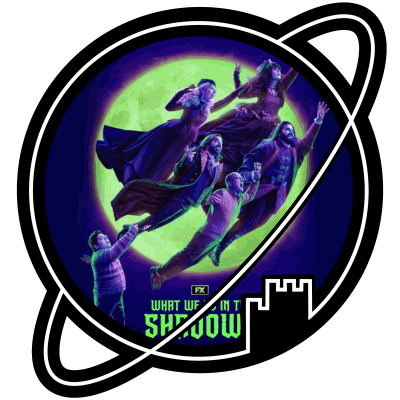
Gosh, this one is quite hard to review.
Let me begin by saying this: the first two seasons are a solid 5 stars for me. I really loved them. Seasons 3 through 6 get 3 stars if they’re lucky. There’s the occasional funny moment but a lot of the magic is gone at this point. Overall, a “fair” rating for the show as a whole would be closer to 3.5 stars. However, the first two seasons are so incredibly worth watching that I bumped it up to 4.
I really loved Nadja in the first few seasons. She was easily my favourite character of the bunch. Out of the “regular” vampires, she’s the mature one, but she’s also really fun! Unfortunately, in the later seasons she becomes absolutely insufferable. I’m not expecting vampires who have lived for hundreds of years to “grow” per se, but I’d like them to at least be consistent.
The moment I realised the show had “changed” was when they started using CGI, specifically for the “original“ vampire. The CGI doesn’t look good, but it’s a nice little metaphor for the rest of the show. Being a mockumentary, What We Do In The Shadows feels quite “realistic” at first. The premise is “what would the lives of vampires be like if they lived in the present (and specifically on Staten Island)?”. The show explores situations like Laszlo being caught by animal control while in bat form, what vampire law and order might be like in modern America or even just “the vampires organise an orgy”. If I’m not mistaken, these first episodes of the show could easily be watched and enjoyed by someone who’s never before heard of the show. Everything starts and end with the framing device: the fact that these vampires are being followed around by a mockumentary crew.
Eventually, the writers seem to stop using this framing device as a starting point, but more of a feature that’s tacked onto the show. The show loses a lot of the “rawness” it used to have. You see it in the writing, but also the costumes and the overall production value. Everything looks much smoother and “nicer” near the end of the show, in a way that takes away from the mockumentary format. Something that really bothered me personally was Nadja’s hair. In the first two seasons it looked real, but in the last few seasons she wears some truly horrific wigs.
I finished seasons 4 through 6 mostly to write this review, but my heart really wasn’t in it. It’s such a shame, because What We Do In The Shadows started SO GOOD. Please watch the first two seasons, but once you notice the quality drop, don’t expect it to ever go back up.

Review: Snow Crash – Neal Stephenson
Hiro Protagonist is a freelance hacker, CIC operative, best sword fighter in the world, and also a pizza courier for the Mafia. When it seems he might incur the wrath of Uncle Enzo by delivering a pizza late, he is saved by Y.T., a skateboarding courier with an attitude. They form a partnership in an attempt to unravel the ever-thickening plot around real-world diseases being spread via the digital metaverse and people attending a particular franchise church speaking in tongues.

Review: Kaos – Netflix
“A line appears, the order wanes, the family falls, and Kaos reigns.” This is the prophecy that haunts a tracksuit wearing Zeus, who desperately tries to stay relevant and powerful in modern day Greece. Meanwhile, Prometheus plots to make sure the prophecy comes true.

Review: Sistersong – Lucy Holland
In 6th century Britain, three sisters, the daughters of the King of Dumnonia in modern-day Cornwall, feel their culture is beset on all sides: as Saxons invade the land, a Christian priest tries to convert the Dumnonians and convince them to abandon their old faith. When a mysterious stranger arrives at the court, the love between two of the sisters is tested – while the third feels uncomfortable in her body and the role society has given her.

Review: Nautilus – Amazon Prime
In the year 1857, when the British East India Mercantile Company reigns the world in all but name, it uses its their stolen riches and enslaved laborers to build a vessel to crown it all: a massive submersible ship called the Nautilus. However, as the construction of the Nautilus reaches its conclusion, one of the ship’s designers, Nemo, leads a prisoner uprising and seizes the Nautilus for himself. In a quest for freedom, knowledge and vengeance, Nemo and his crew brave the dangers of the world’s oceans, as the East India Mercantile Company hunt them for the prize they’ve stolen. Is it possible to escape the Company’s reach and maybe destroy this world power for once and for all?
Review: The Farthest Shore – Ursula Le Guin
A young prince is sent to the island of Roke to warn the masters of the School of Wizardry of the disappearance of magic from the shores of Earthsea. Alongside the boy, the Archmage Ged sets sail to find the source of the mysterious illness that is draining magic from the land.

Review: What We Do In The Shadows – FX
What We Do In The Shadows is a mockumentary style series, following three vampires and one energy vampire who are roommates living on Staten Island, New York. As the show progresses, we are given a glimpse into what it’s like to be an ancient vampire living in a modern world. Meanwhile, vampire familiar Guillermo tries to help the vampires survive while hoping that one day, he will be turned into a vampire himself.